
Why Data Centers Have Become the Most Valuable Asset in the AI Boom
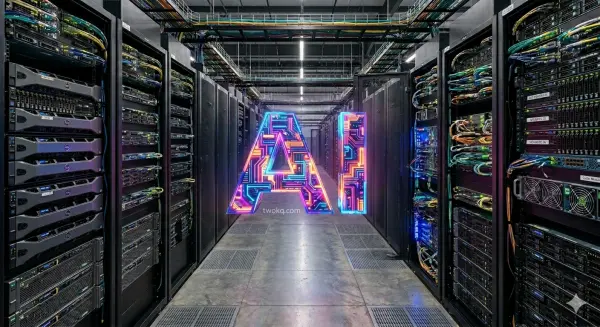
Artificial intelligence may be the technology dominating headlines, but behind every chatbot, image generator, coding assistant, and AI-powered search engine lies an industry that receives far less attention from the public: data centers.
As technology companies compete to deploy larger and more capable AI systems, the demand for computing infrastructure has reached levels that few industry experts predicted just a few years ago.
The result is a global race to build new data centers, secure advanced semiconductor chips, expand energy supplies, and increase cloud computing capacity.
While consumers interact with AI through applications such as ChatGPT, Gemini, Claude, Copilot, and other digital assistants, the actual engines powering these systems are housed inside massive facilities containing tens of thousands of specialized processors operating around the clock.
For many technology executives, access to computing infrastructure has become just as important as access to talent or capital.
The AI Industry Runs on Compute
Modern artificial intelligence systems require enormous amounts of computing power.
Training a large AI model involves processing vast quantities of text, images, videos, code, and other information through advanced semiconductor chips known as graphics processing units, or GPUs.
These chips perform billions of calculations every second and are specifically designed for the mathematical workloads required by machine learning systems.
A single advanced AI training run can consume thousands of GPUs operating simultaneously for weeks or even months.
Once the model is trained, additional infrastructure is needed to serve users. Every prompt entered into a chatbot, every AI-generated image, and every automated recommendation requires computational resources.
As AI adoption grows, the demand for inference—the process of generating responses for users—is becoming nearly as important as model training itself.
Industry analysts increasingly describe compute as the new currency of the AI economy.
Why Technology Companies Are Spending Billions
Major technology firms have dramatically increased spending on infrastructure over the past two years.
Microsoft, Google, Amazon, Meta, Oracle, and numerous AI startups are investing heavily in data center construction and expansion projects.
These investments are not merely about increasing storage capacity. AI workloads require specialized facilities equipped with advanced cooling systems, high-speed networking equipment, backup power systems, and racks capable of supporting thousands of high-performance processors.
Building such facilities has become one of the largest expenses facing technology companies.
Industry estimates suggest that a modern hyperscale AI data center can cost billions of dollars to construct and equip before it becomes operational.
Despite those costs, companies continue investing because access to infrastructure directly influences how quickly they can develop and deploy AI products.
The Global Shortage of AI Chips
The rapid expansion of AI has also exposed vulnerabilities within the semiconductor supply chain.
Demand for advanced AI chips has surged as organizations seek to train larger models and support growing user bases.
Manufacturers have struggled to keep pace.
Companies often wait months to receive shipments of specialized processors, particularly those used for AI workloads. This has intensified competition for hardware and increased the importance of long-term supply agreements.
The situation has elevated semiconductor manufacturers to strategic positions within the technology industry.
Chipmakers that once operated largely behind the scenes now play a central role in determining how quickly AI companies can scale their operations.
Power Has Become a Strategic Resource
One of the least discussed consequences of the AI boom is its impact on energy infrastructure.
Advanced AI systems require substantial amounts of electricity.
Large data centers consume power continuously, and the increasing concentration of AI hardware has pushed energy requirements even higher.
In some regions, utility providers are receiving requests for electricity supplies that exceed the needs of entire communities.
This has created new challenges for governments, regulators, and infrastructure developers.
Technology companies are increasingly exploring renewable energy projects, long-term power agreements, and alternative energy solutions to secure reliable electricity for future expansion.
The availability of power is becoming a critical factor when deciding where new data centers should be built.
Competition Is Expanding Beyond Software
The early stages of the AI race focused primarily on software and model development.
Today, competition extends far beyond algorithms.
Companies are competing for land, electricity, semiconductor supply contracts, networking equipment, engineering talent, and construction resources.
The ability to deploy infrastructure quickly has become a competitive advantage.
Organizations that secure computing capacity can launch new products faster, process more data, and serve larger numbers of users.
Those unable to access sufficient infrastructure risk falling behind regardless of how advanced their software may be.
Governments Are Becoming More Involved
National governments are increasingly viewing AI infrastructure as a strategic asset.
Several countries have announced initiatives aimed at supporting semiconductor production, expanding data center capacity, and strengthening domestic technology ecosystems.
Policymakers see AI infrastructure as essential not only for economic growth but also for national competitiveness.
The ability to host, train, and operate advanced AI systems is becoming an important consideration in discussions about technological leadership.
This has contributed to growing interest in domestic chip manufacturing, research funding, and infrastructure investment programs.
Demand Shows No Sign of Slowing
Industry forecasts suggest that demand for AI computing resources will continue increasing throughout the remainder of the decade.
Businesses across healthcare, finance, manufacturing, education, retail, logistics, and software development are integrating AI into daily operations.
Each new deployment adds pressure to existing infrastructure.
At the same time, AI models continue growing more sophisticated, often requiring additional computational resources to train and operate effectively.
This combination of rising adoption and increasing model complexity is driving unprecedented demand for computing capacity.
For infrastructure providers, data center operators, semiconductor manufacturers, and cloud computing companies, the AI boom has created one of the largest growth opportunities in the history of the technology industry.