
Mark Zuckerberg Says Banning Chinese AI Models Would Be a Mistake
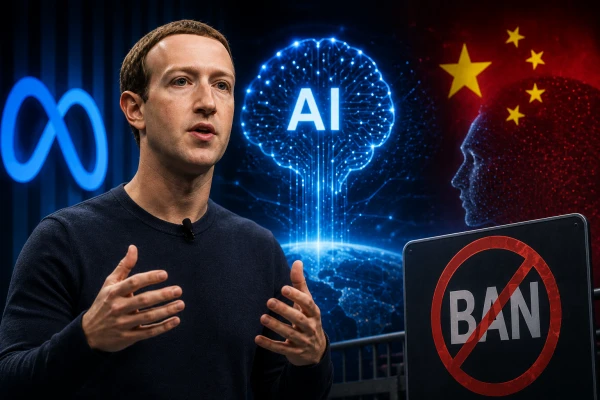
Meta CEO Mark Zuckerberg has entered one of the biggest debates in artificial intelligence by arguing that banning Chinese AI models would slow innovation rather than strengthen American leadership.
His comments come as policymakers continue discussing new restrictions on foreign AI technology, particularly advanced open-weight models developed in China. According to Zuckerberg, competition—not isolation—is what has historically driven technological progress, and the AI industry should continue encouraging innovation while protecting national security.
The debate has intensified as Chinese AI companies rapidly improve their large language models. Over the past year, several Chinese developers have released increasingly capable systems that compete with products from OpenAI, Google, Anthropic and Meta.
These advances have prompted concerns in Washington over intellectual property, cybersecurity and strategic competition. Some policymakers have proposed limiting access to certain foreign AI technologies, while others argue that open research and healthy competition ultimately produce stronger domestic innovation.
Zuckerberg believes that restricting access to AI models could have unintended consequences. In his view, developers, startups and researchers benefit from studying a wide range of AI systems, including open-weight models that can be inspected, modified and improved.
He argues that innovation accelerates when more developers have access to powerful tools rather than when only a handful of companies control frontier technology. That philosophy aligns with Meta's continued investment in its Llama family of open-weight AI models, which have become widely used by developers and enterprises around the world.
The comments also highlight a growing divide within the AI industry. While some companies support tighter controls on advanced AI systems because of safety and security concerns, others believe openness leads to faster scientific progress and stronger defensive capabilities. The discussion extends beyond technology companies to governments, universities and cybersecurity experts who are trying to balance innovation with responsible oversight.
Meta is backing its strategy with enormous financial investment. The company continues expanding AI infrastructure, building large-scale data centers and deploying more advanced computing hardware to support future AI models. These investments demonstrate that Meta intends to remain one of the leading competitors in the global AI race alongside OpenAI, Google DeepMind, Anthropic and xAI.
For businesses and developers, the outcome of this debate could shape how AI software is built over the next decade. If governments introduce stricter restrictions on certain AI models, companies may need to rethink which platforms they use for research, product development and enterprise applications. On the other hand, broader access to open-weight models could encourage greater experimentation and lower barriers to AI adoption.
The discussion also reflects a larger geopolitical reality. Artificial intelligence is no longer just a commercial technology—it has become a strategic asset that influences economic growth, national security and global competitiveness. Decisions made by governments today could affect the pace of AI innovation for years to come.
Whether regulators ultimately adopt stricter controls or encourage more open development, Zuckerberg's comments have added a new dimension to the global AI conversation. As the competition between the United States and China continues to intensify, debates over openness, regulation and innovation are likely to become some of the most closely watched topics in the technology industry.
