
Intel Announces $5.7 Billion AI Investment to Expand European Chip Manufacturing
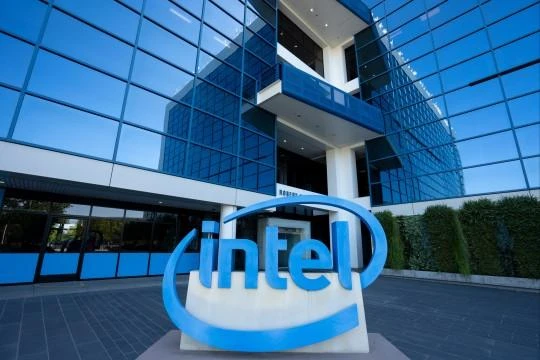
Intel has unveiled a $5.7 billion investment to expand its semiconductor manufacturing operations in Leixlip, Ireland, as demand for artificial intelligence hardware continues to surge worldwide. The investment is one of Intel's largest European commitments in recent years and highlights how AI is reshaping the global semiconductor industry.
The expansion will upgrade Intel's existing manufacturing campus, which already produces some of the company's most advanced silicon wafers. New facilities will improve production capacity, strengthen research and development capabilities, and prepare the site to manufacture future generations of AI and high-performance computing chips.
According to Intel, the project is expected to create several hundred additional jobs while reinforcing Ireland's role as one of Europe's most important semiconductor manufacturing hubs. The company currently employs nearly 5,000 people in Ireland, making it one of the country's largest technology employers.
Artificial intelligence has dramatically increased global demand for advanced semiconductors. Companies including OpenAI, Microsoft, Google, Meta, Amazon, and xAI are investing hundreds of billions of dollars into AI infrastructure, creating unprecedented demand for processors capable of training and running increasingly sophisticated AI models.
While Nvidia currently dominates the AI accelerator market, Intel is working to strengthen its position through continued investment in manufacturing, advanced packaging, and next-generation AI hardware. Expanding fabrication capacity is seen as a critical step toward competing in a market where demand continues to outpace supply.
The Irish expansion forms part of Intel's broader capital spending strategy for 2026. The company plans to invest approximately $17 billion this year across multiple projects designed to improve manufacturing capacity, accelerate research, and support future AI workloads. Much of the Irish project is expected to be completed by the end of 2027.
Governments are also placing increasing emphasis on domestic semiconductor production. Europe, the United States, and several Asian countries have introduced policies aimed at strengthening local chip manufacturing to reduce dependence on overseas supply chains while supporting strategic AI development.
Industry analysts believe manufacturing capacity will become just as important as AI software in determining future technology leadership. As AI models continue growing in size and complexity, companies capable of producing advanced processors at scale will have a significant competitive advantage.
Intel's latest investment demonstrates that the race for artificial intelligence leadership is no longer limited to software developers. It is equally a competition for manufacturing capacity, semiconductor innovation, and long-term infrastructure.
As AI adoption continues accelerating across industries, investments like Intel's Irish expansion are expected to play a key role in supporting the next generation of AI technologies.