
Tesla Expands Optimus Robot Production as Elon Musk Pushes Toward an AI-Powered Workforce
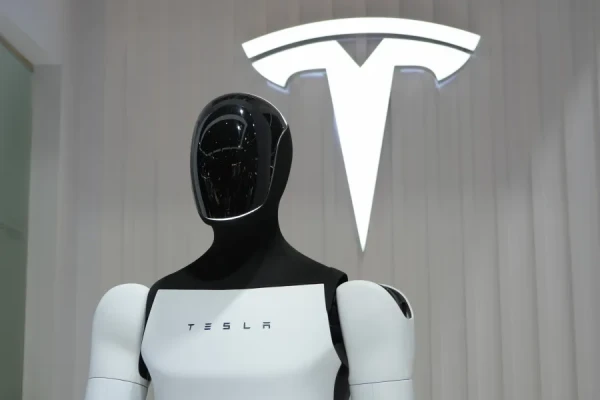
Tesla is moving closer to one of its most ambitious goals yet by expanding production of its Optimus humanoid robot, a project that could redefine how businesses approach automation in the coming decade. While Tesla is widely recognized for its electric vehicles and battery technology, the company has increasingly positioned robotics as a core part of its long-term strategy.
Elon Musk believes intelligent humanoid robots will eventually perform repetitive, dangerous, and physically demanding tasks across factories, warehouses, logistics centers, and even homes. As development accelerates, Optimus is becoming one of the most closely watched robotics projects in the technology industry, attracting attention from investors, manufacturers, researchers, and consumers eager to see how artificial intelligence can move beyond software into the physical world.
Unlike traditional industrial robots that remain fixed in one location and perform a single repetitive task, Optimus has been designed to operate in environments built for humans. The robot is capable of walking, carrying objects, manipulating tools, navigating obstacles, and using advanced artificial intelligence to understand its surroundings.
Tesla's long-term vision is to create a flexible workforce of intelligent robots that can learn new skills through AI instead of requiring engineers to manually program every movement. This approach could dramatically reduce the cost of automation while allowing businesses to deploy robots across a much wider range of industries than has previously been possible.
Artificial intelligence plays a central role in Optimus' development. Tesla is adapting many of the same computer vision and neural network technologies originally created for its self-driving vehicles, enabling the robot to recognize objects, estimate distances, avoid collisions, and make decisions in real time.
Every improvement in AI reasoning, perception, and motion planning allows the robot to perform increasingly complex tasks with greater precision. By combining advanced sensors, powerful onboard processors, and machine learning models trained on enormous amounts of real-world data, Tesla aims to create a humanoid robot capable of working safely alongside human employees in dynamic environments.
Manufacturing is expected to be one of the first industries transformed by humanoid robotics. Companies around the world continue facing labor shortages, rising operational costs, and increasing demand for around-the-clock production. Robots capable of performing repetitive assembly work, transporting materials, inspecting products, and supporting logistics operations could significantly improve productivity while reducing workplace injuries.
Industry analysts believe that if Tesla succeeds in producing Optimus at scale, it could accelerate adoption of humanoid robots throughout automotive manufacturing, electronics production, warehousing, healthcare, retail, and construction.
The potential market extends far beyond industrial facilities. Tesla has repeatedly suggested that future versions of Optimus could eventually assist with household chores, elderly care, home maintenance, shopping assistance, gardening, and other everyday activities. Such capabilities remain years away, but advances in artificial intelligence, battery efficiency, and robotics hardware continue narrowing the gap between research prototypes and commercially viable products.
As robots become more adaptable and affordable, they may gradually transition from specialized industrial equipment into everyday consumer technology, much like smartphones evolved from luxury devices into essential tools used by billions of people worldwide.
Tesla is not alone in pursuing this opportunity. Companies across the United States, China, Japan, and Europe are investing billions of dollars into humanoid robotics, recognizing that AI-powered machines could become one of the next major technology markets.
Rapid improvements in computer vision, natural language processing, reinforcement learning, and high-performance AI chips have made today's robots far more capable than previous generations. This growing competition is expected to accelerate innovation while reducing costs, ultimately benefiting businesses and consumers seeking practical automation solutions.
Despite the excitement, significant challenges remain before humanoid robots become commonplace. Engineers continue working to improve battery life, reduce manufacturing costs, enhance dexterity, strengthen safety systems, and ensure reliable operation across unpredictable real-world environments.
Regulatory frameworks governing workplace robotics, liability, and safety standards are also expected to evolve as intelligent machines become more capable. Successfully addressing these challenges will determine how quickly humanoid robots move from pilot projects into widespread commercial deployment.
Tesla's continued investment in Optimus demonstrates that the future of artificial intelligence extends well beyond chatbots and software applications. The next phase of AI innovation is increasingly focused on giving intelligent systems the ability to interact directly with the physical world, performing useful work that complements human capabilities rather than replacing them entirely.
As production expands and the technology matures, Optimus could become one of the defining products of the next decade, reshaping industries while introducing a new era of AI-powered robotics that changes how people live and work.