
Google Unveils Wyoming Data Center With $17 Billion Plan
Google unveils Wyoming data center plans that will bring the company’s first computing campus in the state to the Cheyenne area, backed by a long-term investment Google values at $17 billion. The company announced the project on November 5 after acquiring a prepared site from AI infrastructure developer Crusoe.
The project combines grid power, natural-gas fuel cells, gas turbines and planned carbon capture. Its disclosed power arrangements are unusually large, but several pieces remain under development and Google has not published the purchase price, final computing capacity or an opening date for the entire campus.
The announced Google Wyoming data center plan has four defining elements:
- A $17 billion long-term investment near Cheyenne.
- A 702-megawatt fuel-cell development with planned carbon capture.
- Air-cooled facilities intended to limit local water demand.
- Power service that begins in late 2027 and ramps toward 2030.
Google Unveils Wyoming Data Center After Crusoe Site Deal
Crusoe said Google acquired the southeast Wyoming site after Crusoe completed early work including site selection, permitting, approvals and the initial power strategy. Financial terms of the transaction were not disclosed, so the $17 billion figure describes Google’s planned Wyoming investment rather than the price paid to Crusoe.
Google identified Tallgrass Energy, Black Hills Energy, American Electric Power and Related Digital as key project partners. The company said the campus would be its first data center in Wyoming, extending a US infrastructure expansion designed to support cloud services and growing demand for AI computing.
The transfer also changes who carries the execution risk. Crusoe developed the site concept and approvals, while Google will control the buildout and operate the campus. That gives Google direct responsibility for coordinating generation, grid service, construction and the phased arrival of computing equipment.
Google said the facilities will use air cooling to reduce pressure on local water supplies. Air cooling can reduce operational water consumption compared with evaporative systems, although the company has not yet published projected annual water use or measured performance for the unfinished Wyoming campus.
A 702 MW Fuel-Cell and Carbon-Capture Plan
Google has contracted with American Electric Power for a 702 MW fuel-cell development using Bloom Energy equipment. The system would run on natural gas, with Tallgrass Energy expected to capture carbon dioxide and store it permanently at the Eastern Wyoming Sequestration Hub.
Google described the planned installation as the largest commercial-scale fuel-cell deployment of its kind. It also said the agreement brings its contracted carbon-capture capacity to nearly one gigawatt, including a previously announced 400 MW fuel-cell project in Illinois.
The Wyoming design also calls for natural-gas generation supplied by Tallgrass and Black Hills Energy. A front-end engineering study will examine carbon capture on combined-cycle turbines, but that language signals engineering work rather than an operating capture system. Actual emissions performance will depend on construction, capture rates and permanent storage.
The mix is intended to provide round-the-clock power while new utility infrastructure is built. It also illustrates the scale of energy commitments now accompanying AI data centers, which increasingly require dedicated generation and long-term utility contracts rather than relying only on spare capacity in the existing grid.
Background Reading
Black Hills Agreements Point to a 2.7 GW Resource Mix
Black Hills Energy’s regulatory disclosure provides the clearest construction timetable. Its agreements run through 2048, with initial service expected in late 2027 and the customer’s load reaching a planned peak in 2030. The utility described a 2.7-gigawatt resource mix, including reserve margins.
That figure should not be read as the data center’s disclosed computing load. Black Hills expects to provide about 590 MW of grid service and manage roughly 2.1 GW of third-party resources through a private microgrid. The total includes generation and reserves assembled to serve the project reliably.
Black Hills plans approximately $1.8 billion in investments from 2027 through 2029, including 564 MW of natural-gas generation. Google has provided $399 million in refundable advances for long-lead equipment, reducing the utility’s near-term financing exposure while permitting and regulatory reviews continue.
The contracts include collateral, termination protections and provisions designed to prevent other customers from paying costs caused by the data center. Those safeguards matter because a single large customer can require years of generation and transmission spending before its full load materializes.
Cheyenne Community Costs and Benefits
Google said it will pay the full cost of the electricity it consumes and infrastructure directly caused by the project. It expects the development to generate hundreds of millions of dollars in property taxes, but the company has not yet provided a public, year-by-year tax forecast or a final construction schedule.
The company also plans a community advisory council and said more than 200 residents attended an initial meeting. Local scrutiny is likely to focus on construction traffic, land use, power prices, emissions and whether promised tax revenue and jobs arrive on the same timetable as the energy infrastructure.
The strongest near-term milestones will come from permits, utility approvals and equipment orders. By stating a late-2027 service start and 2030 peak, Black Hills has supplied measurable checkpoints for a project whose headline investment will otherwise unfold over many years.
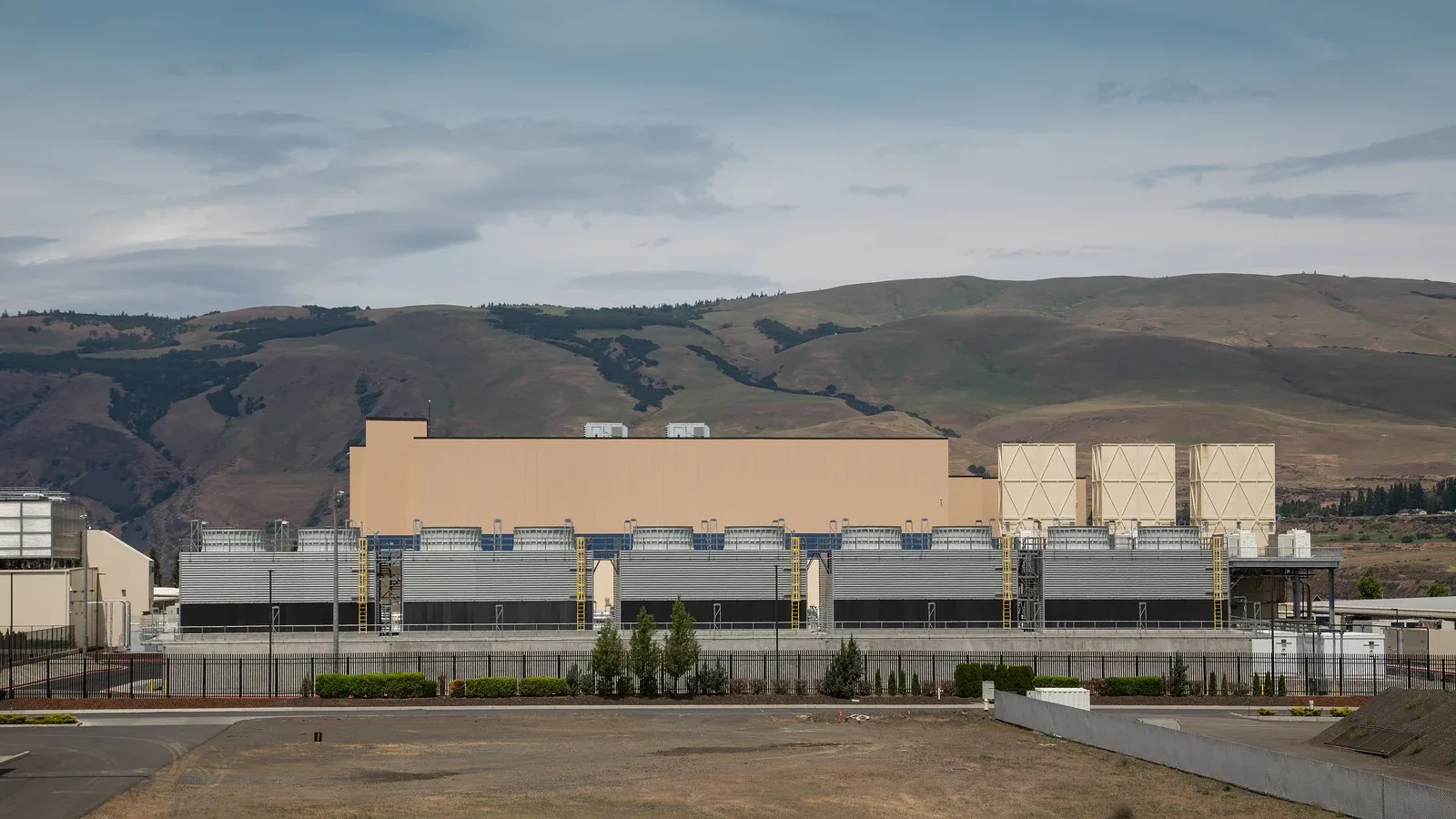
Illustrative feature photograph: Google’s data center in The Dalles, Oregon, photographed by Tony Webster on May 17, 2015. The image does not show the planned Wyoming campus; it was cropped and resized under CC BY 2.0.