
DOJ Launches Super Intelligence Task Force for AI Enforcement
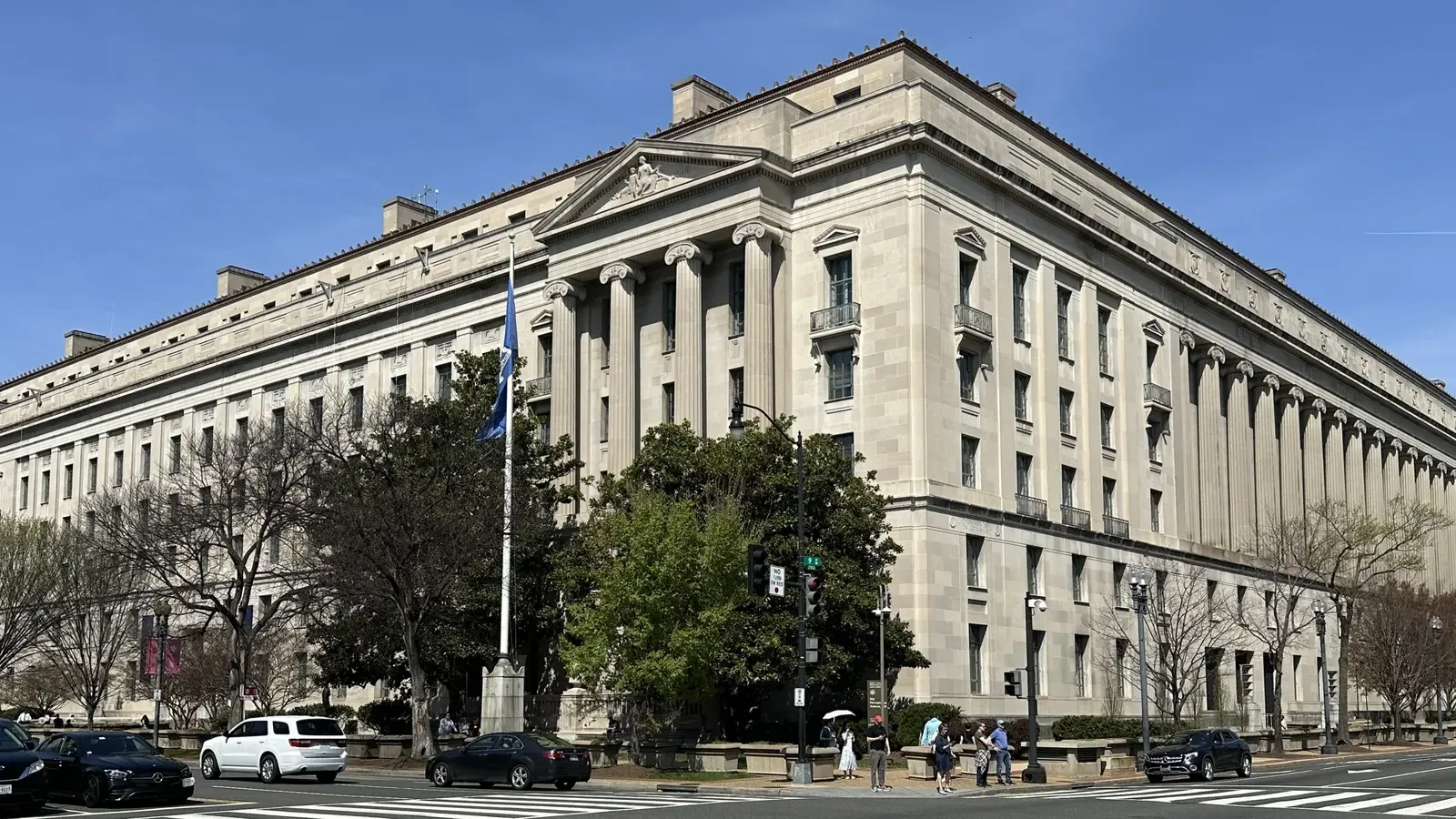
The US Department of Justice has launched a Super Intelligence Task Force to coordinate criminal investigations, civil enforcement and policy work involving artificial intelligence. Announced on November 5, the department-wide body will be led by Associate Attorney General Stanley Woodward and Associate Deputy Attorney General Stephen Weiss.
The initiative is aimed at misuse by foreign governments, state-backed groups, transnational criminal organisations and people or companies involved in fraud or other unlawful conduct. It also connects the Justice Department to the White House's broader Super Intelligence Force, chaired by Director of National Intelligence Jay Clayton.
The task force has six principal responsibilities:
- Coordinate the department's criminal and civil AI enforcement work.
- Prevent overlapping investigations and cases across DOJ components.
- Recommend priorities to protect public safety and limit AI misuse.
- Act as the DOJ's main contact with the federal Super Intelligence Force.
- Absorb the department's earlier Artificial Intelligence Task Force.
- Develop prosecution and compliance guidance for AI-related conduct.
DOJ Super Intelligence Task Force Coordinates Cases
The Justice Department announcement says the task force will protect US leadership in advanced AI from actors at home and abroad. Attorney General Todd Blanche said the department would continue pursuing people whose use of the technology violates existing law, including attacks on taxpayers, critical infrastructure and national security.
An October 13 memorandum provides the operational detail. It tells DOJ components and US Attorneys' Offices to notify the task force when seeking to open an AI-related investigation and before bringing charges or finalising a resolution when requested. The task force must design that process so it does not delay urgent action, including cases involving an imminent public-safety threat or a risk that evidence will disappear.
The notification system is designed to deconflict cases rather than replace prosecutors or investigators. Membership will include representatives from the Antitrust, Civil, Criminal and National Security divisions, the FBI, the National Fraud Enforcement Division, the Office of the Solicitor General and the Attorney General's Advisory Committee. Other components can be added.
The task force will also advise on legislation or regulation through the Offices of Legal Policy and Legislative Affairs. The memorandum directs that work towards innovation without what it describes as burdensome regulation, pairing enforcement against unlawful conduct with an explicit industrial-policy goal of promoting US leadership.
Earlier DOJ AI Task Force Is Being Merged
The new body does not start from a blank slate. A footnote in the memorandum dissolves the Artificial Intelligence Task Force announced on January 9 and transfers its personnel details, cases, work product and reporting duties to the DOJ-SITF. That earlier group focused on affirmative civil litigation involving AI.
The replacement has a wider mandate. It covers criminal prosecutions, civil cases, antitrust questions, national-security investigations, fraud enforcement and evaluation of company compliance measures. Associate Deputy Attorney General Weiss said businesses should maintain strong internal controls so their AI systems behave as intended, but the announcement does not establish a new binding corporate standard.
Related Coverage
Super Intelligence Is the Government's New Name for AI
In this policy, “Super Intelligence” is the federal government's preferred term for technology that agencies previously called artificial intelligence. It should not be read as a technical finding that today's systems have reached the hypothetical level of intelligence exceeding humans across virtually every domain.
The distinction matters because the task force's authority applies to current uses of AI in fraud, cybercrime, infrastructure attacks and other unlawful activity. It is an organisational change inside the Justice Department, not a declaration of a new criminal offence or a replacement for the legal elements prosecutors must prove.
The memorandum explicitly says it is intended to improve internal management and creates no enforceable right or benefit. It does not expand the DOJ's statutory powers. Instead, it sets up a central forum for choosing priorities, sharing information and coordinating cases that may involve several offices or legal theories.
Enforcement Priorities and Guidance Still Need Detail
Several practical questions remain unanswered. The department has not published the notification criteria that will determine which investigations must be escalated, a timetable for prosecution guidance, or a definition of the compliance measures companies will be expected to evaluate. It has also not announced new funding or staffing for the task force.
Those details will determine whether the group becomes an active gatekeeper for AI cases or mainly a coordination layer. Its broad membership could reduce duplicated work and inconsistent legal positions, especially where national security, fraud and competition law overlap. Central review could also slow matters if the notification process becomes too expansive, which is why the memorandum includes an exception for emergencies.
For companies, the immediate signal is that DOJ scrutiny will focus not only on criminals using AI but also on internal controls, reporting and compliance programmes around deployed systems. No new compliance rule was issued with the launch, so existing laws and case-specific facts remain the basis for enforcement.
The November 5 announcement therefore marks the beginning of a department-wide structure rather than a completed enforcement regime. Its significance will depend on the priorities, guidance and cases that follow, and on how closely it coordinates with the federal Super Intelligence Force.
Photograph: Robert F. Kennedy Department of Justice Building by APK, via Wikimedia Commons, licensed under CC BY 4.0. Cropped to 16:9 and resized.