
Dassault Flight-Tests AI Algorithms on Rafale Fighter
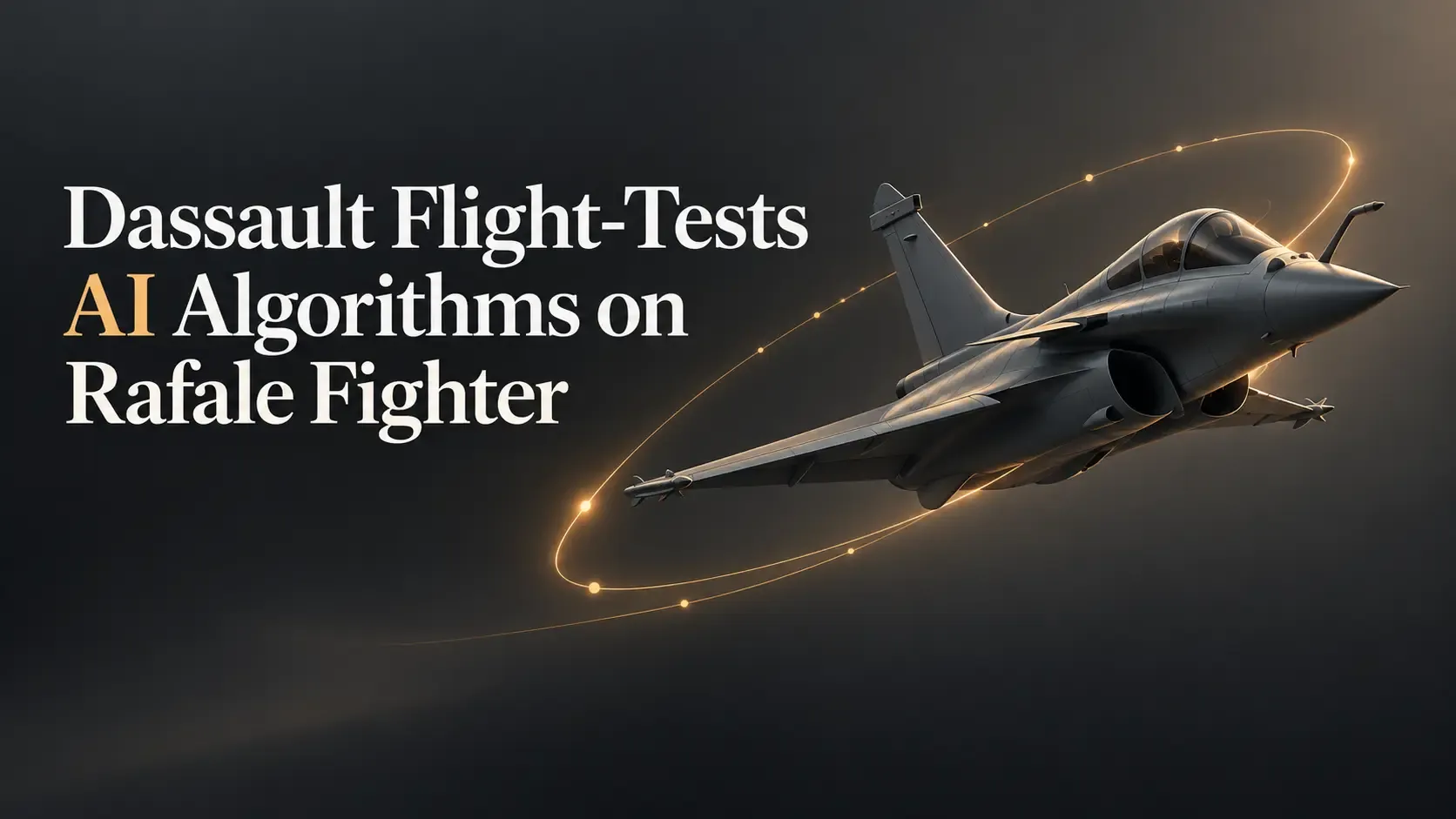
Dassault Rafale AI flight tests have put two artificial-intelligence algorithms aboard the French fighter, taking the systems beyond ground-based evaluation. Dassault Aviation said one algorithm was developed internally and the other with defense-electronics group Thales.
The companies have not disclosed what the algorithms did during flight or how they interacted with the aircraft. The announcement therefore marks an integration and maturity milestone, not evidence that a Rafale flew autonomously or transferred combat authority away from its crew.
Dassault disclosed three confirmed results:
- Two separate AI algorithms were tested in flight.
- One was built with Thales and one by Dassault engineers.
- Both may be considered for future Rafale upgrades.
Dassault Rafale AI Flight Tests Move Beyond Simulation
Flight testing matters because an algorithm that performs well in a laboratory must still operate inside a fast, safety-critical aircraft. Computing limits, sensor timing, vibration, communications and crew workload can expose integration problems that a simulation does not reproduce.
Dassault described the work as part of a broader effort to introduce AI that supports human crews. It said the systems had reached enough maturity to be eligible for future Rafale developments, language that points to further engineering and qualification rather than an immediate fleet-wide deployment.
The absence of functional details is significant. Dassault has not said whether the algorithms processed sensor data, assisted mission planning, prioritized information or performed another task. It also released no benchmark results, accuracy figures or schedule for operational use.
That limits the conclusions that can be drawn from the test. The verified achievement is that two AI systems were integrated into the aircraft and evaluated during flight, an important technical threshold for software intended to operate in a combat aviation environment.
Thales Collaboration Extends the Rafale Upgrade Path
Thales already supplies major avionics and electronic systems for the Rafale, making the jointly developed algorithm part of an established industrial relationship. Dassault did not identify which Thales unit participated or whether the work will become a formal Rafale standard.
The Rafale is designed as a multirole aircraft for missions including air defense, ground attack, reconnaissance and operations from carriers or land bases. Dassault says the platform was built for regular upgrades and is expected to remain in French service beyond 2060.
That long service horizon creates a practical reason to test software-driven capabilities now. New algorithms can potentially be refreshed faster than airframes, but defense software must still pass demanding reviews for reliability, cybersecurity, data quality and safe behavior under unusual conditions.
A partnership also divides the engineering burden. Dassault can focus on aircraft integration and operational performance, while Thales contributes experience in sensors, mission systems and secure electronics. The flight test shows the two companies can bring a jointly developed AI component onto a working Rafale.
Human Crews Remain Central to Dassault’s Plan
Military aviation programs often describe AI as a way to reduce information overload. A fighter can produce large volumes of radar, electronic-warfare and mission data, and software may help a pilot or weapons-systems officer sort that information more quickly.
Dassault’s emphasis on supporting crews is therefore more important than the broad AI label. It suggests an assistive role in which people retain responsibility while algorithms help interpret, rank or coordinate inputs. The company has not announced autonomous weapons release or pilotless Rafale operations.
Any operational deployment would require confidence in how the system behaves when data are incomplete, deceptive or outside its training distribution. Developers also need to show that crews understand the software’s limits and can recognize a poor recommendation before acting on it.
Future disclosures will need to answer whether the algorithms are fixed after certification or can be updated, what data they use and how performance is audited. Those questions will determine whether the flight test becomes an operational capability or remains an experimental program.
AI Wingmen Are Reshaping Fighter Programs
Dassault’s tests arrive as air forces and manufacturers explore closer coordination between crewed fighters and uncrewed aircraft. The goal is often to let a pilot direct additional sensors or platforms without turning the cockpit into an unmanageable control station.
Other programs have also moved aviation AI into real aircraft. Saab has tested an AI agent against a human pilot in a Gripen E, while the United States has flown machine-learning software aboard a modified F-16. The programs differ, but each treats flight as a necessary proving ground.
For Dassault, the immediate milestone is narrower and well defined: two algorithms completed Rafale flight tests and may feed future upgrades. The next meaningful evidence would be a disclosed operational function, a named upgrade standard, customer adoption or a timeline for service entry.
Related Coverage