
OpenAI Unveils Its First Custom AI Chip to Reduce Dependence on Nvidia and Boost ChatGPT Performance
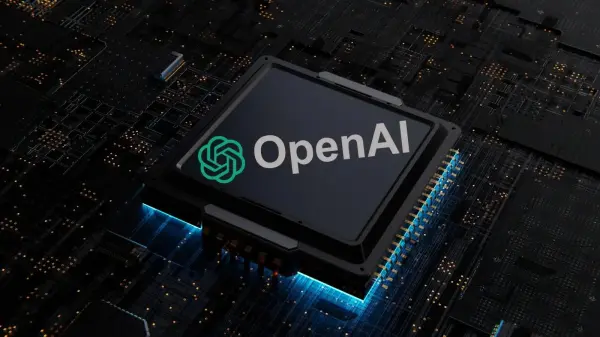
OpenAI has taken a significant step toward controlling its own artificial intelligence infrastructure by unveiling its first custom-designed AI chip, marking one of the company's most important hardware announcements to date.
Developed in collaboration with semiconductor giant Broadcom, the processor has been engineered specifically for AI inference—the stage where artificial intelligence models generate responses to users after training. The announcement signals OpenAI's growing ambition to build more of its technology stack internally while reducing its dependence on Nvidia's industry-leading graphics processors.
The new chip, internally known as Jalapeño, is designed to handle the enormous computational workload generated by products such as ChatGPT and OpenAI's developer platforms. AI inference has become one of the largest operating expenses for companies running large language models because millions of users interact with these systems every day.
By creating a processor optimized for inference, OpenAI aims to improve response speeds, reduce energy consumption, and lower the long-term cost of operating its rapidly expanding AI services.
For years, Nvidia has dominated the artificial intelligence hardware market through its powerful GPUs, which power many of the world's leading AI systems. Companies including OpenAI, Anthropic, Meta, Google, Microsoft, Amazon, and xAI collectively spend tens of billions of dollars purchasing Nvidia hardware to train and deploy frontier AI models.
As demand for AI computing continues to grow faster than chip production, many companies have started investing in custom silicon to reduce costs and gain greater control over their infrastructure. OpenAI's latest announcement reflects this broader industry trend.
Broadcom played a central role in the development of the processor, working alongside OpenAI engineers to create a chip specifically tailored for inference rather than general-purpose graphics processing.
According to Reuters, Broadcom's CEO said the chip is designed to compete with some of the most advanced AI processors currently available while focusing on the workloads most important to OpenAI's products. Instead of replacing Nvidia hardware immediately, the custom processor is expected to complement existing infrastructure while gradually increasing OpenAI's independence.
The announcement arrives during an unprecedented global race to secure AI computing power. Technology companies are investing hundreds of billions of dollars in new data centers, advanced networking equipment, and custom processors capable of supporting increasingly sophisticated artificial intelligence models.
OpenAI has repeatedly stated that access to computing infrastructure remains one of the biggest factors determining how quickly it can develop future generations of AI. Custom chips could help address supply constraints while giving the company greater flexibility in designing future AI systems.
The move also increases competitive pressure across the semiconductor industry. Nvidia remains the dominant supplier of AI hardware, but companies including Google, Amazon, Microsoft, Meta, AMD, and now OpenAI are developing their own specialized processors for different AI workloads. This growing competition is expected to accelerate innovation while giving cloud providers and AI developers more options for powering next-generation artificial intelligence platforms.
Industry analysts believe custom AI chips will become increasingly important as artificial intelligence adoption expands across businesses, governments, healthcare, education, manufacturing, and scientific research.
Purpose-built processors can often deliver higher efficiency for specific workloads than general-purpose hardware, making them attractive for organizations operating AI services at massive scale. For OpenAI, building proprietary hardware could become just as strategically important as developing increasingly capable language models.
While Nvidia is unlikely to lose its leadership position overnight, OpenAI's custom chip represents an important milestone in the evolution of AI infrastructure. As companies race to build faster, more efficient, and more affordable artificial intelligence systems, owning both the software and the underlying hardware is becoming a powerful competitive advantage.
OpenAI's first custom AI processor demonstrates that the future of artificial intelligence will be shaped not only by smarter models but also by the specialized chips that power them.