
As AI Rivals Race Toward Wall Street, Has OpenAI Missed Its Best IPO Opportunity?
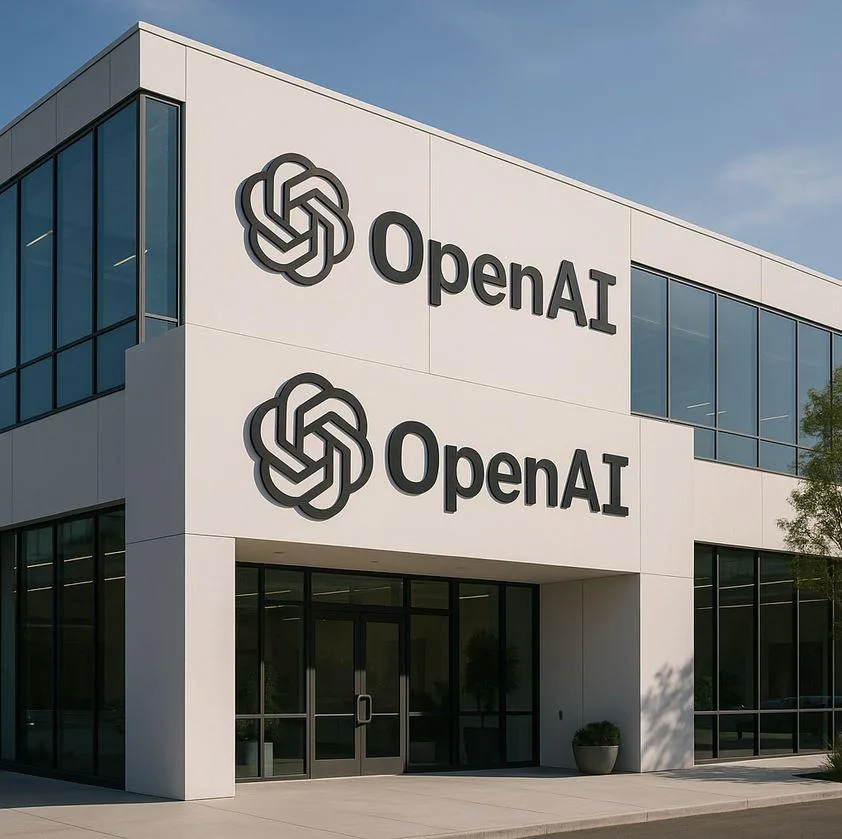
Just two years ago, OpenAI stood alone at the center of the artificial intelligence revolution.
The company behind ChatGPT transformed AI from a niche technology into a global phenomenon, attracting billions of dollars in investment and positioning CEO Sam Altman as one of the most influential figures in technology.
Today, however, the conversation surrounding OpenAI is changing.
While competitors such as Anthropic, xAI and other AI-focused companies move aggressively toward public markets and massive fundraising campaigns, OpenAI finds itself facing difficult questions about profitability, infrastructure costs and whether it has waited too long to capitalize on investor enthusiasm.
The company that once defined the AI boom is now entering a phase where investors want more than bold predictions about artificial general intelligence. They want evidence of sustainable growth, clear revenue models and a realistic path to profitability.
And that may prove to be OpenAI's biggest challenge yet.
From AI Poster Child to Business Reality
The AI industry's rapid rise was built largely on OpenAI's success.
When ChatGPT launched, it triggered one of the fastest technology adoption cycles in history.
Investors rushed to fund AI startups, governments announced national AI strategies and major technology firms redirected enormous resources toward artificial intelligence.
At the time, OpenAI appeared untouchable.
Its vision extended beyond chatbots and productivity tools. Executives openly discussed the possibility of building superintelligent systems capable of transforming science, medicine and the global economy.
That vision attracted staggering amounts of capital.
Projects such as Stargate, OpenAI's ambitious AI infrastructure initiative, were presented as the foundation for America's future leadership in artificial intelligence.
Yet building advanced AI systems requires enormous computing resources, and those resources come at a significant cost.
As the industry matures, investors are increasingly focusing on financial fundamentals rather than technological promises.
The AI Gold Rush Is Entering a New Phase
The competitive landscape has changed dramatically over the past year.
Several major players are now competing for investor attention.
Anthropic has emerged as one of OpenAI's strongest rivals, rapidly increasing its valuation and attracting enterprise customers with its Claude AI models.
Elon Musk's xAI has also become a major force, leveraging its connection to X and broader Musk-led technology ventures.
Meanwhile, companies across the AI infrastructure stack—from chipmakers to cloud providers—continue raising unprecedented amounts of capital.
The result is a crowded market where investors must decide which companies will ultimately dominate the next generation of computing.
Unlike the early days of the AI boom, enthusiasm alone may no longer be enough.
Related Posts
• Honeywell-Backed Quantinuum Raises $1.68
• Google unveils Gemma 4 12B, bringing advanced multimodal Ai
The Problem OpenAI Cannot Ignore
For all of its influence, OpenAI faces a problem shared by much of the AI industry.
Running advanced AI systems is extraordinarily expensive.
Training frontier models requires vast amounts of computing power, specialized chips, data centers and electricity.
Unlike traditional software businesses that become significantly more profitable as they scale, AI companies often face increasing operational costs as usage grows.
Every conversation with ChatGPT consumes computing resources.
Every new user increases infrastructure demand.
Every model upgrade requires additional investment.
This creates a difficult balancing act between growth and profitability.
While reports suggest OpenAI generates billions of dollars in annual revenue, questions remain about whether those revenues can eventually outpace the company's rapidly expanding expenses.
For public market investors, that distinction matters.
A successful IPO requires confidence not only in future technology but also in future profits.
Why Timing Matters More Than Ever
The current market environment may represent one of the strongest opportunities for AI companies to go public.
Technology stocks remain among the most attractive sectors for investors seeking growth.
Artificial intelligence continues to dominate corporate spending priorities.
Governments around the world are investing heavily in AI infrastructure and innovation.
At the same time, there is only so much capital available.
Major IPOs from Anthropic, xAI, Quantinuum and other technology firms could compete for the same pool of institutional and retail investors.
The longer OpenAI waits, the more crowded the market could become.
Some analysts believe that delaying an IPO could allow competitors to capture investor enthusiasm that might once have belonged almost exclusively to OpenAI.
The Valuation Question
Perhaps the biggest challenge facing OpenAI is valuation.
Private market investors have assigned the company an enormous value based on expectations about its future.
However, public markets often operate differently.
Public investors demand transparency, financial disclosures and measurable performance.
They scrutinize revenue growth, operating margins and long-term business sustainability.
For OpenAI, transitioning from a private company fueled by vision and venture capital to a public company judged by quarterly results could require significant adjustments.
The company would need to convince investors that its massive infrastructure spending today will eventually generate meaningful profits tomorrow.
That is easier said than done.
Can OpenAI Still Lead the AI Economy?
Despite growing competition, OpenAI remains one of the most influential organizations in artificial intelligence.
ChatGPT continues to attract millions of users worldwide.
The company remains a leader in generative AI research.
Its partnerships and ecosystem continue expanding across enterprise, education and consumer markets.
The question is no longer whether OpenAI helped create the AI boom.
That is already established.
The question investors are now asking is whether OpenAI can transform technological leadership into a sustainable business model capable of thriving in public markets.
As competitors prepare for major IPOs and Wall Street's appetite for AI remains strong, OpenAI faces a critical decision.
Going public too soon could expose weaknesses in its financial model.
Waiting too long could mean losing momentum in a rapidly evolving market.
Either way, the next chapter of the AI economy may be defined not by who builds the smartest models, but by who proves they can turn artificial intelligence into a profitable and enduring business.
For a company that once symbolized the future of AI, the coming months could determine whether OpenAI remains the industry's standard-bearer—or becomes just one player in an increasingly crowded race.