
Former Twitter CEO Parag Agrawal Expands Google Partnership for His $2 Billion AI Search Startup
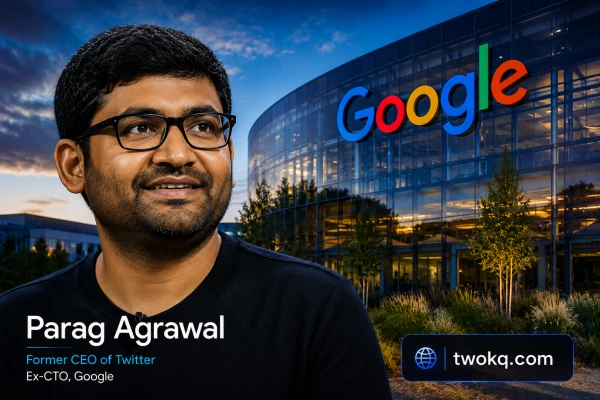
Artificial intelligence is rapidly changing the future of internet search, and one of the latest developments comes from Parag Agrawal, the former chief executive of Twitter, who is quietly building one of the industry's most ambitious AI startups. His company, Parallel Web Systems, has strengthened its partnership with Google, giving the startup access to one of the world's largest enterprise cloud ecosystems. The expanded collaboration is designed to bring Parallel's AI-powered search technology to businesses developing intelligent AI agents using Google Cloud.
Although Parallel has maintained a relatively low public profile since its launch, the latest agreement signals that the company is becoming an increasingly important player in the enterprise artificial intelligence market. Industry analysts believe this partnership could significantly accelerate the adoption of AI-powered search systems designed specifically for businesses rather than general consumers.
Parallel Web Systems was founded after Agrawal departed Twitter following Elon Musk's acquisition of the social media platform. Instead of creating another chatbot, the company has focused on solving a more fundamental problem facing artificial intelligence: helping AI systems search, understand, and retrieve information from the web with greater accuracy and efficiency.
Modern AI assistants often struggle to locate reliable, up-to-date information across the internet, particularly when performing complex reasoning or completing multi-step tasks. Parallel aims to improve this process by developing infrastructure that enables AI agents to interact with online information more intelligently, making them better suited for enterprise applications, research, customer support, software development, and business automation.
The expanded partnership with Google represents the deepest technical integration Parallel has established with a major cloud provider. Through Google Cloud, enterprise customers building AI applications with Google's Gemini models will gain access to Parallel's advanced search technology.
This integration could make it easier for businesses to build AI agents capable of locating relevant information, analyzing multiple data sources, and completing sophisticated workflows without requiring developers to build search infrastructure from scratch.
As organizations increasingly deploy AI across customer service, finance, healthcare, logistics, education, and software engineering, efficient access to trustworthy information is becoming one of the most valuable capabilities any AI platform can provide.
The agreement also reflects a broader shift taking place within the artificial intelligence industry. During the early wave of generative AI, much of the competition centered on developing increasingly powerful large language models. Today, attention is expanding toward the infrastructure surrounding those models, including AI search, memory systems, reasoning engines, retrieval technology, cloud deployment, and autonomous AI agents.
Companies that build these supporting technologies may become just as influential as those developing the language models themselves because intelligent software depends on accurate, real-time access to high-quality information. This has created significant opportunities for startups specializing in AI infrastructure rather than consumer-facing applications.
Parallel's reported valuation of approximately $2 billion highlights growing investor confidence in enterprise AI infrastructure. Venture capital firms are increasingly funding startups that solve practical business challenges rather than focusing exclusively on consumer chatbots.
Organizations around the world are searching for technologies capable of improving productivity, reducing operational costs, accelerating software development, and enabling employees to automate repetitive tasks. AI-powered search systems fit directly into this growing market by helping intelligent agents retrieve, verify, and organize information more efficiently than traditional search engines or static knowledge bases.
For Google, the partnership strengthens its position in the increasingly competitive enterprise AI market. Cloud providers are no longer competing solely on computing power and storage capacity. Businesses now expect integrated AI platforms that include advanced models, developer tools, search technologies, databases, security, and workflow automation.
By combining Google's cloud infrastructure with Parallel's AI search capabilities, the two companies aim to provide enterprise customers with a more complete ecosystem for building intelligent applications capable of handling complex business processes. As demand for AI agents continues growing, partnerships like this may become increasingly common across the technology industry.
Developers also stand to benefit from improvements in AI search infrastructure. Instead of spending months building custom retrieval systems or integrating multiple third-party services, software teams may soon be able to access enterprise-grade AI search capabilities directly through cloud platforms.
This could accelerate the development of intelligent assistants capable of conducting research, summarizing documents, monitoring business operations, answering technical questions, and automating knowledge-intensive tasks across numerous industries. Reducing this complexity allows developers to focus more on building innovative applications while relying on proven infrastructure for information retrieval and reasoning.
The growing importance of AI search demonstrates that the next phase of artificial intelligence extends well beyond conversational chatbots. As businesses increasingly deploy autonomous AI agents capable of completing real work, technologies that enable these systems to locate accurate information quickly and reliably will become essential components of modern computing.
Parag Agrawal's latest partnership with Google positions Parallel Web Systems at the center of this transformation, illustrating how the future of artificial intelligence will be shaped not only by larger models but also by smarter infrastructure that allows those models to operate more effectively across the digital world.