
Microsoft unveils AI-designed Majorana 2 quantum chip, targets commercial systems by 2029
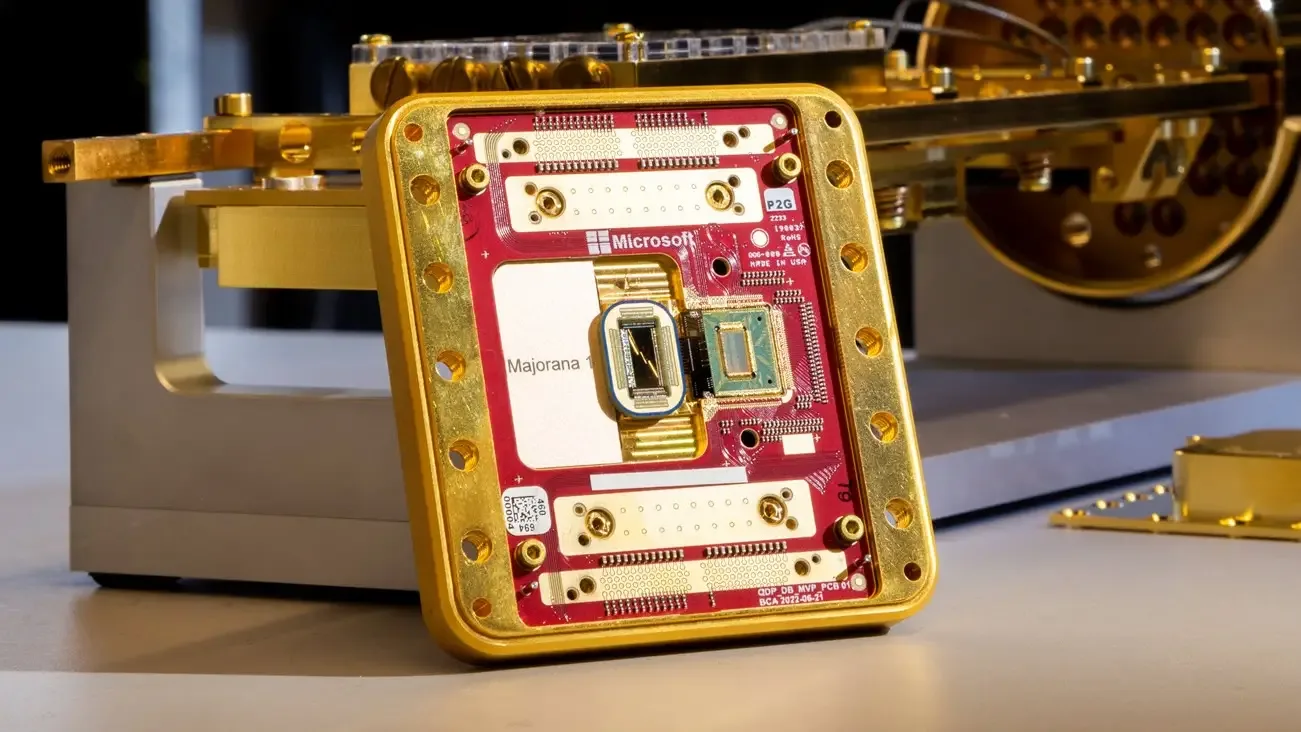
SAN FRANCISCO, June 2 — Microsoft on Tuesday unveiled a next-generation quantum computing chip, dubbed Majorana 2, designed with the assistance of artificial intelligence and built on an unconventional lead-based architecture that the company says could significantly accelerate progress toward practical quantum machines by 2029.
The announcement places Microsoft in direct competition with other major technology firms, including International Business Machines Corporation, Google, and Amazon, all racing to develop quantum systems capable of solving problems in chemistry, medicine, and cryptography that are beyond the reach of classical computers.
Microsoft said the new chip represents a substantial evolution from its previous Majorana prototype, citing up to a 1,000-fold improvement in certain performance metrics.
The company attributes the leap to AI-driven materials discovery techniques that enabled engineers to overcome long-standing manufacturing challenges associated with using lead in chip fabrication.
According to Microsoft executives, the breakthrough involved solving a key stability problem: preventing lead-based materials from degrading during production, a hurdle that has historically limited their use in semiconductor environments.
Jason Zander, an executive vice president overseeing Microsoft’s quantum efforts, said the company’s internal AI tools played a critical role in identifying viable material configurations.
He said the research gives Microsoft confidence that commercially useful quantum systems could be available within the same timeframe as rival IBM’s publicly stated roadmap.
“We figured it out,” Zander said, referring to the manufacturing breakthrough enabled by AI-assisted materials science.
The Majorana 2 chip builds on Microsoft’s broader quantum strategy centered on so-called Majorana quasiparticles, exotic quantum states that the company believes can be harnessed to create more stable and scalable qubits.
However, these quasiparticles remain experimentally controversial, and their existence has not been universally accepted in the physics community.
The announcement has already drawn scrutiny from some researchers, who argue that Microsoft has not released sufficient experimental data for independent verification of its claims.
Critics say the lack of reproducibility remains a key concern in evaluating the company’s progress.
“Microsoft can use as much lead as they like—it is not going to shield them from the basic scientific principle that your results need to be reproducible,” said Henry Legg, a quantum physicist at the University of St. Andrews.
The journal Science has previously noted ongoing investigations into Microsoft’s earlier quantum research claims, highlighting broader skepticism within parts of the academic community.
Microsoft maintains that while some data remains confidential due to intellectual property protections, key findings have been shared with government research bodies, including the U.S.
Defense Advanced Research Projects Agency (DARPA), which is assessing multiple competing quantum approaches.
“We’ve done enough of the physics to really have great data,” Zander said, defending the company’s research direction. “I would not spend the money on the engineering if I felt like we were still off on the physics.”
Quantum computing has become a high-stakes frontier in the global technology race, with governments and corporations investing heavily in systems that could eventually transform cybersecurity, pharmaceutical discovery, and advanced materials design.
While timelines remain uncertain, Microsoft’s new 2029 target signals a more defined roadmap, intensifying pressure on rivals as the field shifts from theoretical breakthroughs toward engineering scalability.