
Google’s New AI Subscription Plans Explained: Is AI Pro or AI Ultra Worth It?
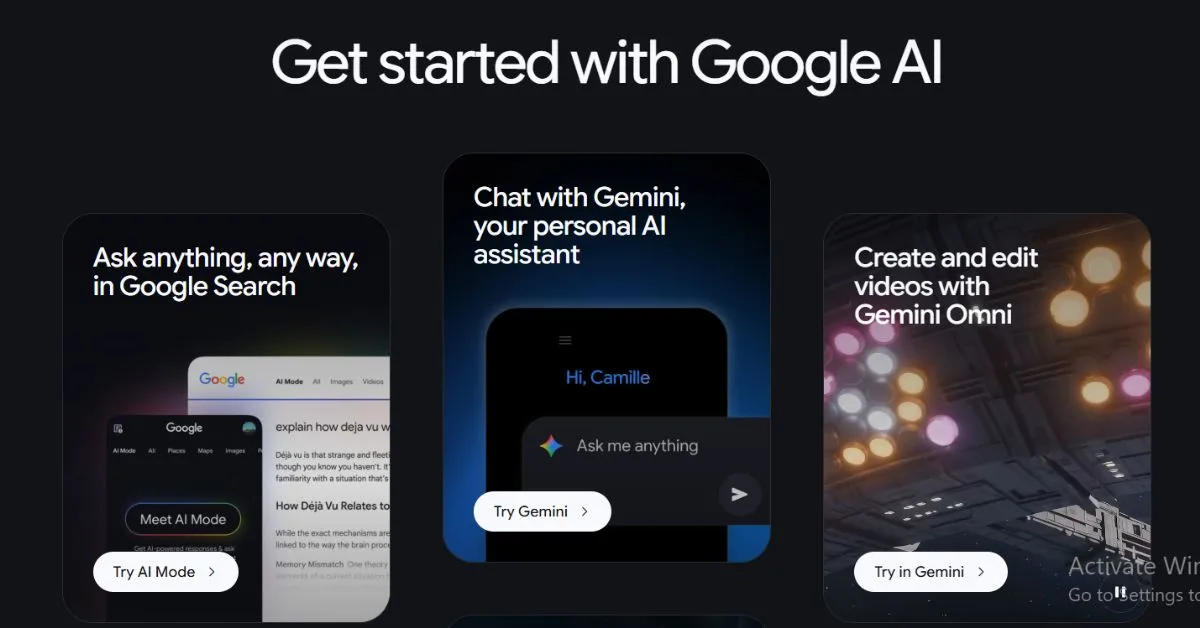
Google’s New AI Subscription Plans Create a Direct Battle With OpenAI and Anthropic
Google is no longer treating artificial intelligence as a feature. It is now selling AI as a full ecosystem.
At Google I/O 2026, the company unveiled its most aggressive consumer AI strategy yet, replacing its relatively simple Gemini subscription offering with a multi-tiered lineup designed to serve everyone from casual users to enterprise developers.
The move reflects a broader shift taking place across the AI industry. As competition intensifies between Google, OpenAI, Anthropic and Microsoft, companies are increasingly turning to subscriptions as the primary way to monetize advanced AI tools.
Instead of offering a single premium plan, Google now divides its AI services into multiple tiers, each targeting a different audience and use case.
The result is a subscription structure that not only challenges ChatGPT and Claude directly but also positions Google to become a central hub for productivity, cloud storage, content creation and autonomous AI agents.
Google Is Expanding Beyond Chatbots
The biggest change in Google's strategy is that Gemini is no longer being marketed as just a chatbot.
Across its new subscription plans, Google is bundling AI with products that millions of people already use every day, including Gmail, Google Drive, Docs, Photos, YouTube and cloud storage.
This creates an advantage that competitors struggle to match.
While OpenAI primarily sells access to ChatGPT and Anthropic focuses on Claude, Google can integrate AI directly into an ecosystem that already serves billions of users.
The company appears to be betting that AI adoption will accelerate when users do not need to change their habits or learn entirely new software.
Instead, Gemini becomes embedded inside the tools they already rely on.
The Free Tier Remains an Entry Point
Google's free AI offering has become significantly more capable than it was a year ago.
Users receive access to Gemini with a 32,000-token context window, allowing them to handle longer conversations and larger documents than many free AI services offer.
However, limitations remain.
Free users do not receive NotebookLM Plus, advanced research tools, premium video-generation capabilities or the larger context windows available in paid subscriptions.
For occasional tasks such as asking questions, generating summaries or getting writing assistance, the free tier remains sufficient.
But professionals and frequent users are likely to encounter limitations quickly.
AI Plus Targets the Mainstream Consumer
Priced at $7.99 per month, Google AI Plus is clearly designed to attract everyday consumers rather than power users.
The plan includes access to Gemini, 200GB of cloud storage, video-generation capabilities and family sharing for up to five additional people.
The pricing is particularly aggressive.
For less than the cost of many streaming subscriptions, Google is offering AI tools alongside cloud storage benefits that many households already pay for separately.
This tier is likely aimed at students, families and users who want more AI functionality without committing to premium plans costing $20 or more each month.
Google AI Pro Becomes the New Default Choice
Among all the subscription options, AI Pro appears to be Google's most strategically important offering.
At $19.99 per month, the plan includes 5TB of storage, expanded NotebookLM capabilities, Deep Research features, Workspace integrations and access to Google's most capable AI models.
For users already paying for Google One storage plans, the economics become particularly attractive.
The jump from standalone cloud storage to a fully featured AI subscription is relatively small, making AI Pro an easy upgrade path for existing Google customers.
Google is also adding YouTube Premium Lite benefits, increasing the perceived value of the subscription without raising prices.
This positions AI Pro directly against ChatGPT Plus and Anthropic's standard Claude offerings.
For many professionals, researchers, writers and creators, this tier will likely become the sweet spot between affordability and capability.
The $100 AI Ultra Plan Signals a New Market
Perhaps the most important announcement was the introduction of Google AI Ultra at $99.99 per month.
Just a few years ago, the idea that consumers would pay $100 every month for AI software would have seemed unrealistic.
Today, it is becoming a competitive category.
Google's Ultra plan joins similar premium offerings from OpenAI and Anthropic, reflecting growing demand among developers, engineers, researchers and businesses that require significantly higher usage limits.
Subscribers receive:
- 20TB of cloud storage
- Higher Gemini usage limits
- Access to Gemini Spark
- Google Antigravity developer tools
- Full YouTube Premium benefits
- Monthly cloud credits
The plan effectively turns AI into a professional productivity platform rather than a consumer application.
Gemini Spark May Be Google's Most Important AI Product
Beyond pricing, the most significant feature included in higher-tier plans is Gemini Spark.
Unlike traditional AI assistants that simply answer questions, Spark is designed to act on behalf of users.
The system can monitor tasks, automate workflows, interact with Google services and continue operating even when users are offline.
This places Google squarely in the emerging race toward autonomous AI agents.
Companies throughout the industry increasingly view agents—not chatbots—as the next major phase of AI development.
If Spark proves reliable, it could become one of the strongest reasons for customers to remain inside Google's ecosystem.
Why Google Is Charging More for AI
The introduction of premium tiers reflects an economic reality facing every major AI company.
Advanced AI systems remain extremely expensive to operate.
Training models requires billions of dollars in infrastructure investments, while serving millions of daily users demands enormous computing resources.
As a result, companies are moving away from the idea that AI can remain free indefinitely.
Google's new pricing structure demonstrates how the industry is evolving.
Rather than selling AI itself, companies are increasingly selling access levels, automation capabilities and productivity enhancements.
The more work an AI system performs, the higher the subscription cost.
The Real Competition Is No Longer Search
For years, Google competed primarily in search.
Today, the battle is expanding into productivity, creativity and automation.
OpenAI wants ChatGPT to become a universal assistant.
Anthropic is positioning Claude as a trusted workplace AI.
Microsoft continues embedding AI throughout Windows and Microsoft 365.
Google's answer is a subscription ecosystem that connects AI to nearly every major service it operates.
The company is no longer asking whether users want AI.
It is asking how much AI they are willing to pay for.
As AI becomes increasingly integrated into daily life, that question may determine which technology giants dominate the next decade.