
Google Reinvents Search With AI Agents, Smart Search Box and Custom Mini Apps
Google is fundamentally redefining what it means to search the internet.
At Google I/O 2026, the company unveiled what executives described as the biggest evolution of Search since its launch more than two decades ago.
The changes go far beyond improved results pages or smarter answers. Instead, Google is turning Search into an intelligent AI platform capable of reasoning, monitoring information, building applications, and completing tasks on behalf of users.
The announcement marks a major shift in the search industry, moving away from traditional keyword-based browsing toward a future where users interact with persistent AI agents that continuously work in the background.
Search Is Becoming an AI Operating System
For years, Google Search has been built around a simple process: users enter a query and receive a list of links.
That model is now evolving.
Google says AI Mode has surpassed one billion monthly users just one year after launch, with search activity continuing to grow rather than decline.
The company believes users increasingly want answers, recommendations, and actions instead of simply navigating through webpages.
To support that vision, Google is making Gemini 3.5 Flash the default model powering AI Mode globally.
The model brings faster reasoning, improved coding capabilities, and enhanced agentic functionality directly into Search.
According to Google, the goal is no longer just helping people find information. The goal is helping people accomplish tasks.
Inside Google's New AI-Powered Search Experience

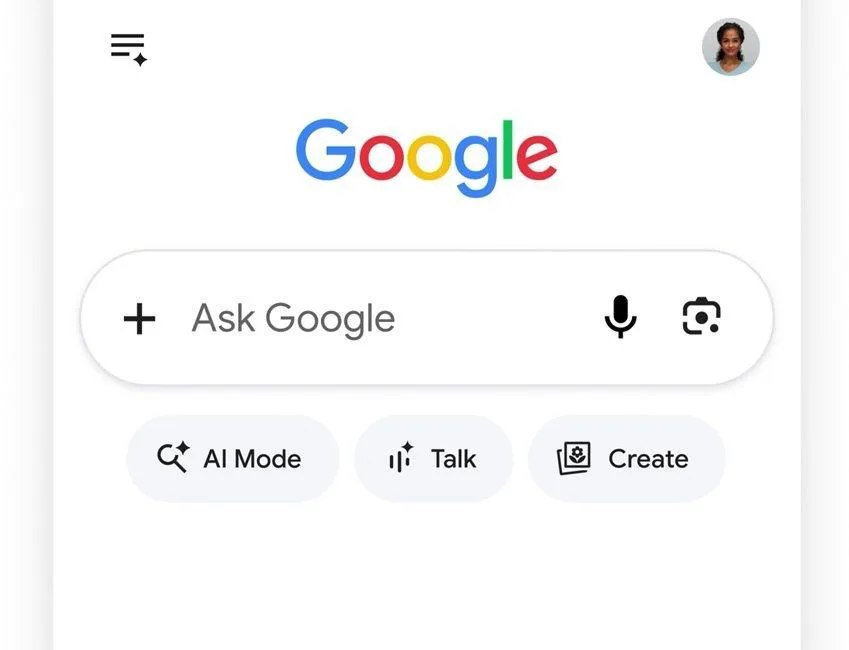
The Biggest Search Box Upgrade in 25 Years
One of the most significant announcements was the complete redesign of Google's search box.
The traditional search field is evolving into an intelligent AI interface capable of understanding much more detailed requests.
Instead of typing a few keywords, users can now:
- Upload images
- Use videos
- Submit documents
- Reference browser tabs
- Combine multiple formats in a single query
- Engage in follow-up conversations
The new interface dynamically expands as users type, encouraging more natural questions rather than short search terms.
Google believes this will make Search feel more like interacting with a knowledgeable assistant than using a traditional search engine.
Search Agents: Google Wants Search to Work While You Sleep
Perhaps the most ambitious feature announced is the introduction of Search Agents.
These AI-powered agents operate continuously in the background, monitoring the web and delivering updates based on user-defined goals.
Rather than repeatedly searching for the same information, users can instruct an agent to track developments and notify them when relevant changes occur.
Examples include:
- Monitoring apartment listings
- Tracking product launches
- Watching stock movements
- Following sports updates
- Tracking industry news
- Monitoring job opportunities
Instead of manually checking websites every day, the agent performs the work automatically.
This transforms Search from a reactive tool into a proactive assistant.
Google Search Will Now Make Phone Calls for Users
Google is also expanding its agentic capabilities beyond information gathering.
For selected categories such as:
- Home repair
- Beauty services
- Pet care
- Local businesses
- Event bookings
Users can ask Google to contact businesses on their behalf.
The AI can gather pricing information, check availability, and help complete bookings without requiring users to make the calls themselves.
This feature demonstrates Google's broader strategy of turning Search into an action-oriented platform rather than a discovery tool alone.
Search Can Now Build Software on Demand
Another major breakthrough is Google's integration of its Antigravity framework directly into Search.
The technology allows Search to generate custom interfaces, dashboards, calculators, visualizations, and mini applications in real time.
For example, users can request:
- Fitness trackers
- Budget planners
- Wedding planning dashboards
- Study schedules
- Project management tools
- Interactive simulations
- Data visualizations
Instead of directing users to third-party websites, Search can generate these tools instantly.
Google describes these experiences as personalized mini apps created specifically for individual tasks.
AI-Powered Coding Arrives in Search
Google is also introducing coding capabilities through Gemini 3.5 Flash.
The system can dynamically create interactive user interfaces and simulations based on natural language requests.
For instance, users studying complex scientific concepts can generate visual demonstrations, interactive charts, and custom educational tools directly within Search.
The move further blurs the line between search engines, productivity software, and application development platforms.
Personal Intelligence Expands Globally
Google also announced a major expansion of Personal Intelligence.
The feature allows Search to understand user context by connecting to services such as:
- Gmail
- Google Photos
- Google Calendar
- Future Google services
With permission, Search can use this information to provide highly personalized recommendations and responses.
For example, Search could:
- Suggest travel plans based on upcoming calendar events
- Surface relevant emails during research
- Recommend photos tied to a specific project
- Generate reminders from past conversations
Google says users remain in full control of which services are connected.
Why This Matters
The search industry is entering its biggest transformation since Google's founding.
For decades, search engines have primarily functioned as gateways to information. Google's latest announcements suggest a future where search becomes a digital assistant capable of reasoning, planning, monitoring, creating, and acting on behalf of users.
The rise of AI-powered competitors such as ChatGPT, Claude, and Perplexity has accelerated this shift, forcing traditional search platforms to evolve rapidly.
Google's answer is not merely adding AI-generated summaries. Instead, the company is attempting to transform Search into an intelligent operating layer that sits between users and the internet itself.
If successful, the future of Search may no longer involve finding information. It may involve having AI find, organize, analyze, monitor, and act on that information for you.
That would represent the most significant change to online search since Google first revolutionized the web more than 25 years ago.