
Alibaba Bans Claude Code Over Security Concerns, Raising New Questions About AI Coding Tools
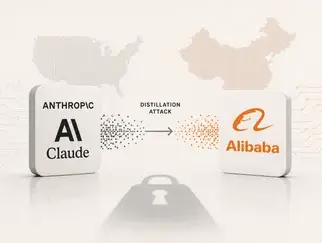
Alibaba has reportedly instructed employees to stop using Anthropic's Claude Code, making it one of the first major technology companies to restrict a leading artificial intelligence coding assistant over internal security concerns.
The decision comes at a time when AI-powered programming tools are becoming an essential part of software development, raising broader questions about trust, data security, and the growing role of AI in enterprise environments.
According to reports, Alibaba's internal decision was linked to concerns that Claude Code could introduce unnecessary security risks when used in sensitive software development environments. While the company has not publicly released detailed technical findings, the move highlights a growing debate among large organizations about how AI coding assistants should be deployed inside businesses that manage valuable intellectual property and confidential source code.
Claude Code has become one of the fastest-growing AI programming assistants in 2026.
Built by Anthropic, it helps developers generate code, debug applications, explain programming concepts, write documentation, and automate repetitive development tasks. Many software engineers consider it one of the strongest competitors to GitHub Copilot, Cursor AI, Google's Gemini Code Assist, and OpenAI Codex because of its impressive reasoning ability and high-quality code generation.
However, the rapid adoption of AI coding assistants has also introduced new security challenges. Many organizations worry about how AI models process proprietary code, whether confidential information could unintentionally leave company networks, and how developers should safely integrate AI into professional software engineering workflows. Even when providers implement strong privacy protections, large enterprises often apply stricter internal security policies than individual users or small businesses.
The timing of Alibaba's reported restriction is particularly significant because it follows increased attention on Anthropic's newest AI models, including Claude Fable 5 and Claude Sonnet 5. Over recent weeks, Anthropic has expanded security measures around its frontier AI systems after working with U.S. regulators to strengthen safeguards against sophisticated misuse. The company has emphasized that protecting enterprise customers remains one of its highest priorities while continuing to improve model capabilities.
Industry analysts believe the situation reflects a broader shift across the technology sector. As AI becomes deeply integrated into software development, businesses are no longer evaluating coding assistants solely on programming performance.
Security, compliance, privacy, regulatory requirements, and enterprise governance are becoming equally important factors when choosing AI platforms. Organizations handling financial systems, healthcare records, government projects, or critical infrastructure are especially cautious about introducing new AI technologies without extensive internal testing.
Anthropic has continued investing heavily in enterprise AI, launching new developer tools, expanding Claude's capabilities, and introducing specialized platforms for research and scientific computing.
Despite isolated restrictions by some organizations, Claude remains one of the world's most widely used AI assistants for programming and professional knowledge work. The company has repeatedly stated that customer conversations and code are protected through enterprise security controls designed to meet business requirements.
Alibaba's reported decision may not significantly slow the broader adoption of AI coding assistants, but it serves as an important reminder that security will remain central to the future of artificial intelligence. As competition intensifies between Anthropic, OpenAI, Google, Microsoft, and other AI companies, organizations will increasingly judge AI platforms not only by how intelligent they are, but also by how securely they can be deployed in real-world business environments.