
OpenAI Launches ChatGPT Wallet for Agent Purchases
OpenAI launches ChatGPT Wallet for purchases made by AI agents, giving eligible US ChatGPT Pro subscribers a way to approve checkout inside Dots. The November 13 release connects participating merchants to existing card networks rather than creating a new currency or stored balance.
Every purchase still requires the customer to review the cart, total and payment card, then confirm with Face ID or a fingerprint on a supported device. OpenAI says the merchant and the agent receive a tokenized credential instead of the customer’s actual card number, security code and expiration date.
The initial ChatGPT Wallet rollout has four defining limits:
- It is available through Dots, not Chat, Work or Codex.
- Access starts with eligible US ChatGPT Pro users aged 18 or older.
- Each transaction needs the user’s review and biometric approval.
- American Express, Mastercard and Visa support the launch.
OpenAI Launches ChatGPT Wallet in Dots
Dots is OpenAI’s environment for agents that can work across websites and apps. Wallet adds a payment step to that process, allowing a Dots agent to find an item, prepare an order and present a checkout for the user to authorize without receiving the underlying card details.
The service initially requires a US billing address and an eligible US-issued card from American Express, Chase, Mastercard or Visa, according to OpenAI’s support documentation. Users add a card through a secure form and are specifically told not to paste payment information into a conversation.
OpenAI’s Wallet terms also draw a clear boundary around the product. Wallet is not a bank account, does not hold a balance and does not itself extend credit or transfer funds. Card issuers, networks and merchants continue to perform those roles.
How Tokenized Agent Payments Work
The key security control is payment tokenization. When the user approves a transaction, the payment network issues a substitute credential for the card number, security code and expiration date. That token can be used for the authorized checkout while keeping the original credentials away from the agent and merchant.
This design follows a familiar pattern used by mobile wallets, but applies it to software that navigates commerce sites on a person’s behalf. Reuters independently confirmed that OpenAI requires a security check for every transaction and does not expose card details to the AI agent.
Existing card benefits remain attached to the purchase. OpenAI says eligible rewards and dispute protections continue to apply, while the merchant remains responsible for pricing, inventory, delivery, returns, refunds and customer service. Buyers therefore retain the usual commercial relationship with the seller.
Merchant Checkout Must Recognize AI Agents
Wallet does not make every online store immediately compatible with agent checkout. OpenAI says merchants must allow agent access, recognize cryptographically signed requests through Web Bot Auth and adjust fraud systems that may otherwise treat an automated browser as suspicious traffic.
The company describes WebMCP and merchant plugins as optional integrations, which means sellers can support the basic payment flow without rebuilding their storefronts around an OpenAI-specific checkout stack. Compatibility will still depend on each merchant’s policies, site behavior and risk controls.
That merchant work is a practical test for agentic commerce. A payment can be technically secure yet fail if a retailer blocks automation, cannot verify the agent’s request or assigns it an excessive fraud score. Adoption therefore depends on coordination across storefronts, payment networks and identity systems.
Current Limits and Future Delegated Spending
At launch, Wallet is deliberately narrow. The user must approve each purchase, supported access is limited to adult US Pro subscribers in Dots, and the product is not available in ChatGPT Chat, Work or Codex. OpenAI has not announced a general international release date.
The company says a later version could let users pre-authorize an agent within parameters such as a spending ceiling, merchant category or time window. That delegated model is a future direction rather than a current capability, and it would raise the importance of revocation, receipts and clear responsibility for disputed actions.
For now, ChatGPT Wallet is a controlled bridge between AI agents and established card infrastructure. Its most consequential feature is not autonomous spending, but the separation of shopping work from payment authority: the agent can assemble the transaction, while the customer still releases the money.
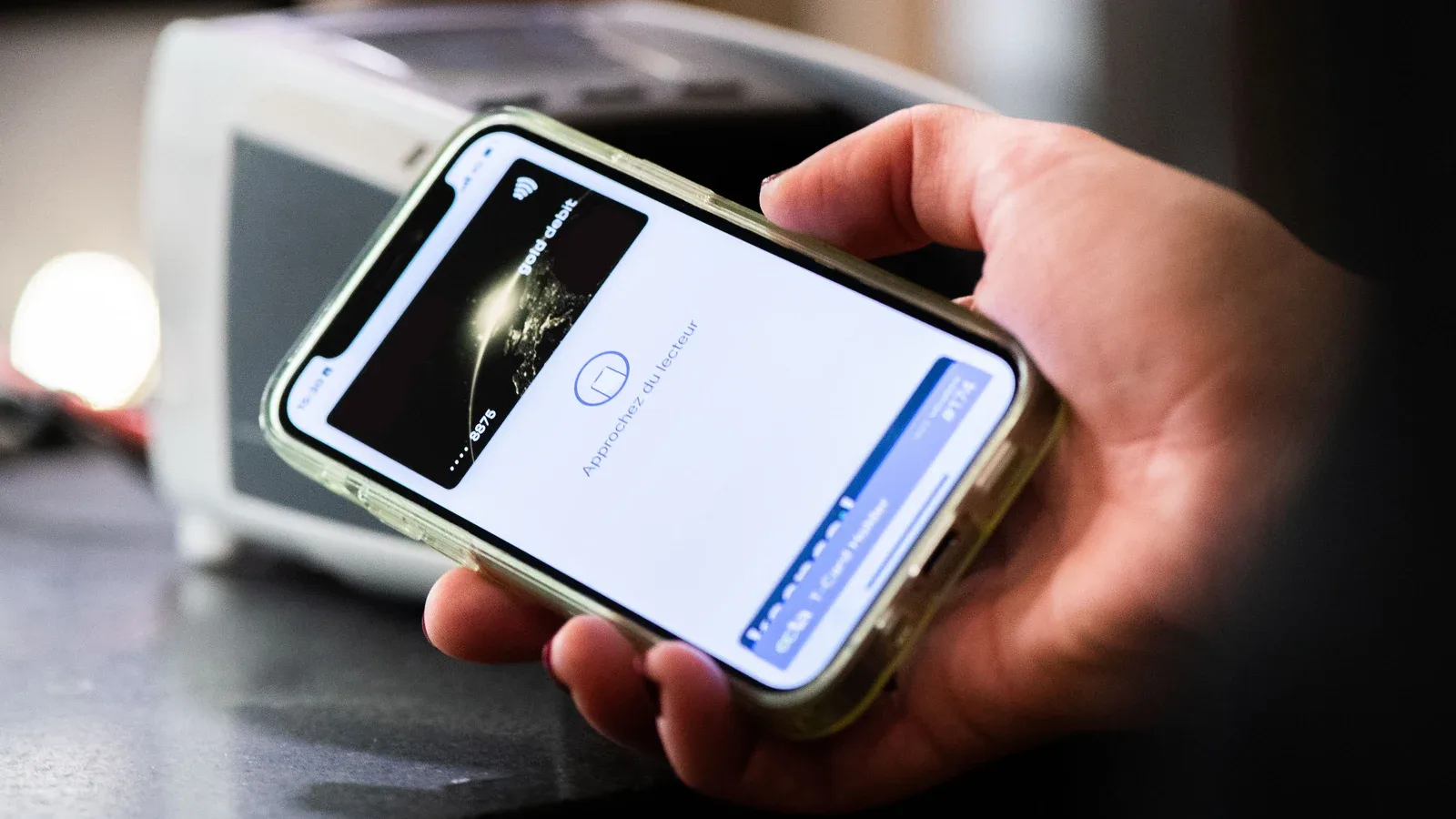
Illustrative feature photograph: a person making a smartphone payment, photographed by Bogdan Hoyaux for the European Commission and sourced through Wikimedia Commons under CC BY 4.0. © European Union, 2026. It does not depict ChatGPT Wallet or an OpenAI transaction. The image was cropped to 16:9 and resized.