
Nvidia Donates OpenShell Agent Security Runtime to CNCF
Nvidia donates OpenShell, its open-source security runtime for autonomous AI agents, to the Cloud Native Computing Foundation. Accepted on November 10 as a CNCF Sandbox project, OpenShell now moves from Nvidia’s repository into vendor-neutral community governance.
The change matters because OpenShell enforces agent rules outside the language model, where prompts cannot provide a deterministic security boundary. The project can isolate workloads, broker credentials and restrict access to files, networks and model endpoints as agents use real tools.
The contribution establishes four immediate changes:
- OpenShell becomes an early-stage CNCF Sandbox project.
- The code moves to the neutral ai-openshell organization.
- Cedar becomes the project’s policy language.
- Nvidia’s engineering work continues under community governance.
Background Reading
Nvidia Donates OpenShell to CNCF at KubeCon
Nvidia announced the transfer during KubeCon + CloudNativeCon North America in Salt Lake City. CNCF accepted OpenShell alongside Agent Substrate, a Google-led project for operating long-running agent workloads on Kubernetes.
OpenShell was created to govern autonomous agents at the infrastructure layer. Its maintainers argue that a model cannot reliably police itself because model outputs are probabilistic. Instead, the runtime places deterministic controls around the agent’s processes, communications, credentials and access to external services.
The contribution moves the project from Nvidia’s GitHub repository to a neutral organization called ai-openshell. CNCF says working groups and special-interest groups will form around integrated components and cross-cutting work such as observability.
Engineers from Red Hat, Docker and Canonical have contributed alongside Nvidia since the project’s early development. OpenShell has adopted the CNCF Code of Conduct, a public request-for-comments process and governance commitments intended to prevent one vendor from controlling release decisions.
How OpenShell Enforces Agent Security
OpenShell divides security responsibilities among several components. A Gateway manages agent lifecycles, while a Supervisor enforces policy and controls secure communications with isolated sandboxes. Credential brokering is designed to let an agent use a service without exposing the underlying secret to the model or its working environment.
The runtime also emits Open Cybersecurity Schema Framework event streams for observing and auditing agent behavior. That can give security teams a structured record of which resources an agent accessed, which policy decisions were applied and how the workload interacted with networks or inference endpoints.
OpenShell is adopting Cedar, an open policy language designed for authorization decisions. Policies can define permitted actions and resources in machine-readable rules rather than relying on natural-language instructions that an agent may misinterpret, ignore or circumvent.
The architecture exposes extension points for inference providers, compute drivers, approval workflows, policy middleware, isolation backends and credential systems. Organizations can connect existing infrastructure instead of adopting one prescribed model provider, secret store or sandbox technology.
CNCF Governance Changes the Project’s Control
Moving OpenShell into CNCF gives platform teams, security vendors and users a formal route to propose changes and participate in governance. Nvidia says its core maintainers and research investment will continue, but the project’s direction will be decided through the new community structure.
That separation could reduce buyer concerns about building agent controls around a runtime governed by one hardware vendor. It also creates a shared place for Kubernetes operators, model providers and security teams to define interfaces that work across multiple deployment stacks.
The donation does not remove Nvidia’s commercial interest. OpenShell remains part of Nvidia’s broader agent-security architecture, which includes BlueField data-processing units and Sentry enforcement. A neutral software project can expand adoption while Nvidia sells hardware and enterprise infrastructure around compatible deployments.
Independent reporting from KubeCon found that OpenShell and Agent Substrate are converging around self-managed, security-conscious agent deployments. The projects address different layers: OpenShell focuses on containment and policy enforcement, while Agent Substrate focuses on operating persistent agent workloads on Kubernetes.
Sandbox Status Signals an Early-Stage Runtime
CNCF’s Sandbox designation is an entry point for experimental or innovative projects. The foundation warns that Sandbox software can undergo significant or breaking changes and may fail to progress. The status does not certify production readiness, security or broad adoption.
OpenShell must still demonstrate stable releases, a healthy multi-organization contributor base and real adoption before it can seek the Incubating level. Graduated CNCF projects meet a higher standard that includes demonstrated production use and mature governance.
Enterprises evaluating OpenShell should therefore test policy bypasses, credential isolation, workload escapes and failure recovery in their own environments. They should also examine which components remain Nvidia-specific, how audit events connect to existing monitoring systems and who can approve changes to enforcement rules.
The donation gives agent security a vendor-neutral forum and exposes the runtime to broader technical scrutiny. Its practical value will depend on whether maintainers turn the current architecture into stable controls that continue working when models, tools and infrastructure change.
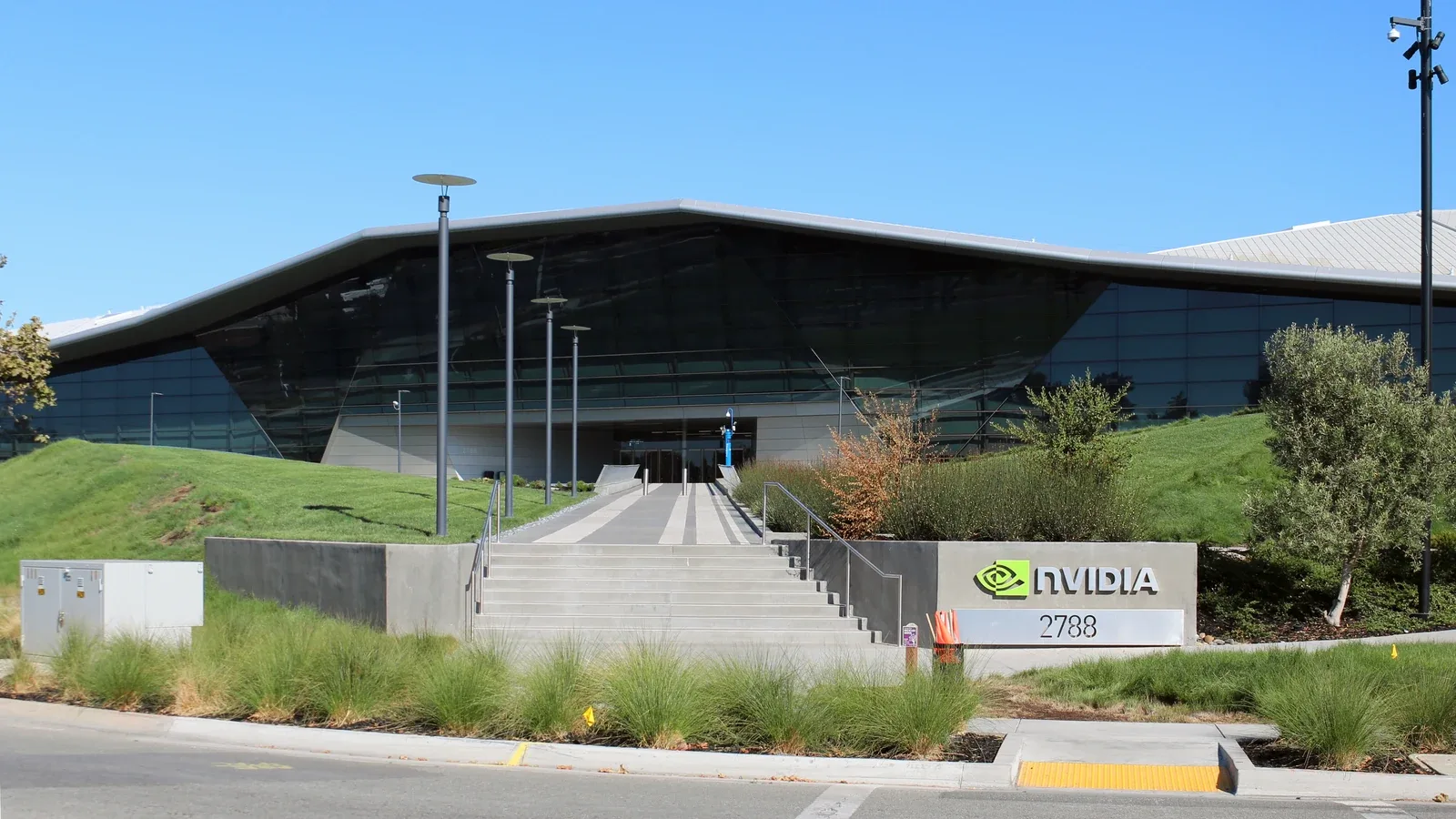
Image credit: Nvidia headquarters in Santa Clara, photographed by Coolcaesar. Cropped from the original and used under the Creative Commons Attribution-ShareAlike 4.0 license via Wikimedia Commons.