
Nvidia Launches RTX Spark Superchip to Power the Next Generation of Windows AI PCs
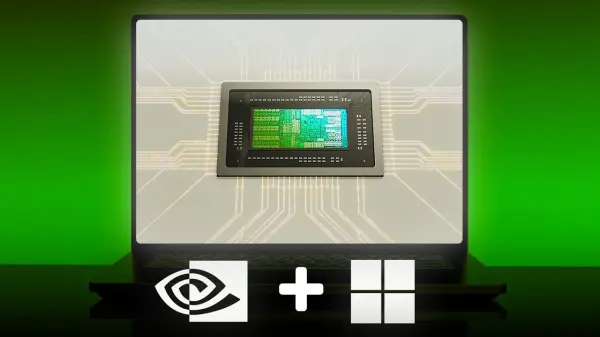
Nvidia has officially introduced the RTX Spark Superchip, a powerful new processor designed to usher in a new generation of Windows AI PCs. Announced during the company's Computex 2026 keynote, RTX Spark combines Nvidia's Grace CPU with its Blackwell RTX GPU in a single integrated platform built specifically for artificial intelligence, gaming, and professional creative workloads.
The company describes RTX Spark as one of its most efficient PC platforms ever, capable of running advanced AI models directly on personal computers without depending heavily on cloud services.
Unlike traditional laptop processors that focus mainly on everyday productivity, RTX Spark has been engineered for the emerging era of AI-powered computing. The platform delivers up to 128GB of unified memory and approximately one petaflop of AI performance, giving developers, content creators, engineers, and researchers enough computing power to run sophisticated AI models locally.
This allows users to perform advanced AI tasks such as image generation, software development, language model inference, and intelligent automation with significantly lower latency while improving privacy by keeping sensitive data on the device.
One of Nvidia's biggest goals is to transform Windows PCs from traditional productivity machines into intelligent systems capable of running autonomous AI agents. Instead of simply opening applications manually, future AI PCs powered by RTX Spark could complete complex workflows, summarize documents, automate repetitive tasks, assist with programming, organize files, and provide context-aware recommendations directly on the device. Nvidia believes this shift toward "agentic computing" represents the next major evolution of personal computing.
Microsoft has worked closely with Nvidia to optimize Windows for the new hardware. Together, the companies are building security technologies and operating system improvements that allow AI agents to operate safely while maintaining user privacy.
This collaboration is expected to strengthen Microsoft's vision for AI-powered Windows devices while providing developers with a consistent platform for building next-generation AI applications.
Several major PC manufacturers have already committed to launching RTX Spark-powered devices. Companies including Dell, HP, Lenovo, ASUS, MSI, Microsoft, Acer, and Gigabyte are expected to introduce laptops and compact desktop systems based on the new platform later this year.
These systems will target professionals, software developers, AI researchers, creators, and enterprise customers seeking powerful local AI capabilities without relying entirely on cloud infrastructure.
The launch also signals Nvidia's growing ambitions beyond graphics cards. While the company already dominates the AI accelerator market inside data centers, RTX Spark expands its reach into personal computing. This places Nvidia in more direct competition with Intel, AMD, Qualcomm, and Apple, all of which are investing heavily in AI-enabled processors designed for next-generation laptops and desktops.
Industry analysts believe AI PCs will become one of the fastest-growing segments of the technology market over the next several years as businesses and consumers demand faster, more intelligent computing experiences.
As artificial intelligence becomes deeply integrated into everyday computing, RTX Spark represents a major milestone in Nvidia's long-term strategy. Rather than treating AI as an online service, the company is bringing advanced intelligence directly to personal computers.
If adoption continues as expected, AI-powered Windows PCs could redefine how people work, create, learn, and interact with technology, making RTX Spark one of Nvidia's most significant product launches in recent years.