
Norway Proposes AI Glasses Ban for Parks, Schools and Gyms
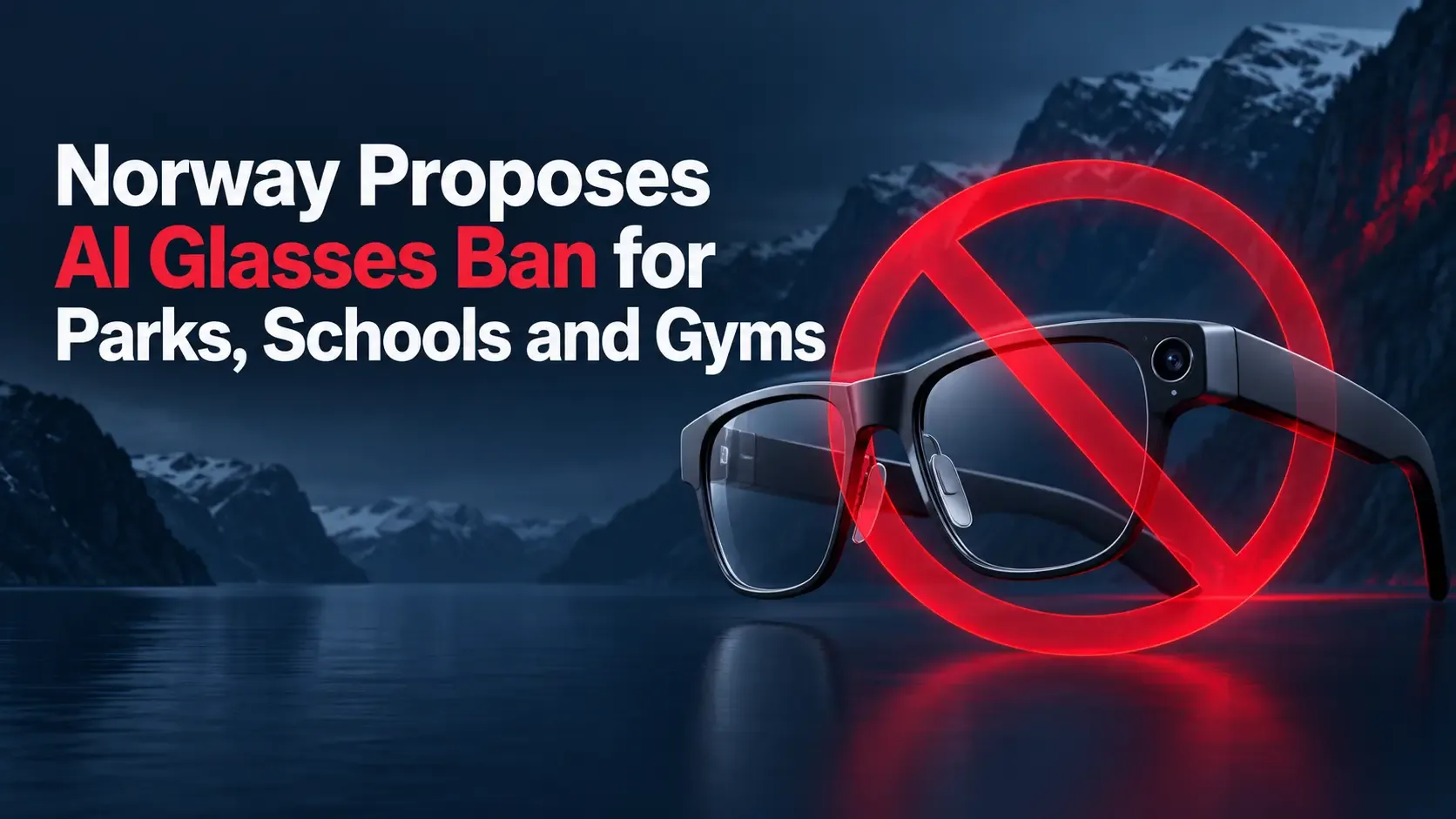
Norway proposes an AI glasses ban for selected public places, creating one of the clearest government tests yet for camera-equipped wearable technology. The temporary restriction could reach parks, schools, gyms, healthcare facilities and public events while lawmakers develop a longer-term national framework.
The plan is not yet law and would not prohibit AI glasses throughout Norway. The minority government said it will bring a bill to the Storting as soon as possible, while an expert group studies permanent rules for devices that can photograph, film or record audio around people who may not know it.
The October 5 government announcement establishes four boundaries:
- The restriction would be temporary and location-specific.
- Private use and some low-risk uses would remain permitted.
- Exceptions could protect vulnerable groups and socially useful applications.
- Parliament must still consider the legislation.
Related Coverage
Norway’s AI Glasses Ban Would Cover Selected Locations
The Digitalisation and Public Governance Ministry listed places where people regularly gather, including parks, beaches, museums, shopping centres, amusement parks and sporting, music or cultural events. The final list would be set through the legislative process rather than the press announcement.
Children would receive particular attention. Schools, kindergartens, playgrounds, youth clubs and other locations used heavily by children could fall within the temporary ban, while the government is also considering universities, colleges and other educational institutions.
Healthcare and changing areas form another category. Doctors’ offices, swimming pools, gyms and facilities with changing rooms or showers are among the places where officials believe privacy expectations are especially strong.
The proposal concerns wearing or using covered glasses in those settings, not a national prohibition on owning the devices. Norway said private use could continue, along with use in places where other people are not at risk of being recorded without consent.
The Bill Must Define Which Wearable Devices Are Covered
Norway has not settled the technical definition. Officials will examine whether the rules should apply to glasses with cameras and audio recording, only to camera glasses with AI functions, or more broadly to body-worn devices that combine cameras, microphones or artificial intelligence.
That choice will determine whether the law targets a product category or a capability. A narrow definition could miss devices that record discreetly without on-device AI. A broad definition could reach accessibility tools, body cameras or other wearables whose risks and benefits differ from consumer smart glasses.
The government therefore plans exceptions for vulnerable people and limited socially beneficial uses. AI glasses can support navigation, live translation, visual assistance and hands-free work, making a blanket technical definition difficult to apply without creating unintended barriers.
Enforcement details also remain open. The announcement did not specify penalties, inspection powers or how venues should distinguish ordinary eyewear from camera-equipped models. Those questions will matter because many devices are deliberately designed to resemble conventional glasses.
Privacy Pressure Is Spreading Beyond Norwegian Lawmakers
Norway’s plan arrives as smart glasses move from experiments toward mainstream consumer hardware. Meta sells AI-enabled Ray-Ban models, Google has demonstrated Android XR glasses, and Samsung has discussed partnerships for its own wearable products.
The core tension is that environmental awareness makes these products useful while also exposing bystanders. Cameras and microphones can supply context for translation, navigation and assistance, but the people captured by those sensors may not have chosen to participate or even noticed the recording.
Some businesses are already acting without waiting for legislation. Associated Press reported that Dutch eyewear retailer Hans Anders suspended sales of Ray-Ban Meta glasses, while the UK Cinema Association introduced policies to restrict camera-enabled eyewear over privacy and piracy concerns.
Manufacturers have tried to make recording visible through indicator lights and usage rules. Those measures rely on people seeing and trusting the signal, however, and they cannot fully address situations where a light is obscured or a bystander does not know what the device can capture.
The Storting Will Decide the Temporary Ban’s Reach
The next formal step is a government bill. Because Norway’s government lacks a parliamentary majority, the wording, covered locations, exceptions and enforcement mechanism could change as it seeks support in the Storting.
At the same time, the expert group will study permanent regulation of body-worn technology. Its remit is broader than one generation of glasses, giving Norway a way to consider future devices that combine recording, inference and real-time assistance in less visible forms.
For technology companies, the proposal turns privacy design into a market-access question. Clear recording signals, local processing, hardware controls and auditable consent features may influence whether products are permitted in sensitive spaces rather than serving only as optional safeguards.
The decisive evidence will come from the bill itself: its device definition, location list, exemptions, penalties and duration. Until parliament acts, Norway has announced a policy direction—not imposed a completed ban.