
Meta Opens Muse Gadgets SDKs for DIY AI Hardware
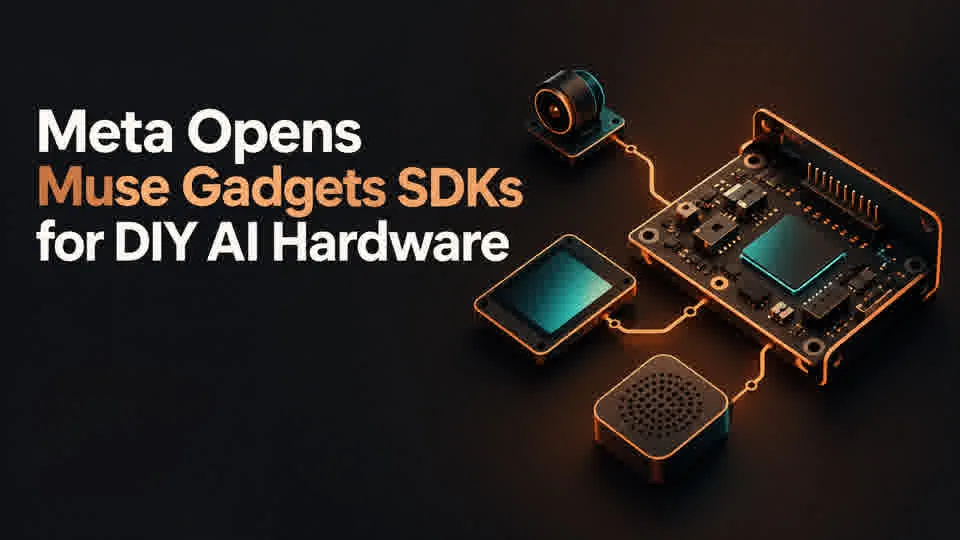
Meta opens Muse Gadgets with device SDKs and firmware that let developers connect its personal AI agent to ESP32 boards, Raspberry Pi computers and other Linux hardware. The October 2 release moves Muse beyond apps and dedicated products into displays, buttons, microphones, speakers, sensors and home-control projects.
The code is available under Apache 2.0, but access to the Muse service remains controlled through personal SDK tokens and separate terms. The release has three practical layers:
- An ESP32 SDK for small embedded devices.
- A Linux SDK for Raspberry Pi and other computers.
- A Home Link reference device for local network control.
Meta Opens Muse Gadgets Across Two Device SDKs
The ESP32 Device SDK is designed for inexpensive microcontroller boards that can carry screens, audio components and sensors. Meta's examples include a color e-ink display for reminders, a compact touchscreen with push-to-talk and a small status display that can show what Muse is doing.
The Linux Device SDK targets Raspberry Pi systems and other Linux computers. Builders can add commands that allow Muse to interact with local applications, perform system-administration chores or connect with Home Assistant installations.
Both paths pair with the Muse mobile app on iOS or Android. A builder enables Developer mode, obtains an SDK token and then connects a device carrying the MuseGadget identifier. Each SDK directory also includes instructions intended for coding agents such as Muse Code.
Meta published the repository through its Facebook Incubator organization with contribution guidelines and a security-reporting route. The main code uses Apache 2.0, while specified third-party components retain their original licenses and Meta's Jollybot avatar is excluded from the Apache grant.
Muse Home Link Bridges the Agent to Local Devices
Home Link is Meta's reference implementation: a compact USB device that joins a home Wi-Fi network and gives Muse a route to compatible products or equipment exposing a local HTTP API. Setup uses Bluetooth Low Energy before the gadget connects to the selected network.
The hardware uses an Espressif ESP32-C5 processor running at 240 MHz, with 8 MB of PSRAM, 8 MB of flash storage and dual-band Wi-Fi 6. It measures 35 by 42 by 10 millimeters and can draw power through either USB-C or USB-A.
Meta says community skills can connect Home Link with Philips Hue, Sonos, Apple TV, Google Nest speakers and Samsung televisions. Builders can also create their own local integrations and submit them to the repository.
The company sets a clear limitation: Home Link itself runs official firmware and cannot be reflashed, even though that firmware is based on the open ESP32 SDK. Meta is offering the device free to active United States Muse subscribers, one per account, with first-come shipments planned for October.
Further Reading
Open Code Does Not Mean Unrestricted Muse Access
The licensing split is central to understanding the release. Developers may inspect, modify and redistribute the SDK code under Apache 2.0, but every gadget needs a Meta-issued token to pair with the Muse service. The source license does not grant a right to those tokens.
Meta's token terms limit use to personal, non-commercial projects connected to the builder's own Muse account. One token may be linked to no more than 50 devices, and builders cannot sell token-enabled gadgets or list them through a marketplace without written permission.
The rules also restrict how shared devices handle information. Builders must disclose what their hardware does with another person's data and cannot retain prompts or responses beyond what the device needs to function. Meta can suspend a token when it believes a project creates security or safety risk.
Meta describes the SDK as experimental rather than a supported developer platform. It may change, stop working or be withdrawn, while community skills can break independently. The Home Link documentation specifically warns against relying on those skills for home security, emergencies or medical uses.
DIY Hardware Expands the Muse Agent Strategy
Muse already operates as a consumer agent across websites and connected services. The gadget SDK adds physical inputs and outputs without requiring Meta to design every form factor, allowing enthusiasts to test whether an agent is more useful as an ambient display, voice terminal or home-network controller.
That model resembles an ecosystem strategy more than a conventional hardware launch. Meta supplies the agent, pairing system and reference device, while external builders experiment with enclosures, sensors, screens and local integrations. The most successful ideas could reveal which dedicated AI interfaces deserve broader production.
The Verge reported that Meta Superintelligence Labs leader Nat Friedman said 5,000 Home Link units were manufactured. The limited batch gives Meta a way to seed development while avoiding a full retail commitment, and the public repository lets the company observe contributions and demand.
The approach also exposes an important boundary around modern open-source AI. The hardware software is inspectable, but useful operation still depends on a proprietary agent, account, mobile application and revocable credential. Builders gain freedom at the device layer without gaining control of the underlying Muse service.
Early evidence will come from repository activity, working community skills and the reliability of real devices after the novelty period. For Meta, Muse Gadgets is a low-cost test of whether personal agents can become a hardware platform rather than remaining another app on a phone.