
Microsoft Launches Seven AI Models at Ignite 2026
Microsoft launches seven AI models at Ignite 2026, expanding its in-house MAI family across coding, cybersecurity, image editing, voice, medical transcription and structured business decisions. The November 17 release makes price-performance, rather than one general-purpose model, the center of Microsoft’s strategy.
The lineup moves Microsoft further beyond its historic dependence on outside model suppliers. Several products are available now, while others remain limited previews or are restricted to Microsoft security systems, so the announcement is broader than the immediately accessible catalog.
Microsoft counts these seven offerings in the Ignite release:
- MAI Cyber 2 Flash for defensive security work
- MAI Code 2 for complex software engineering
- MAI Code 2 Flash for faster routine coding
- MAI Image 2.7 for generation and editing
- MAI Realtime 1 for speech-to-speech agents
- Dragon Copilot Transcribe, powered by MAI Transcribe 2
- Microsoft-Decision-1.1 for constrained software decisions
Microsoft Launches Seven AI Models at Ignite 2026
Microsoft presented the models as a portfolio of specialist systems that can run continuously without the cost of using a frontier general-purpose model for every task. The company’s umbrella announcement compares quality and cost across coding, security, image, audio and decision workloads.
Reuters independently confirmed that the suite is intended to challenge OpenAI and Anthropic with domain-specific models. Microsoft AI chief Mustafa Suleyman said the company is optimizing performance and price together, but the strongest comparisons still come from Microsoft’s own tests and selected third-party leaderboards.
The release also signals a strategic split. Microsoft Foundry continues to distribute models from other developers, including OpenAI and Meta, while Microsoft builds its own systems for tasks closely connected to GitHub Copilot, Microsoft Security, Dynamics 365, Dragon Copilot and workplace software.
MAI Code 2 Targets Enterprise Development Costs
MAI Code 2 is the flagship coding model for production work, deep debugging, multifile changes, repository-wide reasoning and interface development. Code 2 Flash is the smaller option for explanations, targeted edits, routine fixes and rapid iteration.
Microsoft says Code 2 reached 98% of GPT-6.1 Sol’s average performance across four coding benchmarks at 40% of the cost. It reported 96% of Claude Opus 5.5’s performance at 5% of the cost, while Code 2 Flash targets lower-cost, high-volume tasks.
The model card describes both systems as sparse mixture-of-experts transformers with integrated vision encoders and a 1.05-million-token context window. Microsoft lists 80 billion active parameters for Code 2 and 12 billion for Flash, with both models trained from scratch by Microsoft.
Background Reading
Cyber, Image and Voice Models Fill Specialist Roles
MAI Cyber 2 Flash is designed to find and validate vulnerabilities inside Microsoft’s defensive security products. Microsoft reports a 92.3% task-success rate on CyberGym-E2E, compared with 91.5% for GPT-6 Astra, at less than 2% of the cost per task in its evaluation.
That result carries an important qualification. Microsoft found that 92 of the benchmark’s 905 tasks used the same open-source projects and vulnerability reports as some training data. It excluded those tasks for every model and calculated the published result on the remaining 813.
MAI Image 2.7 focuses on image generation and controlled editing. Microsoft says it ranked first on Artificial Analysis image editing on November 16 by four Elo points, while pricing the public-preview model at about $35 per 1,000 images and the companion Flash version at about $10.
MAI Realtime 1 is Microsoft’s first live speech-to-speech model. It starts at one cent per audio minute, with reasoning tokens billed separately, and is designed for interruptions, noisy environments, enterprise tools and configurable speaking styles. Dragon Copilot Transcribe applies MAI Transcribe 2 to clinical conversations.
Availability Splits Releases From Limited Previews
The launch does not give every customer equal access on day one. MAI Code 2 and Code 2 Flash are available in GitHub Copilot, while Code 2 Flash has limited access in Foundry. Microsoft says broader distribution through additional developer platforms will follow.
MAI Cyber 2 Flash is coming exclusively to Microsoft security products and is scheduled to replace the current MAI profile model for eligible Codename MDASH customers in mid-December. MAI Realtime 1 also remains a limited preview, although Microsoft offers a consumer demonstration through MAI Labs.
MAI Image 2.7 and its Flash companion are in public preview through Foundry and selected partners. Microsoft-Decision-1.1 has the broadest production status: it is generally available in Foundry, OpenRouter and Vercel for routing, classification, prioritization, verification and workflow control.
The portfolio’s commercial test will be whether specialist models reduce operating cost without creating a patchwork of access rules, benchmarks and integration work. Independent production measurements will matter more than launch-day comparisons, especially for security findings, coding reliability and decisions that trigger business actions.
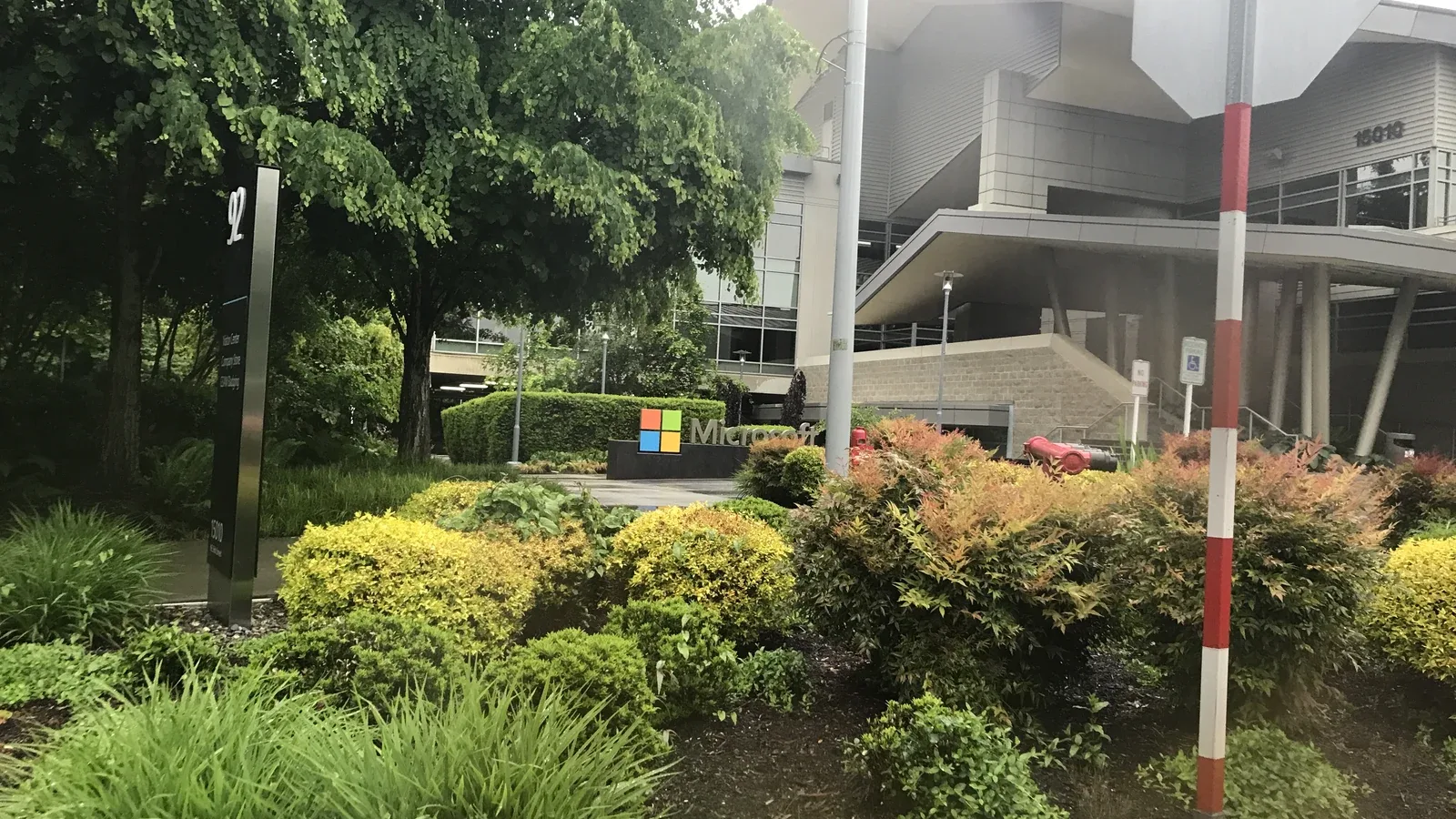
Illustrative feature photograph: Microsoft sign at the Microsoft Visitor Center Building 92, photographed by Lectrician1 and sourced through Wikimedia Commons under CC BY-SA 4.0. The image was cropped to 16:9, resized and is distributed under the same license.