
Why OpenAI Is Building Its Own AI Chips and What It Means for Nvidia
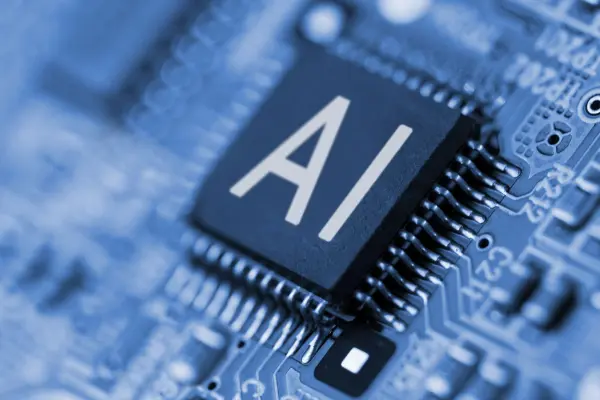
OpenAI has entered a new phase of its artificial intelligence strategy by developing custom AI chips designed specifically for running ChatGPT and future AI services. Rather than depending entirely on third-party processors, the company is beginning to build its own hardware stack in partnership with Broadcom. The move signals a major shift in how leading AI companies are approaching the next generation of computing infrastructure.
For years, Nvidia has dominated the AI hardware market. Its graphics processors power many of the world's largest AI models, including systems used by OpenAI, Microsoft, Google, Meta, and Amazon. However, the explosive growth of artificial intelligence has made these chips extremely expensive and difficult to obtain. Companies are now searching for ways to reduce costs while improving efficiency.
Unlike general-purpose AI processors, OpenAI's custom inference chips are designed for a specific task: generating responses after a model has already been trained. Every ChatGPT conversation, coding request, or AI-powered search requires inference. Because billions of these requests are processed every month, even small improvements in efficiency can translate into enormous cost savings.
Industry experts estimate that inference has become one of the largest operating expenses for AI companies. Training a frontier model is expensive, but serving millions of daily users requires an even larger long-term investment in computing infrastructure. By designing hardware optimized for its own workloads, OpenAI hopes to lower energy consumption, reduce latency, and improve overall performance.
The partnership with Broadcom gives OpenAI access to decades of semiconductor design expertise while allowing the AI company to tailor hardware around its own software. This approach mirrors strategies already used by several technology giants. Google develops its Tensor Processing Units (TPUs), Amazon has its Trainium processors, Microsoft is investing in Maia AI chips, and Meta continues expanding its own custom silicon projects.
Building custom chips also strengthens OpenAI's long-term independence. Relying on a single hardware supplier exposes companies to supply shortages, pricing fluctuations, and manufacturing constraints. Diversifying hardware options provides greater flexibility as AI demand continues growing worldwide.
The timing is particularly significant because global spending on AI infrastructure continues reaching record highs. Technology companies are investing hundreds of billions of dollars in new data centers equipped with advanced processors, networking equipment, cooling systems, and high-bandwidth memory. Custom chips are becoming another important part of this rapidly expanding ecosystem.
This development does not necessarily threaten Nvidia's leadership in the short term. Nvidia remains the dominant supplier for training large AI models, and its software ecosystem continues to attract developers. However, the emergence of custom AI chips from OpenAI, Google, Microsoft, Amazon, and Meta demonstrates that the industry is entering a more competitive phase where companies increasingly control their own hardware.
Investors are watching this trend closely because AI hardware is becoming one of the most valuable sectors in the global technology market. Every improvement in chip performance, energy efficiency, or manufacturing costs has the potential to influence the economics of artificial intelligence at a massive scale.
For businesses using AI services, custom hardware could eventually lead to faster response times, lower operating costs, and more reliable cloud-based AI platforms. As demand for generative AI continues to grow, companies that successfully optimize both software and hardware are expected to gain an important competitive advantage.
The race for artificial intelligence leadership is no longer defined only by smarter language models. It is increasingly becoming a competition over the complete technology stack, from processors and memory to cloud infrastructure and software. OpenAI's investment in custom chips is another sign that the future of AI will be shaped just as much by hardware innovation as by advances in machine learning.