
Why AI Companies Are Racing to Build Humanoid Robots and Why the Technology Industry Is Investing Billions
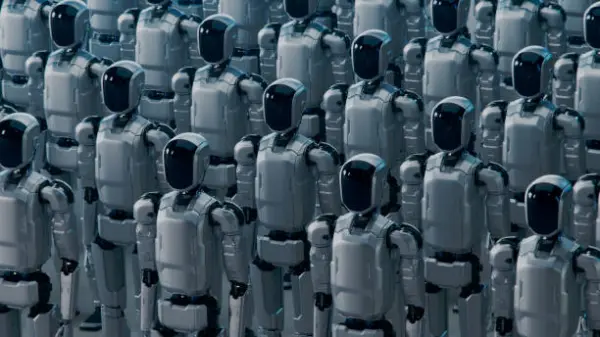
Artificial intelligence is moving beyond chatbots and image generators into something much more physical. The next major competition among technology companies is no longer just about building smarter language models—it is about creating intelligent humanoid robots capable of working safely alongside people in factories, warehouses, hospitals, and even homes.
Over the past year, investment in humanoid robotics has accelerated dramatically. Companies that once focused exclusively on software are now investing billions of dollars in robotics research, advanced sensors, machine vision, and AI-powered movement systems. Industry experts believe physical AI could become one of the largest technology markets of the next decade.
One reason for this rapid growth is the maturity of generative AI. Modern language models can already understand instructions, answer complex questions, and make decisions. The next challenge is giving those same capabilities a physical body. Instead of simply responding on a screen, AI systems are beginning to interact with the real world by picking up objects, navigating workplaces, and completing repetitive tasks.
Nvidia has emerged as one of the biggest players behind this transformation. Rather than manufacturing robots itself, the company develops the processors, simulation software, and safety systems that power many of the world's most advanced robotic platforms. Its recently introduced Halos for Robotics platform focuses on ensuring humanoid robots can operate safely around human workers, borrowing technologies originally developed for autonomous vehicles.
Amazon is also expanding its use of intelligent robots inside warehouses. AI-powered mobile robots are increasingly capable of understanding spoken instructions, planning routes dynamically, and transporting inventory without requiring fixed tracks or predefined paths. These improvements allow warehouses to become more flexible while reducing repetitive physical work for employees.
Tesla continues developing its Optimus humanoid robot, while companies such as Figure AI, Agility Robotics, and several Chinese robotics startups are introducing machines capable of performing tasks ranging from warehouse logistics to manufacturing support. Instead of replacing entire workforces, many of these robots are being designed to handle dangerous, repetitive, or physically demanding jobs that are difficult to fill.
Another important trend is the rise of Physical AI. Unlike traditional industrial robots that repeat pre-programmed movements, physical AI systems combine computer vision, language understanding, reasoning, and real-time decision-making. This allows robots to adapt to changing environments instead of following rigid instructions. The result is a new generation of machines that can learn, collaborate, and solve problems more independently.
Safety remains one of the industry's biggest priorities. A humanoid robot operating around people must recognize obstacles, avoid collisions, understand human behavior, and respond instantly to unexpected situations. Companies are therefore investing heavily in simulation platforms that allow robots to practice millions of scenarios virtually before entering real workplaces.
Businesses are paying close attention because the economic potential is enormous. Manufacturing, logistics, healthcare, agriculture, construction, and retail all face labor shortages in many regions. Intelligent robots could help fill these gaps while improving productivity and reducing workplace injuries.
The technology is still evolving, and widespread household adoption may take years. However, commercial deployments are increasing steadily as hardware becomes more capable and AI software improves. Analysts expect the first large-scale rollout of humanoid robots to occur in industrial environments where repetitive tasks generate the strongest return on investment.
The race to build humanoid robots demonstrates that artificial intelligence is entering a new era. Future competition will not be limited to software running in the cloud. Instead, it will increasingly involve intelligent machines capable of interacting with the physical world. For technology companies, this could become the next trillion-dollar opportunity after generative AI itself.