
What Is HBM and Why Every Modern AI Chip Depends on High Bandwidth Memory
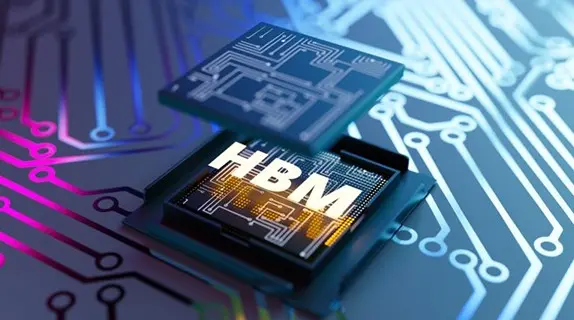
If you have been following recent developments in artificial intelligence, you have probably come across the term HBM, especially in discussions about NVIDIA GPUs, AI data centers, and next-generation AI chips. While large language models such as ChatGPT, Claude, Gemini, and DeepSeek receive most of the public attention, another technology is quietly making these powerful AI systems possible. That technology is High Bandwidth Memory, commonly known as HBM.
HBM is a specialized type of computer memory designed to move enormous amounts of data between memory and a processor at extremely high speeds. Unlike traditional memory technologies that prioritize larger capacity, HBM is engineered to maximize data transfer while consuming less power. This combination of speed and efficiency has made it one of the most important components in modern artificial intelligence hardware.
What Is HBM?
HBM stands for High Bandwidth Memory. It is an advanced memory architecture in which multiple memory chips are stacked vertically and connected using microscopic electrical pathways called Through-Silicon Vias (TSVs). Instead of placing memory chips side by side on a circuit board, HBM stacks them on top of one another, allowing data to travel much shorter distances.
Because of this unique design, HBM can transfer significantly more information every second than traditional memory technologies such as GDDR memory while using less electrical power. This makes it ideal for workloads that require constant movement of massive amounts of data.
Why Is HBM Important for Artificial Intelligence?
Artificial intelligence models process enormous datasets while performing billions—or even trillions—of mathematical calculations. Every time you ask ChatGPT a question, generate an AI image, or request code from Claude, the AI hardware must continuously read and write data at extremely high speed.
Without fast memory, even the world's most powerful GPU would spend much of its time waiting for information instead of performing calculations.
HBM solves this problem by delivering exceptionally high bandwidth, allowing AI processors to receive the data they need almost instantly. This enables faster training, quicker responses, and greater efficiency when running advanced AI models.
What Is the Difference Between a GPU and HBM?
Many people confuse GPUs with HBM, but they perform different jobs.
A GPU (Graphics Processing Unit) is the processor that performs calculations. It is responsible for training AI models, generating images, processing language, and executing complex mathematical operations.
HBM is the ultra-fast memory connected directly to the GPU. Its job is to supply the processor with data as quickly as possible.
An easy way to understand the relationship is to imagine a professional chef working in a kitchen.
- The GPU is the chef preparing meals.
- HBM is the countertop where all the ingredients are placed within easy reach.
A skilled chef works much faster when every ingredient is immediately available. Likewise, a powerful GPU performs better when connected to high-speed HBM.
Which Companies Use HBM?
Today, nearly every major AI hardware company depends on HBM.
NVIDIA uses HBM extensively in its flagship AI processors, including the H100, H200, Blackwell, and newer accelerator platforms.
AMD incorporates HBM into its Instinct AI accelerators designed for enterprise AI workloads.
Google uses HBM in many of its Tensor Processing Units (TPUs), while companies such as Microsoft, Amazon, Meta, OpenAI, Anthropic, Tesla, Oracle, and xAI all rely on AI infrastructure powered by processors equipped with HBM technology.
Without High Bandwidth Memory, today's frontier AI models would be dramatically slower and significantly less efficient.
Why Is Everyone Suddenly Talking About HBM?
HBM has become one of the hottest technologies in the semiconductor industry because demand is growing much faster than supply.
Every company building advanced AI systems requires enormous quantities of HBM-equipped processors. As AI adoption accelerates worldwide, memory manufacturers such as SK hynix, Samsung, and Micron are racing to increase production.
This surge in demand has made HBM one of the most valuable components in modern semiconductor manufacturing.
HBM3 and HBM4
The technology continues evolving rapidly.
HBM3 powers many of today's leading AI chips and offers significant improvements over earlier generations in bandwidth and energy efficiency.
The next generation, HBM4, is expected to deliver even greater performance, enabling future AI systems to process larger models, longer conversations, more detailed images, and increasingly sophisticated reasoning tasks.
Industry experts believe HBM4 will play a central role in the next wave of frontier AI development.
Will HBM Become Even More Important?
Almost certainly.
Artificial intelligence models continue growing larger every year. Companies are training models with trillions of parameters while deploying AI across healthcare, finance, robotics, cybersecurity, scientific research, and autonomous vehicles.
As these systems become more advanced, the demand for faster memory will only increase.
Many analysts believe HBM will become one of the most strategically important technologies in the global AI industry, alongside advanced semiconductor manufacturing and high-performance AI processors.
Final Thoughts
Although most people associate artificial intelligence with software like ChatGPT or Claude, the real foundation of modern AI begins inside powerful data centers filled with specialized hardware.
High Bandwidth Memory is one of the key technologies that allows today's AI systems to operate at incredible speed while handling enormous amounts of information. Without HBM, many of the breakthroughs in generative AI, machine learning, and large language models would simply not be possible.
As the AI race continues to accelerate, HBM will remain one of the most important technologies powering the next generation of intelligent systems. Whether the future belongs to OpenAI, Anthropic, Google, Microsoft, NVIDIA, or another company, one thing is certain: every modern AI chip depends on High Bandwidth Memory to unlock its full potential.