
What Is the Difference Between a GPU and HBM and Why Both Are Essential for Artificial Intelligence
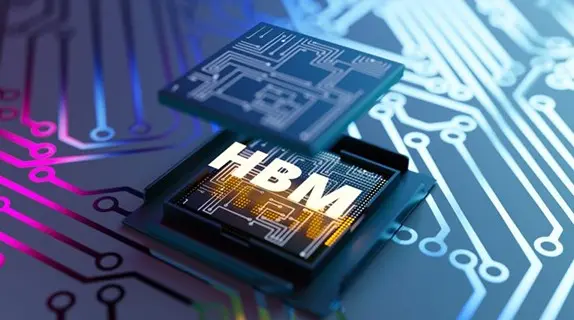
As artificial intelligence becomes more powerful, many people are hearing technical terms like GPU and HBM for the first time. These technologies are frequently mentioned in discussions about ChatGPT, Claude, Gemini, NVIDIA, AMD, and AI data centers.
Because they are often discussed together, many people assume they are the same thing. In reality, they perform very different roles, and modern artificial intelligence would not function efficiently without both.
A GPU, or Graphics Processing Unit, is the main processor responsible for carrying out billions of mathematical calculations every second. Originally designed to render graphics for video games, GPUs have evolved into the backbone of artificial intelligence because they can process many calculations simultaneously.
This parallel processing makes them ideal for training large language models, generating AI images, running scientific simulations, and powering AI assistants such as ChatGPT and Claude.
HBM, which stands for High Bandwidth Memory, is not a processor. Instead, it is a specialized type of ultra-fast memory placed extremely close to the GPU. Its primary job is to supply the GPU with enormous amounts of data as quickly as possible. While the GPU performs the calculations, HBM ensures the processor never has to wait for information to arrive.
An easy way to understand the difference is to imagine a construction site. The GPU is like a team of skilled builders assembling a large building. HBM is the constant supply of bricks, steel, cement, and tools delivered exactly when needed. Even the best builders cannot work efficiently if materials arrive slowly. Likewise, the fastest GPU becomes less effective without high-speed memory feeding it data continuously.
This relationship is especially important in artificial intelligence because AI models process huge datasets containing text, images, audio, video, and code. Every prompt sent to an AI assistant requires the processor to access large amounts of information almost instantly. High Bandwidth Memory provides the data throughput necessary to keep modern AI chips operating at maximum performance.
Companies such as NVIDIA, AMD, Google, Microsoft, Amazon, Meta, OpenAI, Anthropic, and xAI all depend on GPUs equipped with HBM to develop and deploy advanced AI systems. NVIDIA's H100, H200, and Blackwell processors combine powerful GPUs with multiple stacks of High Bandwidth Memory, allowing them to train some of the world's largest AI models while serving millions of users every day.
The importance of HBM has grown alongside the increasing complexity of artificial intelligence. As AI models become larger and more capable, they require dramatically more memory bandwidth than previous generations. Traditional graphics memory cannot deliver enough data quickly enough for today's frontier AI workloads, making HBM one of the most valuable technologies in modern semiconductor manufacturing.
Because of this demand, manufacturers including SK hynix, Samsung, and Micron are investing billions of dollars to expand HBM production. Industry analysts expect global demand for High Bandwidth Memory to continue rising as AI infrastructure expands across cloud computing, autonomous vehicles, robotics, healthcare, finance, cybersecurity, and scientific research.
The GPU and HBM work as a single system. The GPU provides computational power, while HBM provides the speed needed to deliver data efficiently. Removing either component would dramatically reduce AI performance. This is why companies building advanced AI hardware continue investing heavily in both processor technology and memory innovation.
As artificial intelligence evolves toward even larger models and more advanced reasoning capabilities, the partnership between GPUs and High Bandwidth Memory will become even more important.
Future AI breakthroughs will depend not only on smarter algorithms but also on the hardware that makes those algorithms practical. Understanding the difference between a GPU and HBM helps explain why these two technologies sit at the heart of every major AI system powering the world today.