
What Is AI Inference and Why It Has Become the Most Expensive Part of Artificial Intelligence
Artificial intelligence has transformed the way people search for information, write code, generate images, and automate everyday tasks. Behind every ChatGPT response, every AI-generated image, and every intelligent assistant is a process known as AI inference. Although it receives far less attention than AI training, inference has quietly become one of the largest expenses for companies building and operating modern AI systems.
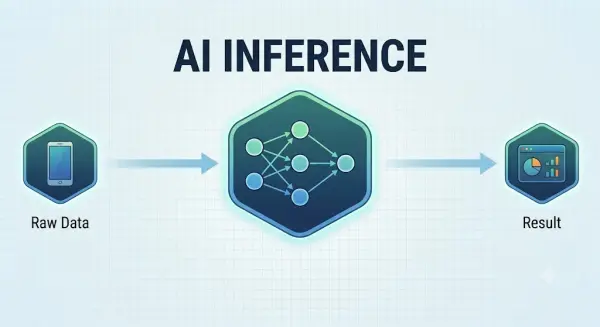
Whenever you ask ChatGPT a question or request Gemini to summarize a document, the AI model has already been trained. The work happening at that moment is inference—the process of using a trained model to generate an answer based on your prompt. Every response requires processors, memory, networking equipment, and electricity working together in real time.
Unlike AI training, which happens occasionally, inference happens continuously. Millions of people interact with AI services every day, generating billions of requests. Each request consumes computing resources, making inference one of the biggest ongoing operational costs for AI companies.
This explains why companies such as OpenAI, Google, Microsoft, Anthropic, Meta, and xAI are investing billions of dollars in new AI infrastructure. Building smarter models is important, but serving those models to millions of users quickly and reliably is an equally difficult challenge.
Modern inference relies heavily on advanced processors, particularly graphics processing units (GPUs) designed for artificial intelligence. These chips perform thousands of calculations simultaneously, allowing AI systems to understand prompts and generate responses within seconds. Nvidia has become the leading supplier of these processors, although competitors including AMD, Google, Amazon, and Microsoft are developing their own alternatives.
Memory also plays a crucial role. High Bandwidth Memory (HBM) enables processors to access enormous amounts of data without slowing down. Without enough memory bandwidth, even the fastest AI processors would struggle to deliver real-time responses.
Energy consumption has become another major factor. Large AI data centers require enormous amounts of electricity to operate continuously. Companies are therefore focusing on making inference more efficient, reducing the cost of each AI request while maintaining fast performance. Improvements in hardware, software optimization, and model design all contribute to lowering these costs.
Businesses are also adopting specialized inference chips. Instead of using the same hardware for both training and deployment, many companies are designing processors optimized specifically for inference. These custom chips consume less power, cost less to operate, and deliver faster responses for common AI tasks.
The rapid growth of AI agents is expected to increase inference demand even further. Unlike traditional chatbots that answer individual questions, AI agents can perform multi-step tasks, interact with software applications, analyze documents, and make decisions autonomously. These capabilities require substantially more inference computing power than simple conversations.
Industry analysts believe inference spending could eventually exceed training costs. While frontier models may only be trained a few times each year, they serve users every second of every day. As AI adoption expands across healthcare, finance, education, manufacturing, and software development, the volume of inference requests will continue rising.
Understanding AI inference helps explain why technology companies are investing so aggressively in data centers, advanced chips, networking equipment, and renewable energy. The future of artificial intelligence depends not only on building smarter models but also on delivering those models efficiently to billions of users around the world.
For consumers, faster and cheaper inference means quicker AI responses, lower subscription costs, and more powerful AI tools. For businesses, it represents one of the most important technological challenges of the next decade. As artificial intelligence becomes part of everyday life, AI inference will remain the engine powering nearly every interaction between humans and intelligent machines.