
NHTSA Tesla Cybercab Audit Targets Nearly 1,000 Vehicles
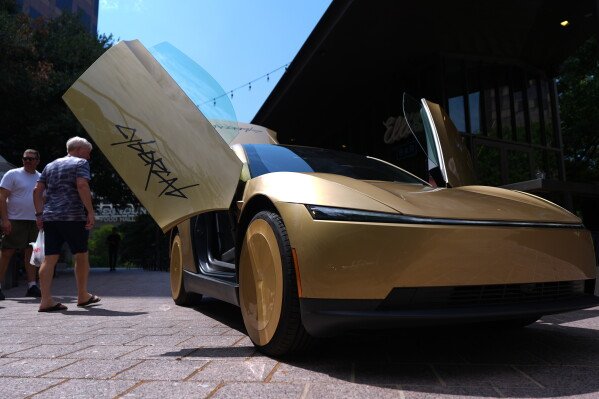
NHTSA Tesla Cybercab audit work now covers about 1,000 vehicles, with the U.S. safety regulator examining how Tesla certified its purpose-built robotaxi against federal standards. The review began immediately after the company started commercial Cybercab deployment in Austin, Texas, on September 3.
The two-seat electric vehicle has no permanently attached steering wheel, brake pedal, accelerator pedal or mirrors. Those omissions are central to the audit because many Federal Motor Vehicle Safety Standards were written around conventional controls that allow a human driver to intervene.
NHTSA Tesla Cybercab Audit Scope
The National Highway Traffic Safety Administration told Reuters it is examining the process and technical data Tesla used to claim compliance. The agency will also review how the company decided that certain federal standards did not apply to the Cybercab.
NHTSA's action is described as an audit, not a conclusion that the vehicles are defective or noncompliant. Tesla had not publicly responded to the regulator's latest statement when Reuters reported the expanded review on September 4.
The agency's review centers on four unusual Cybercab features:
- No permanently attached steering wheel
- No brake or accelerator pedals
- No conventional external mirrors
- No human control path during an emergency
The scale needs context. Texas records showed 420 autonomous Tesla vehicles registered in the state on Friday morning, including 45 Cybercabs, while the federal audit covers about 1,000 vehicles associated with the certification process.
Austin Deployment Raises Stakes
Tesla began offering rides in a small number of Cybercabs in Austin after a closed launch event. The company said it intends to expand gradually to more vehicles and locations, placing pressure on regulators to resolve the certification questions before the fleet grows.
Cybercab differs from the modified Model Y vehicles Tesla previously used for robotaxi service in Texas and Florida. Those cars retained conventional controls even when operating without a safety driver, while the new model was designed from the outset without them.
Associated Press reporting described gold-colored Cybercabs operating on Austin streets with no way for passengers to take control. The service marks Tesla's clearest attempt yet to turn years of self-driving promises into a purpose-built commercial product.
Related Research
Camera-Only Autonomy Faces Scrutiny
The Cybercab uses cameras rather than the combination of cameras, radar and lidar deployed by competitors such as Waymo and Zoox. Tesla argues that a simpler sensor stack can make autonomous transport cheaper and easier to scale, but the approach places more responsibility on software interpretation.
The production vehicle reportedly uses eight cameras to navigate. It has a 48-kilowatt-hour battery, front-wheel drive and a curb weight of 3,113 pounds, according to documents cited by The Verge, making it lighter than Tesla's smallest Model 3.
Those efficiency figures do not answer the compliance questions. Regulators must assess whether Tesla's technical evidence shows the vehicle can meet the safety purpose of rules written for mirrors, controls and human visibility, even when the physical equipment is absent.
The review also lands against a longer record of scrutiny around Tesla's driving software. U.S. authorities have examined crashes in low-visibility conditions, alleged traffic-law violations and the timeliness of crash reporting connected to the company's existing systems.
Tesla Trails Waymo's Robotaxi Scale
Tesla is entering a market where Waymo has already established a larger commercial footprint. AP reported more than 4,000 Waymo vehicles across 14 cities, compared with more than 200 unsupervised Tesla robotaxis operating across several U.S. locations before the Cybercab expansion.
Public confidence remains another barrier. A February Pew Research Center survey cited by AP found seven in ten U.S. adults were not too comfortable or not at all comfortable riding in a driverless car.
Removing the controls makes that trust question more concrete because riders cannot grab a wheel or press a brake if the software behaves unexpectedly. Tesla must convince passengers that remote support and automated safeguards are sufficient while satisfying regulators that the design meets federal requirements.
Certification Decision Shapes Expansion
The audit could end without formal enforcement, lead to requests for more technical evidence or push Tesla toward exemptions and design changes. Its immediate importance lies in timing: commercial service has started before the agency has publicly resolved how the control-free design fits existing standards.
Tesla has not announced a firm retail date for Cybercab, despite previously discussing a purchase price below $30,000. Wider sales would expose the vehicle to a broader certification and consumer-safety test than a limited company-operated fleet.
The next material signals will come from NHTSA's findings, Tesla's response and the number of vehicles placed into paid service. A clean certification path could accelerate deployments, while a demand for exemptions or hardware changes would challenge the low-cost architecture at the center of Tesla's robotaxi strategy.