
Trump Orders Robotics Import Talks After Security Finding
Trump robotics import talks will begin after President Donald Trump accepted a Commerce Department finding that foreign robotics and industrial machinery threaten U.S. national security. The October 28 proclamation directs two agencies to negotiate with trading partners but imposes no immediate tariff, quota or import ban.
The decision places industrial automation, autonomous machines and the equipment used to manufacture critical goods inside the Section 232 trade-security process. It creates a 180-day checkpoint for negotiations while preserving the president's authority to use tariffs, duties, quotas, fees or investment incentives later.
The proclamation makes four immediate changes:
- Commerce and USTR must pursue agreements with trading partners.
- The agencies must provide a progress update within 180 days.
- Commerce must continue monitoring covered imports.
- Alternative trade remedies remain available after negotiations.
Trump Orders Robotics Import Talks Under Section 232
The presidential proclamation follows a Commerce investigation under Section 232 of the Trade Expansion Act of 1962. That law allows the president to adjust imports when their quantity or circumstances threaten to impair national security.
Trump concurred with Commerce's finding and ordered the department to negotiate jointly with the Office of the U.S. Trade Representative. The order does not name targeted countries, set import ceilings or publish a tariff schedule. It instead makes negotiations the administration's initial response.
The 180-day deadline applies to an update on the negotiations. It is not a promise that talks will produce agreements by then, nor is it an automatic date for new duties. The proclamation says future remedies will depend on the status or outcome of the talks and continued monitoring.
Imported Robots Are Tied to Defense and Critical Infrastructure
The administration's case extends beyond factory productivity. Commerce found that robotics and industrial machinery support modern defense systems, military readiness and all 16 U.S. critical-infrastructure sectors. The order cites their use in aircraft, ships, weapons, vehicles, electronics, medical devices and metal fabrication.
Advanced autonomous robots receive specific attention. The proclamation says humanoid, quadruped and ground robots can support intelligence, surveillance, reconnaissance, casualty extraction and mine-clearing missions. Industrial robots also help automate the production of missiles, aircraft and ships, linking ordinary manufacturing capacity to defense readiness.
The order says robotics and industrial machinery are connected to about $7.1 trillion in U.S. manufactured-goods shipments and $86 billion in equipment production in 2024. Those figures describe the economic activity supported by the sector, not the annual value of the imports covered by the decision.
Cybersecurity is another part of the finding. Robots and industrial machines can process and store sensitive data while operating inside manufacturing and defense environments. The administration argues that equipment sourced from certain foreign entities can therefore create security and safety risks beyond the physical supply chain.
The Order Leaves Tariffs, Quotas and Fees on the Table
Reuters independently reported that the decision spared U.S. manufacturers from an immediate tariff increase. Many depend on imported equipment, and the proclamation itself says the United States relies on foreign suppliers for most types of robotics, industrial machinery and components.
That reliance creates a difficult policy balance. Higher import costs could encourage domestic production, but they could also raise the price of the automation U.S. manufacturers use to expand output. Negotiated agreements may let the administration seek supply assurances or investment commitments before choosing broader restrictions.
Section 232 still gives the president several options. The proclamation expressly lists tariffs, duties, quotas and fees as possible later remedies. It also raises the possibility of a program that encourages new U.S. investment in robotics, industrial machinery, parts and components.
The original investigation covered more than humanoid robots. Reuters says its scope included programmable computer-controlled systems, industrial stamping and pressing machines, machine tools for cutting and welding, autoclaves, industrial ovens, and laser- and water-cutting equipment. Any eventual remedy could therefore reach a wide manufacturing supply chain.
The 180-Day Window Creates a New Robotics Policy Checkpoint
For equipment makers, distributors and manufacturers, the immediate task is to follow the negotiations rather than price in a tariff that has not been announced. Suppliers will need to watch whether the administration differentiates among countries, product types, security features or commitments to manufacture inside the United States.
The order also gives Commerce a continuing monitoring role. If import conditions change or the negotiations fail to address the stated threat, the department can recommend additional action. That makes the October 28 proclamation the beginning of a policy process rather than a final schedule of restrictions.
The next concrete milestone is the required agency update within 180 days. A useful assessment will depend on disclosed agreements, covered products and measurable domestic-capacity commitments. Until then, the verified change is a national-security finding and a negotiation mandate, with possible import measures reserved for a later decision.
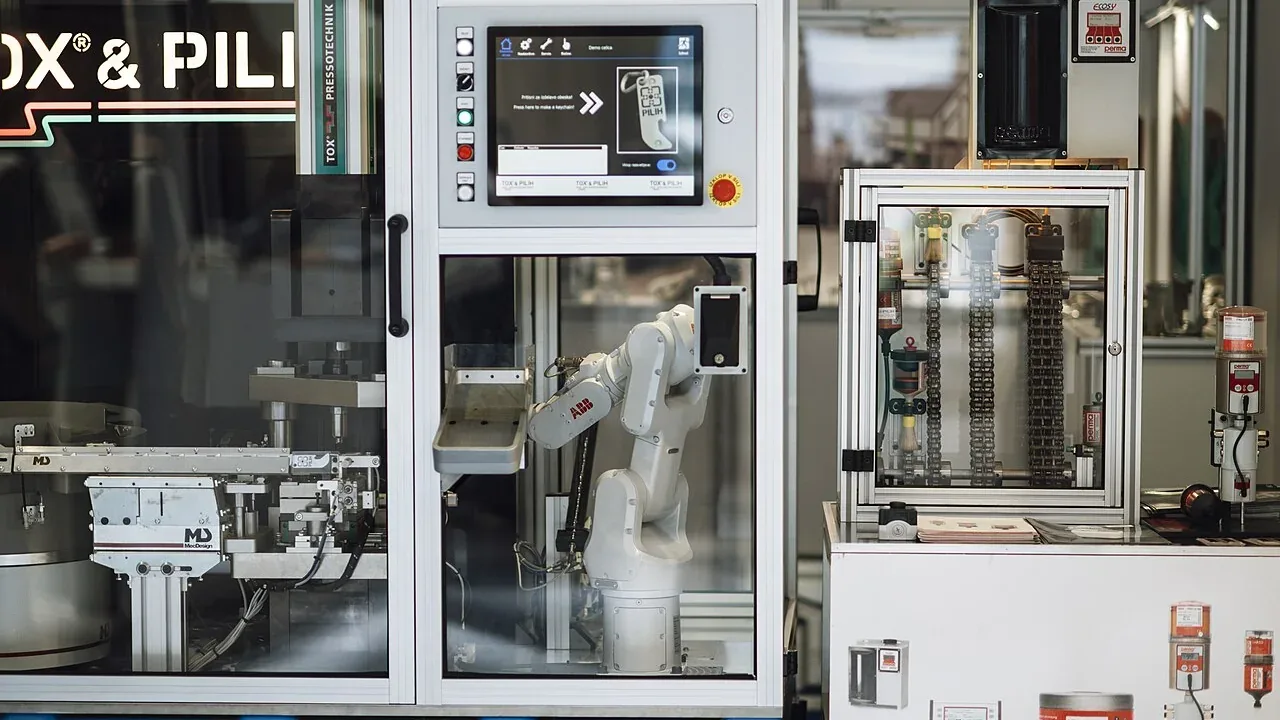
Illustrative photograph: “Robot arm operates machine in factory setting” by Nenad Stojković (Shixart1985), licensed under CC BY 2.0; cropped to 16:9.

Background Reading