
China Proposes AI Export Controls on 23 Technologies
China proposed AI export controls on 23 technologies on October 16, covering large models, agents, computing clusters and information processing. The plan forms part of a wider update affecting 40 technologies across artificial intelligence, biotechnology and solar power, with public comments open until November 15.
The Ministry of Commerce and Ministry of Science and Technology also imposed an immediate registration requirement for covered technology exports. That creates two distinct milestones: businesses face a reporting step now, while the proposed additions to China's prohibited and restricted technology catalogue remain under consultation.
Related Research
AI Export Controls Target Sensitive Models and Capabilities
The ministries' Announcement No. 48 of 2026 places AI within a technology-transfer framework rather than announcing a general prohibition on foreign use of Chinese AI. The wider 40-item proposal contains 14 technologies slated for prohibition and 26 for restriction; those totals include the non-AI sectors.
In its explanatory Q&A, the commerce ministry identifies autonomous malicious-code generation and modification as an example of technology it wants to prohibit from export. AI-assisted vulnerability discovery is among the proposed restricted technologies. Officials cite risks to critical infrastructure, defence systems and other sensitive environments.
The Associated Press reported that the draft also includes restrictions on models with at least two trillion parameters or certain leading capabilities. Proposed prohibitions cover core model technologies trained with sensitive national data and agents designed for highly sensitive uses. The proposal does not identify particular commercial models by name.
Those distinctions matter for interpreting the announcement. Parameter count, technical capability, training data and intended application can point to different parts of the proposed framework. A company's nationality or a model's popularity alone does not establish that a particular transfer falls within a listed category.
Chinese Model APIs Remain Outside Proposed Export Scope
The ministry says providing access through APIs, applications, websites or software-as-a-service offerings falls outside the large-model technology-export category. Overseas local deployment involving restricted technology would fall within scope, while relatively controlled arrangements, such as a company's own overseas cloud, could receive automatic licensing or other simplified treatment.
The proposal would exclude technology already made public through open-source releases or academic publication. The government also describes streamlined procedures for new open-source exports, Chinese-operated overseas computing centres, offshore chip fabrication, joint research using overseas resources and international standards work. Existing public releases and future transfers therefore receive separate treatment.
Reuters reported that the service-access distinction could let developers such as DeepSeek and Alibaba keep expanding internationally while Beijing gains more oversight of sensitive technology transfers. It also reported that officials discussed possible overseas-access restrictions with major Chinese technology companies earlier this year.
The commercial implication is a potential difference between selling access to an AI capability and transferring the technology needed to operate it independently. For overseas customers, those routes offer different levels of operational control, dependence on a provider and flexibility to modify a system.
October 16 Registration Covers Licensing and Ownership Changes
The temporary registration measure applies from publication of the announcement until the revised catalogue formally takes effect. The notice explicitly includes exports that have started but remain incomplete, making the immediate reporting requirement relevant to existing transactions as well as newly planned arrangements.
The notice names three principal registration situations:
- Transferring technology ownership to an overseas recipient.
- Licensing domestic technology for use abroad.
- Changing a domestic technology's owner or actual controller to an overseas entity.
Registration information includes the exporter and recipient, destination, technology and intended use, and expected export value. The notice also allows the ministry to specify other situations requiring registration. It directs exporters to the technology-trade application on the ministry's unified business platform.
Registration is the immediate measure described in the announcement; the proposed catalogue classifications follow a separate consultation process. Treating the entire proposal as an already implemented export ban would obscure that sequencing and overstate what changed on October 16.
November 15 Consultation Precedes the Revised Catalogue
The ministries are seeking comments on the proposed technologies, technical indicators, control policies and facilitation measures. The notice gives a November 15 deadline but does not specify when the final revised catalogue will begin operating. The ultimate scope will depend on that final text and implementation arrangements.
The proposal arrives alongside continuing bilateral AI discussions. In a September 28 account of U.S.-China trade consultations, China's commerce ministry said the countries had established an AI dialogue, held an initial exchange on risks and benefits, and agreed to create an incident-communication channel.
For the international AI market, the central issue is how China will preserve commercial reach while controlling transfers of sensitive capabilities. The API and public-domain provisions leave substantial room for cross-border use, but local deployment, licensing and changes of ownership introduce different questions that the final catalogue will need to resolve.
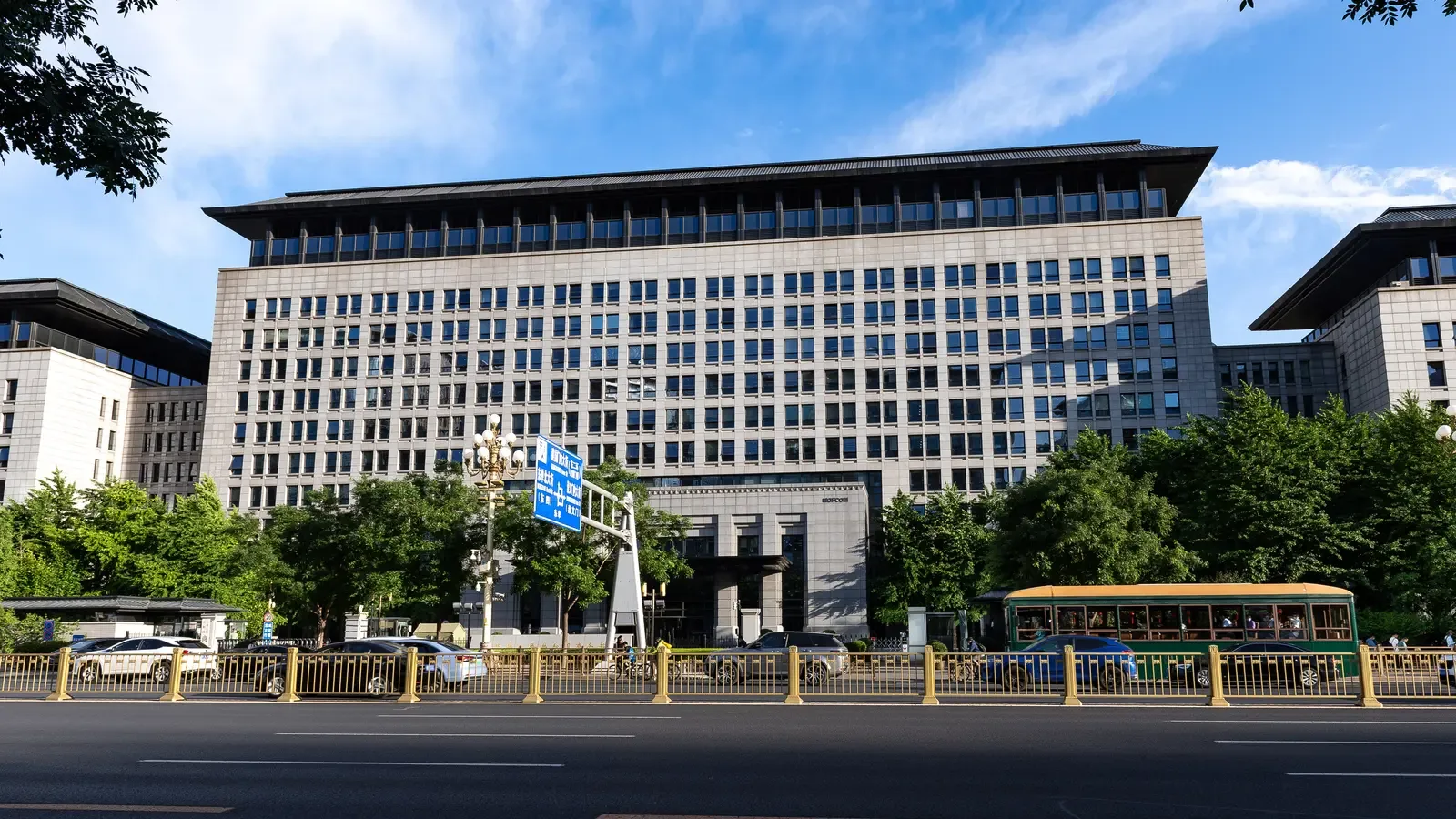
File photograph: China's Ministry of Commerce in Beijing, May 27, 2021, by N509FZ / Wikimedia Commons. Cropped and converted to WebP; this image adaptation is licensed under CC BY-SA 4.0.