
Meta Muse for Small Business Launches With Shopify and QuickBooks
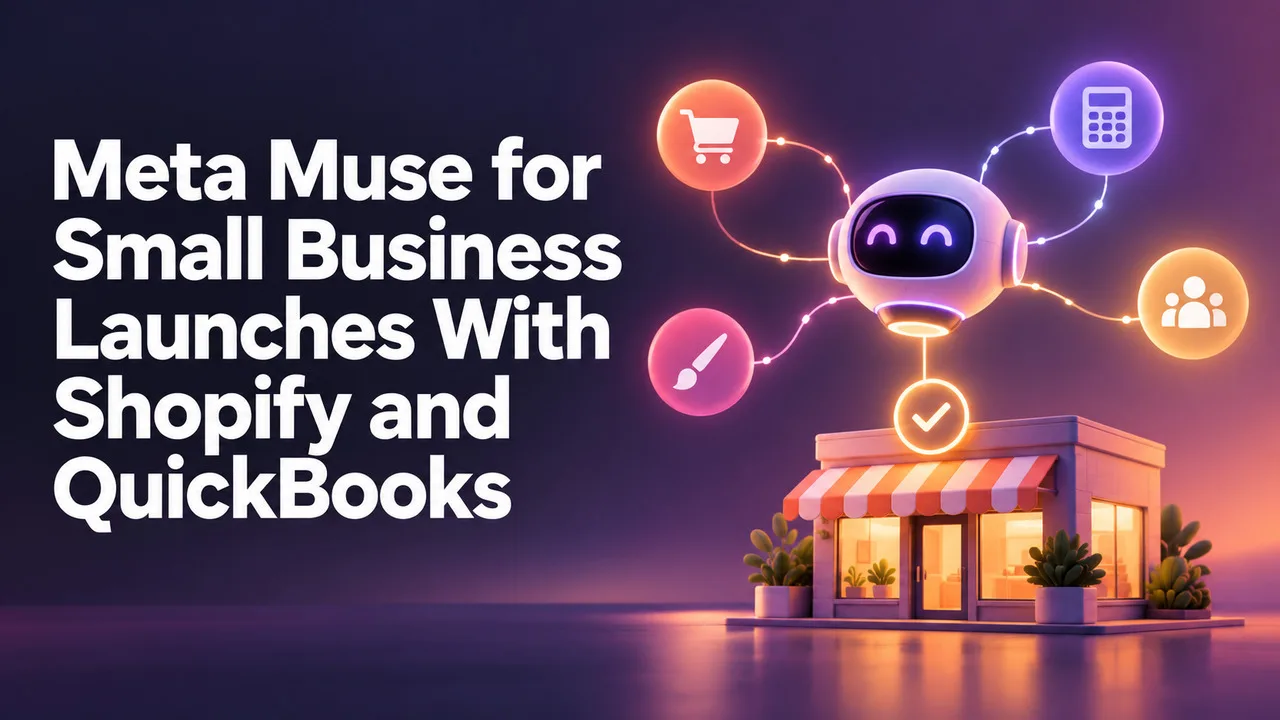
Meta Muse for Small Business launches with Shopify and QuickBooks connections, extending Meta’s consumer AI agent into bookkeeping, commerce, design, advertising and collaboration workflows. The September 29 release is available through the existing Muse app rather than a separate business product.
Meta says owners can ask Muse to analyze performance, prepare campaigns, organize priorities and flag unusual expenses. The company also set an important boundary: the agent will not publish content, send messages or spend money without the user’s approval.
The small-business release combines three practical layers:
- Connections to business data and everyday software
- Agent skills for analysis, planning and drafting
- Approval gates before consequential actions
Meta Muse for Small Business Connects the Operating Stack
The release adds connectors for Asana, Box, Canva, Dropbox, Figma, Granola, HighLevel, Intuit QuickBooks, Klaviyo, Lovable, Notion, Shopify, Slack, Stripe and Zoom. Muse can also connect to Instagram professional-account analytics, Facebook Pages and Meta advertising accounts.
Those connections give the agent access to several layers of a business at once: storefront activity, financial records, customer information, campaign results, project work and brand assets. Meta’s pitch is that Muse can reason across those systems instead of requiring an owner to copy information between separate applications.
Meta’s examples include comparing annual sales, campaigns and social activity to create a growth plan; reviewing email and calendar priorities; drafting a new advertising campaign; and checking monthly financial performance for expenses that look unusual. Muse can also propose work proactively, such as flagging messages that need responses and preparing first drafts.
The company says businesses can add custom connectors for services not included in the initial list. That expands the addressable workflows, but it also makes connector quality, permission design and data freshness central to whether the output is trustworthy.
Approval Controls Separate Preparation From Execution
Meta says nothing publishes, sends or spends without approval. The promise means Muse may prepare a social post, customer message or purchase, but the owner must authorize the final action. That distinction is especially important when one agent can see financial, customer and advertising information together.
Approval gates reduce the chance that an incorrect recommendation immediately becomes an irreversible business decision. They do not guarantee the underlying analysis is accurate, and they do not replace careful access controls for connected accounts.
A business still needs to decide which records Muse can read, which staff members can approve actions and how completed work is audited. The launch announcement does not publish detailed retention policies, connector-specific permission scopes or an independent security assessment for every supported service.
Further Reading
Free Access Gives Meta a Route to Paid Business Usage
Meta says Muse remains free for most uses, with subscriptions available for people who need more. Axios reported two paid tiers at $20 and $100 per month, while Meta has not described a separate small-business application or a distinct enterprise contract for this version.
The low entry price puts Muse in reach of companies that may not buy a conventional enterprise software package. It also gives Meta a way to convert heavy usage into subscription revenue as businesses connect more data and run longer workflows.
Meta has early distribution on its side. Reuters cited Sensor Tower estimates of about 2.8 million Muse downloads during the consumer agent’s first two weeks in the United States and Canada. Axios reported that roughly one-third of early users had already connected some kind of business account.
That adoption does not establish how many companies use the agent regularly or pay for it. The stronger evidence will be repeat business workflows, subscription conversion and measurable time saved without increasing mistakes or exposing sensitive records.
Shopify and QuickBooks Put Muse Near Business Decisions
Shopify, QuickBooks and Stripe move Muse closer to revenue, expenses and payments than a general-purpose chatbot. Canva, Figma and Meta’s own advertising tools connect that operational data to content production and customer acquisition.
This combination could let an owner trace a problem across systems: weak product sales, rising campaign costs, inventory pressure and cash-flow effects. The agent can then prepare a plan using the same context. Whether it performs reliably will depend on clean data, correct account matching and sensible limits on what it may infer.
The launch also intensifies competition with Microsoft, Google, Intuit and specialist business-software vendors. Meta is using its social and advertising relationships as an entry point, then connecting outward to the tools where small companies manage money, projects and customer operations.
The next useful disclosures will concern connector permissions, audit histories, pricing limits and error-handling when two systems disagree. Muse for Small Business is available now, but those operational details will determine whether it becomes a dependable business layer or remains an occasional assistant.