
Google Launches Gemini-Powered Smart Speaker After Six-Year Gap
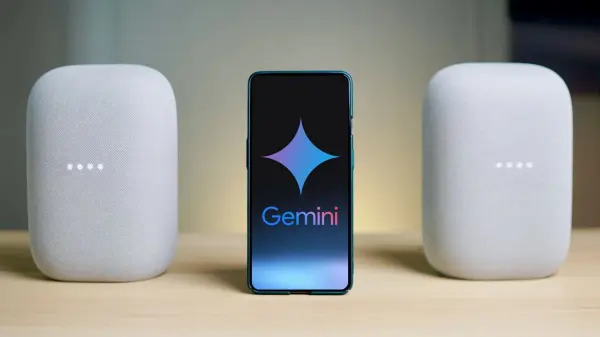
Google has introduced its first standalone smart speaker in nearly six years, placing its Gemini artificial intelligence platform at the center of the company's latest attempt to reshape the smart home market. The launch represents one of Google's most significant consumer hardware announcements of 2026 and reflects the growing importance of AI-powered devices in everyday life.
The new Google Home Speaker is the first dedicated smart speaker released by the company since the launch of Nest Audio in 2020. Unlike previous generations that primarily focused on music playback, timers, weather updates, and basic smart home controls, the new device is designed around Gemini AI, Google's flagship artificial intelligence platform.
Google believes advances in generative AI have created an opportunity to redefine what a smart speaker can do. Earlier smart home assistants often struggled with complex requests and required users to memorize specific commands. Gemini is intended to eliminate many of those limitations by allowing users to communicate naturally and ask more sophisticated questions.
The company says users can issue multi-step requests without needing to break tasks into separate commands. For example, homeowners can ask the speaker to adjust multiple lights, start music playlists, set reminders, and control connected devices through a single conversational request. The system is designed to understand context and maintain more natural interactions than previous voice assistants.
The launch comes during a period of intense competition in AI-powered consumer devices. Technology companies are increasingly moving artificial intelligence beyond smartphones and computers into glasses, wearables, speakers, vehicles, and home electronics. Industry analysts view smart home hardware as one of the next major battlegrounds for AI adoption.
Google's renewed focus on smart speakers follows a broader transformation of its product ecosystem around Gemini. The company has integrated the AI system into Search, Android, Workspace applications, cloud services, and developer tools. Bringing Gemini into home devices extends that strategy and creates another point of interaction between users and Google's AI services.
The device also arrives as consumer expectations for voice assistants continue to evolve. The popularity of generative AI systems has raised expectations that digital assistants should be capable of reasoning, maintaining context, and providing detailed responses rather than simply executing commands. Companies including Google, Amazon, Apple, Meta, and OpenAI are all investing heavily in technologies designed to meet those expectations.
Google's latest speaker is positioned as part of a larger vision in which AI assistants become more deeply integrated into daily routines. Beyond controlling smart home devices, the company envisions AI helping users manage schedules, answer questions, retrieve information, and coordinate tasks across multiple devices. The goal is to create a more proactive assistant capable of supporting users throughout the day.
The launch also highlights the growing convergence between artificial intelligence and consumer hardware. For much of the AI boom, competition focused primarily on software models and chatbots.
Increasingly, however, technology companies are building dedicated devices designed to showcase AI capabilities directly to consumers. Smart speakers, AI glasses, wearable assistants, and intelligent home devices are becoming important channels for delivering AI experiences.
Industry observers say the success of Google's latest speaker could provide an indication of how quickly consumers are willing to adopt AI-powered hardware beyond smartphones.
As companies race to establish leadership in the next generation of personal technology, devices that combine artificial intelligence with everyday convenience are expected to play an increasingly important role in shaping the future of consumer electronics.
