
The End of Passwords Is Closer Than Most People Think
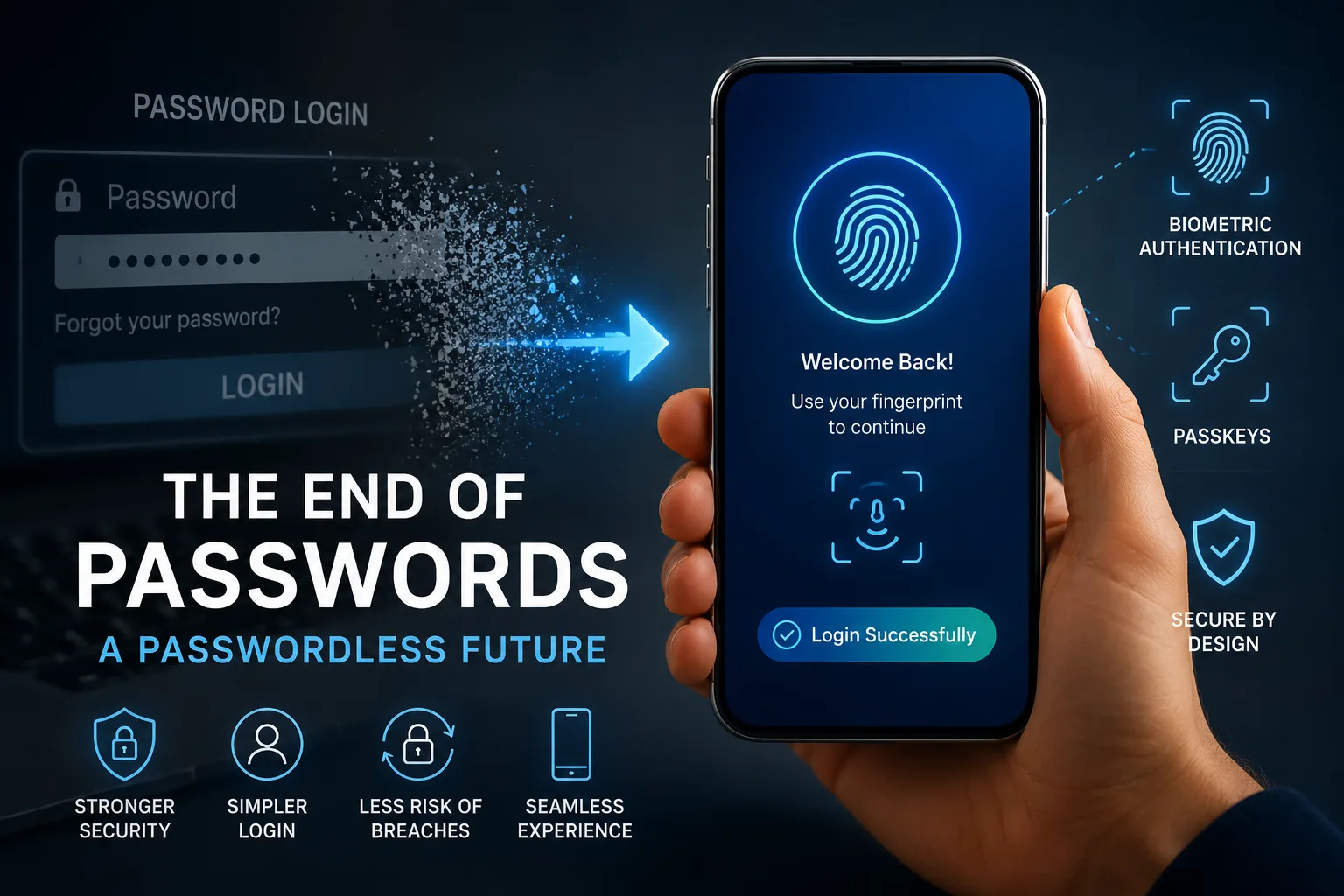
For decades, passwords have served as the first line of defense for digital accounts. Whether logging into an email inbox, accessing online banking services, or signing into workplace applications, users have relied on combinations of letters, numbers, and symbols to prove their identity.
Despite their widespread use, passwords have long been one of the weakest links in cybersecurity.
People frequently reuse the same passwords across multiple accounts, choose easily guessed phrases, or store login credentials in insecure locations.
Cybercriminals have taken advantage of these habits through phishing campaigns, data breaches, and credential-stuffing attacks that continue to compromise millions of accounts each year.
Now, a growing number of technology companies are working toward a future where passwords are no longer necessary.
The shift is being driven by advances in passwordless authentication, a technology that allows users to sign in using biometric verification, trusted devices, or cryptographic credentials instead of traditional passwords.
Major technology firms have spent the last several years developing standards designed to make passwordless login both secure and convenient. The goal is simple: eliminate one of the internet's oldest security problems while making digital services easier to access.
Passkeys have emerged as one of the most promising solutions.
Unlike traditional passwords, passkeys use cryptographic keys stored securely on a user's device.
When someone attempts to log in, the device verifies their identity through methods such as fingerprint scanning, facial recognition, or device PIN authentication.
Because the actual credential never leaves the device and cannot be easily reused across services, passkeys significantly reduce the risk of phishing attacks and password theft.
The adoption of passwordless technology is accelerating across industries.
Banks are increasingly introducing biometric verification for account access. Enterprise software providers are integrating passkey support into workplace systems. E-commerce platforms are exploring frictionless login experiences that reduce abandoned purchases caused by forgotten passwords.
For consumers, the benefits are obvious.
Remembering dozens of unique passwords has become an increasingly frustrating part of daily digital life. Passwordless authentication simplifies access while strengthening security at the same time.
Businesses also stand to benefit.
Password resets represent a significant cost for many organizations, particularly large enterprises with thousands of employees.
Reducing dependence on passwords can lower support costs, improve user experience, and strengthen overall cybersecurity posture.
However, the transition is not without challenges.
Many organizations still rely on legacy systems built around traditional authentication methods. Upgrading these systems requires investment, planning, and employee training. In some industries, regulatory requirements and compliance obligations may also slow adoption.
There are also concerns about accessibility. While biometric authentication offers convenience for many users, technology providers must ensure that alternative authentication methods remain available for individuals who cannot or choose not to use biometric systems.
Related post:
Cybersecurity experts caution that passwordless technology should not be viewed as a complete solution to every security threat. Attackers continuously adapt their methods, and organizations must maintain broader security strategies that include device protection, network monitoring, employee education, and multi-factor authentication.
Even so, momentum is clearly moving in one direction.
The technology industry increasingly views passwords as an outdated security mechanism that creates more problems than it solves. As passkeys and other passwordless technologies become standard across devices and online services, traditional passwords may gradually disappear from everyday digital experiences.
The transition will not happen overnight. Millions of applications and services still depend on passwords, and replacing them across the global digital ecosystem will take years.
Yet the trend is becoming impossible to ignore.
Just as physical keys transformed from simple metal locks to smart access systems, digital identity is evolving beyond passwords toward more secure and user-friendly authentication methods.
For businesses, developers, and consumers alike, the question is no longer whether passwordless technology will become mainstream. The real question is how quickly the transition will occur and who will be prepared when it does.
The era of passwords is not over yet, but its end is becoming increasingly visible.