
Quantum-Safe Internet Security Gains Momentum as Organizations Prepare for Future Cyber Threats
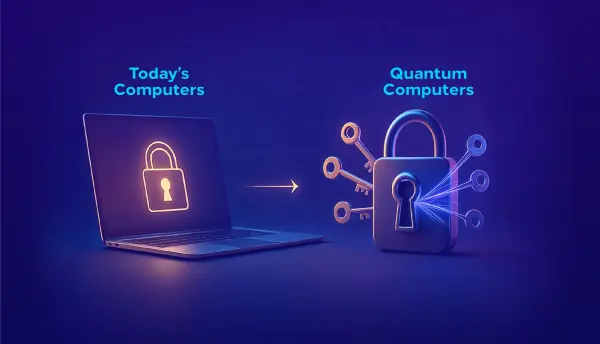
The global technology industry is accelerating efforts to prepare for one of the most significant cybersecurity challenges on the horizon: the arrival of practical quantum computing.
While fully capable quantum computers are still under development, security experts warn that existing encryption systems protecting financial transactions, government communications, healthcare records, and online services could eventually become vulnerable once quantum machines reach sufficient scale.
A newly published large-scale study examining more than 32,000 internet domains provides one of the clearest snapshots yet of how prepared organizations are for the transition to post-quantum security technologies.
The findings reveal meaningful progress, but also highlight major gaps that could leave critical systems exposed in the future.
For decades, modern internet security has relied on cryptographic systems such as RSA and elliptic curve cryptography. These technologies form the foundation of secure web browsing, online banking, cloud services, and encrypted communications.
Current computers would require enormous amounts of time to break these encryption methods. However, researchers believe future quantum computers could solve certain mathematical problems dramatically faster, potentially undermining some of today's most widely used security systems.
As a result, governments, technology companies, financial institutions, and cybersecurity organizations have been working to develop and deploy quantum-resistant encryption technologies capable of protecting data against future attacks.
The recent study found that adoption of post-quantum security measures is increasing across the internet.
Researchers discovered that nearly half of the analyzed domains now support hybrid post-quantum key exchange mechanisms, which combine traditional encryption methods with newer quantum-resistant technologies. These hybrid approaches are designed to provide security today while preparing systems for future quantum threats.
Despite this progress, the research also revealed that more than half of examined domains continue to rely entirely on traditional cryptographic methods.
This creates concerns among security experts because attackers may already be collecting encrypted information with the expectation that future quantum computers could eventually decrypt the stolen data.
The threat is commonly referred to as "Harvest Now, Decrypt Later." In this scenario, sensitive information stolen today could remain unreadable for years before becoming accessible once sufficiently powerful quantum systems emerge.
The study identified particularly uneven adoption across different industries.
Technology-focused organizations appear to be moving more quickly toward quantum-resistant infrastructure, while sectors that depend heavily on legacy systems continue to lag behind.
Government agencies, financial institutions, healthcare providers, and other organizations operating older infrastructure often face greater challenges when implementing new security standards.
One of the most notable findings involved digital certificates, which are used to verify the identity of websites and online services.
Researchers reported that none of the examined domains had implemented hybrid post-quantum certificates, suggesting that an important layer of internet authentication remains dependent on traditional cryptographic systems. According to the study, this could create vulnerabilities in the future if quantum computing capabilities advance faster than expected.
The growing urgency surrounding post-quantum security has prompted major technology companies to accelerate research and deployment efforts.
Cloud providers, browser developers, networking companies, and cybersecurity vendors have begun integrating quantum-resistant technologies into products and services. Industry standards bodies are also working to establish frameworks that can support widespread migration without disrupting existing systems.
The challenge extends far beyond websites and online services.
Modern digital infrastructure includes millions of connected devices, cloud platforms, mobile applications, industrial systems, and communication networks that depend on encryption for security. Updating these systems is expected to require years of planning, testing, and deployment.
Technology leaders increasingly view the transition as comparable to previous internet-wide upgrades such as the adoption of HTTPS encryption and IPv6 networking. The difference is that post-quantum migration affects the core security mechanisms protecting digital communications around the world.
Businesses are also facing growing pressure from regulators and cybersecurity agencies to evaluate their readiness.
Several government agencies have already issued guidance encouraging organizations to identify cryptographic systems currently in use, assess potential risks, and begin planning migration strategies. Security experts warn that organizations waiting until practical quantum computers arrive may find themselves facing a rushed and costly transition.
The broader technology industry sees quantum-resistant security as a long-term investment rather than an immediate response to an active threat.
Although large-scale quantum computers capable of breaking modern encryption do not yet exist, infrastructure upgrades often take years to complete. Organizations that begin preparing today are expected to be better positioned as new security standards become mainstream.
The study's findings suggest that the internet is entering a critical transition period. Adoption of post-quantum technologies is clearly underway, but the path toward a fully quantum-safe internet remains incomplete.
As quantum computing research continues to advance, the race is no longer solely about building powerful quantum machines. It is also about ensuring that the digital infrastructure supporting governments, businesses, and billions of internet users remains secure when that future arrives.