
OpenAI's First AI Device Could Replace Smartphones: Everything We Know So Far
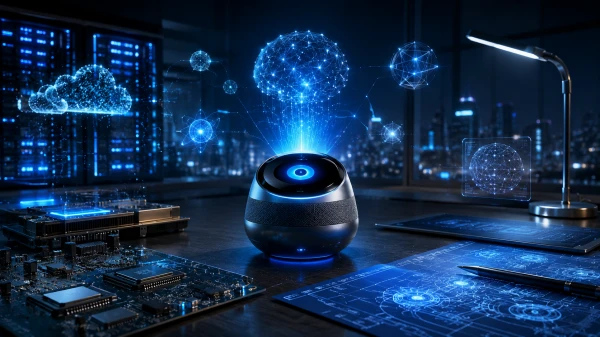
OpenAI is preparing to enter the consumer hardware market with what could become one of the most ambitious technology products since the smartphone. According to recent reports, the company is developing its first dedicated artificial intelligence device in collaboration with legendary former Apple designer Jony Ive, the creative mind behind products including the iPhone, iMac and iPad.
Unlike traditional smartphones, the upcoming device is expected to focus on conversational artificial intelligence, contextual awareness and intelligent task completion rather than app-based interactions. Although OpenAI has not officially revealed the product, reports suggest the company wants to create an entirely new category of AI-powered personal computing that places intelligent assistance at the center of everyday life.
One of the most surprising details emerging from industry reports is that the device may not include a conventional display. Instead of asking users to constantly look at a screen, OpenAI is reportedly exploring a screenless design that relies heavily on voice interaction, artificial intelligence, microphones, speakers and contextual awareness.
The goal is to create technology that feels less distracting than today's smartphones while remaining capable of understanding requests, answering questions, organizing schedules, sending messages and performing digital tasks naturally through conversation. If successful, this approach could fundamentally change how people interact with technology throughout the day.
The partnership between OpenAI Chief Executive Officer Sam Altman and renowned designer Jony Ive has generated enormous excitement across the technology industry. Ive spent decades helping define Apple's product philosophy through elegant industrial design and intuitive user experiences.
His collaboration with OpenAI signals that the company is thinking beyond software and intends to build a complete artificial intelligence ecosystem where hardware and AI models work seamlessly together. Industry analysts believe this combination of advanced AI with world-class hardware design could create one of the most closely watched product launches of the decade.
Unlike smartphones, which require users to open apps and manually navigate digital interfaces, OpenAI's AI device is expected to function as an always-available intelligent assistant. Users may simply speak naturally to ask questions, organize meetings, summarize emails, translate conversations, perform internet research, control smart home devices and receive personalized recommendations.
Rather than replacing applications one by one, the AI would act as a universal interface capable of completing tasks across multiple services automatically. This vision aligns with the broader industry movement toward agentic artificial intelligence, where AI systems actively perform work instead of simply responding to commands.
The timing of OpenAI's hardware ambitions reflects a broader transformation occurring across the technology sector. Companies including Google, Meta, Apple, Amazon and Microsoft are investing heavily in AI-powered hardware ranging from smart glasses and wearable devices to AI-enabled personal assistants.
Many experts believe the next major computing platform will combine advanced artificial intelligence with purpose-built hardware capable of understanding voice, vision, location and personal context simultaneously. OpenAI's reported device would place the company directly into competition with some of the world's largest consumer electronics manufacturers.
Developing dedicated AI hardware also provides important technical advantages. Specialized devices can be optimized specifically for artificial intelligence workloads, enabling faster responses, improved battery efficiency, enhanced privacy and more seamless integration between software and hardware.
Instead of relying entirely on cloud processing, future AI devices may combine powerful on-device intelligence with cloud-based reasoning, allowing users to access advanced AI capabilities even in environments with limited connectivity. This hybrid approach could significantly improve responsiveness while giving users greater control over sensitive information.
Businesses are closely watching OpenAI's hardware strategy because it could reshape how AI is adopted across industries. Enterprise users may eventually deploy similar devices for customer service, field operations, healthcare, logistics and manufacturing, where voice-driven AI assistants can improve productivity while reducing the need for traditional computer interfaces. Developers are also expected to gain new opportunities to build applications that integrate directly with AI-first hardware rather than relying solely on smartphones or desktop computers.
Although many technical details remain confidential, the excitement surrounding OpenAI's first hardware product reflects growing confidence that artificial intelligence is moving beyond software into everyday physical devices. If OpenAI and Jony Ive successfully deliver a compelling AI-first experience, the product could influence the future direction of consumer technology in much the same way the original iPhone transformed mobile computing.
Whether it ultimately replaces smartphones or complements them, OpenAI's first AI device represents one of the most anticipated technology projects currently under development and may mark the beginning of a new generation of intelligent personal computing.
