
DeepMind CEO Calls for Global AI Standards to Prevent Dangerous Artificial Intelligence
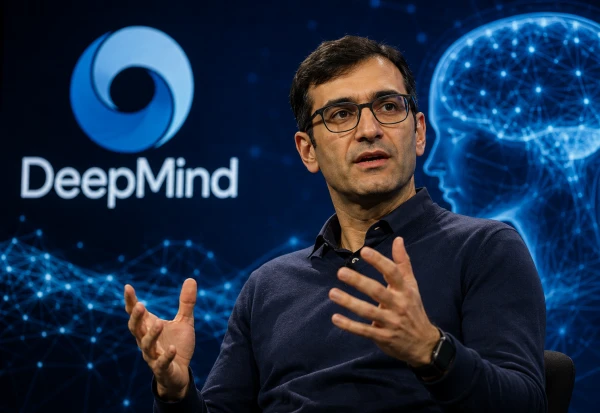
The debate over how artificial intelligence should be governed has entered a new phase after Google DeepMind Chief Executive Officer Demis Hassabis called for the creation of an independent international organization responsible for setting safety standards for the world's most powerful AI systems. Hassabis believes frontier AI is advancing so quickly that existing regulatory approaches may not be enough to address future risks.
Rather than allowing individual companies or governments to develop separate rules, he argues that internationally recognized standards could help ensure advanced AI is developed responsibly while still encouraging innovation. His proposal comes as AI companies continue releasing increasingly capable models that can reason, write software, analyze scientific research and automate complex tasks across nearly every industry.
According to Hassabis, artificial intelligence is approaching a level where collaboration between governments, researchers and technology companies will become essential. Modern frontier AI models already demonstrate impressive abilities in programming, scientific discovery, language understanding and problem-solving.
As future systems become even more capable, experts believe clear international standards will be needed to evaluate safety, reliability, transparency and responsible deployment before these technologies are introduced into critical sectors such as healthcare, finance, education, transportation and national infrastructure.
An independent standards body could provide consistent evaluation methods while encouraging companies to meet common safety benchmarks regardless of where their AI systems are developed.
The proposal reflects growing concern throughout the AI industry about the pace of technological progress. Companies including Google DeepMind, OpenAI, Anthropic, Microsoft, Meta and xAI are investing billions of dollars into increasingly advanced foundation models.
Competition has accelerated dramatically during the past two years, with every major developer introducing systems capable of handling longer context windows, stronger reasoning, multimodal understanding and autonomous agent capabilities.
While these advances promise enormous economic and scientific benefits, they also raise questions about misuse, cybersecurity, misinformation, privacy and the long-term management of highly capable AI systems.
Hassabis has repeatedly emphasized that artificial intelligence has the potential to become one of humanity's most beneficial technologies if developed responsibly. DeepMind has already demonstrated AI systems capable of accelerating scientific research, improving protein structure prediction, advancing medical discovery and assisting researchers with complex engineering challenges.
However, the same underlying technologies could also introduce new risks if deployed without adequate safeguards. Establishing internationally accepted evaluation standards could help identify weaknesses before advanced AI models are widely released while improving public confidence in emerging AI technologies.
The concept of global AI governance is not entirely new, but momentum has increased significantly as frontier models become more powerful. Several governments have already introduced AI legislation, while international organizations continue discussing principles for responsible AI development. The challenge remains creating rules that protect society without slowing innovation.
Technology companies generally support reasonable oversight but caution that fragmented regulations across different countries could make AI development more complicated and reduce international competitiveness. A single independent standards organization could potentially provide consistent guidance while allowing governments to implement regulations based on shared technical assessments.
Businesses are also paying close attention because future AI standards may directly affect how enterprise AI systems are developed and deployed. Organizations operating in healthcare, banking, insurance, manufacturing and public services increasingly depend on artificial intelligence for decision-making and automation.
Clear international standards would help businesses understand compliance requirements while reducing uncertainty around future regulation. Developers could also benefit from standardized testing procedures that make it easier to demonstrate the safety and reliability of new AI applications before deployment.
The discussion surrounding AI governance extends beyond technical performance. Experts increasingly argue that transparency, accountability, explainability and security should become core requirements for advanced AI systems.
Independent evaluations could measure not only benchmark scores but also how models behave under stressful conditions, how they respond to malicious prompts, how effectively they protect user privacy and whether they remain aligned with intended human objectives. These broader assessments may become increasingly important as AI systems begin handling more sensitive responsibilities across society.
Demis Hassabis' proposal signals that the conversation around artificial intelligence is evolving beyond building more capable models toward ensuring those models can be trusted. As governments, researchers and technology companies continue debating the future of AI regulation, international cooperation is likely to play an increasingly important role.
Whether through a new independent standards body or expanded collaboration between existing institutions, the goal remains the same: enabling artificial intelligence to deliver transformative benefits while reducing the risks associated with one of the most powerful technologies ever created.