
Paramount+ Faces Backlash After AI-Generated ‘Star Trek’ Thumbnail Sparks Criticism
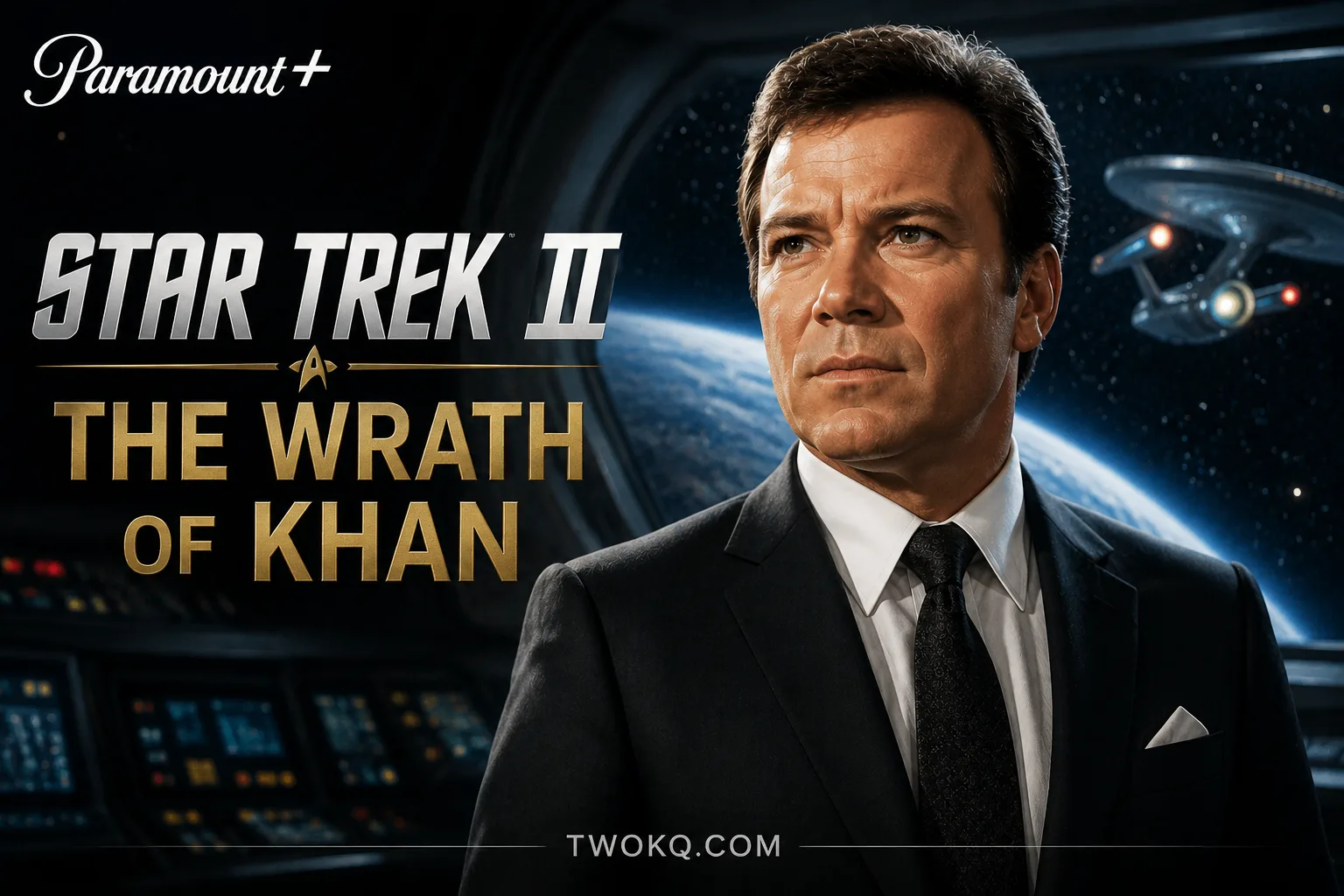
LOS ANGELES, May 29 (twokq) – Paramount+ is facing growing criticism after viewers discovered what appears to be an AI-generated promotional thumbnail for the classic film Star Trek II: The Wrath of Khan, a move that has reignited debate over the growing use of artificial intelligence in the entertainment industry.
The controversial image, first highlighted by technology and entertainment observers online, shows Captain James T. Kirk, played by William Shatner, wearing a modern business suit — an outfit the character never wore in the 1982 science-fiction film or throughout the actor’s decades-long portrayal of the iconic Starfleet captain.
Fans quickly questioned the authenticity of the image after noticing inconsistencies in the clothing, facial details and overall composition.
Critics argued that the thumbnail carried several visual traits commonly associated with generative AI tools, including unnatural textures, mismatched costume design and awkward facial blending.
The backlash intensified after artist Ryan Estrada publicly analyzed the image, suggesting that the original frame was likely taken from a scene in The Wrath of Khan where Kirk undergoes a retinal scan.
According to Estrada’s assessment, the close-up shot may have been digitally expanded using generative AI technology to create a more attention-grabbing promotional image for streaming audiences.
The result, however, drew widespread mockery across social media platforms, with longtime Star Trek fans describing the image as “soulless,” “cheap,” and disconnected from the franchise’s legacy.
The incident comes at a time when major entertainment companies are increasingly experimenting with artificial intelligence to automate parts of content production, marketing and digital asset creation.
Streaming platforms have been under pressure to reduce operational costs while maintaining high volumes of promotional material across thousands of titles.
Industry analysts say the controversy highlights a growing concern inside Hollywood over whether AI-generated visuals are beginning to replace human designers and artists in areas traditionally driven by creative direction and franchise consistency.
Paramount has not officially confirmed whether the thumbnail was created using AI tools. However, recent comments from company leadership have intensified speculation.
Paramount owner David Ellison previously stated that the company intends to use advanced technology to “transform every single aspect” of its business operations.
For many fans, the issue extends beyond a single thumbnail.
The Star Trek franchise, widely regarded as one of the most influential science-fiction properties in television and film history, has experienced mounting uncertainty in recent years following production slowdowns and cancellations involving several projects.
Critics argue that relying on automated AI-generated imagery for legacy content risks further damaging audience trust at a sensitive moment for the franchise.
Media analysts also warn that the use of AI-generated promotional assets could create broader reputational risks for streaming services if viewers begin to perceive studio marketing materials as low-quality or misleading.
The controversy arrives amid wider global debate over the role of artificial intelligence in creative industries.
From publishing and journalism to film and gaming, companies are increasingly adopting AI systems to accelerate workflows, reduce costs and generate content at scale.
But opponents argue that overreliance on automation may weaken originality, reduce employment opportunities for creatives and undermine artistic authenticity.
For now, the disputed thumbnail reportedly remains visible on Paramount+, continuing to fuel online discussion among fans and technology observers alike.
As artificial intelligence becomes more deeply embedded in the entertainment business, the reaction to Paramount+’s Star Trek controversy may serve as another warning sign that audiences are paying closer attention to how studios use AI behind the scenes.