
Global AI Sovereignty Push Reshapes Tech Power Between US, China and Emerging Economies
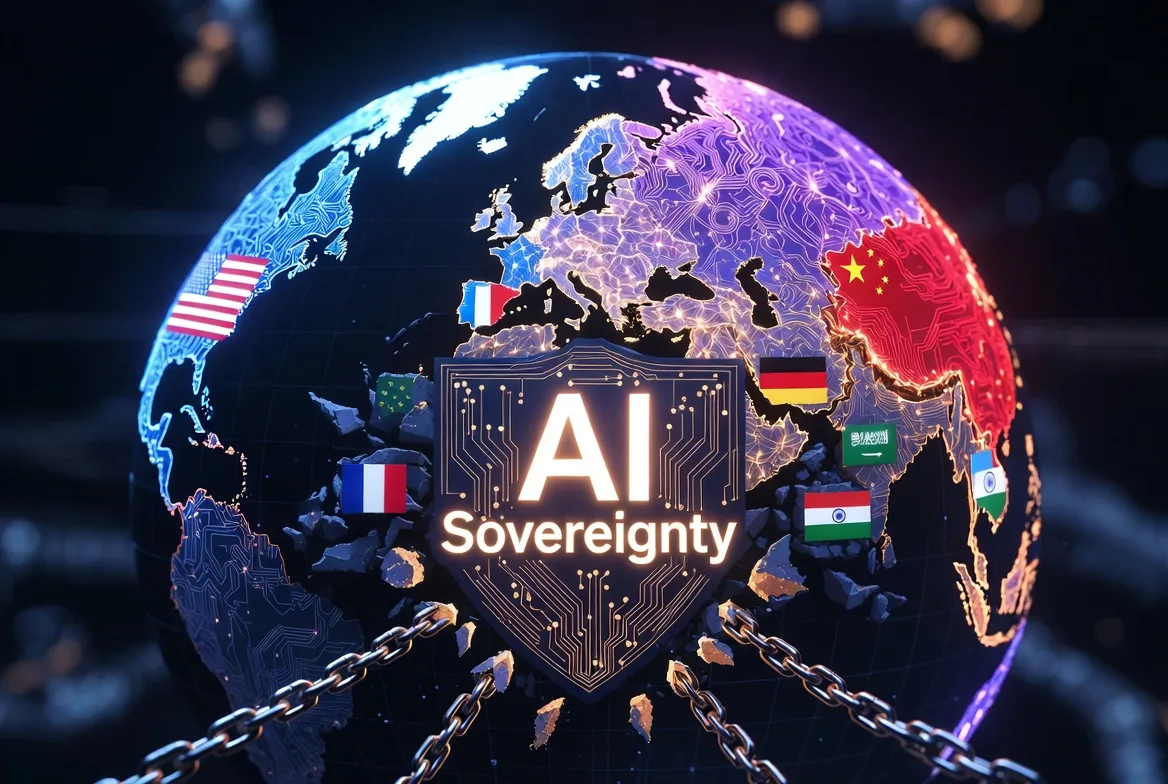
A global contest over artificial intelligence independence is accelerating, as governments move to reduce reliance on U.S. and Chinese technology and reshape how AI systems are built, deployed and governed across borders.
The shift, often described as “AI sovereignty,” is driving countries to localize data, develop domestic infrastructure and promote alternative AI ecosystems in an effort to avoid becoming dependent on a small group of dominant technology providers.
The result is a rapidly emerging patchwork of regulations, standards and technical systems that businesses will increasingly have to navigate.
At the core of the debate is concern among policymakers that global AI development is becoming concentrated in the United States and China, leaving other nations exposed to external control over critical digital infrastructure.
Some leaders have warned that without domestic capability, countries risk becoming “digital vassals” of foreign AI powers.
Speaking at the India AI Impact Summit 2026, Indian Prime Minister Narendra Modi and senior technology executives highlighted the importance of building national AI capacity, with sovereignty emerging as a central theme in discussions about the future of digital infrastructure and economic competitiveness.
However, analysts note that the feasibility of full AI independence varies significantly across the technology stack.
While countries can exert meaningful control over data governance, privacy rules and application-level deployment, core components of AI systems — including advanced chips, large-scale cloud infrastructure and frontier model training — remain heavily concentrated in the United States and China. This imbalance makes complete technological self-sufficiency unlikely for most economies.
Despite this, sovereign AI strategies are gaining traction. Governments across Europe, Asia and the Middle East are investing in national AI initiatives, local data centers and domestic model development in an effort to ensure strategic autonomy over sensitive sectors such as defense, healthcare and finance.
The United States continues to maintain a significant lead in frontier AI development, driven by major private sector players and advanced semiconductor ecosystems.
At the same time, China has rapidly expanded its domestic AI capabilities, supported by state-backed investment and a growing open-source model ecosystem.
This dual dominance is shaping the strategic response of other nations, many of which are now pursuing hybrid approaches that combine foreign technology with localized control layers.
Open-source AI models are expected to play a central role in this transition. As more alternatives emerge beyond dominant U.S. and Chinese systems, governments and enterprises are increasingly likely to adopt open frameworks to maintain flexibility while complying with local regulations.
Industry analysts say this trend will reshape global business operations. Companies operating across multiple jurisdictions may soon face overlapping compliance regimes, requiring region-specific AI deployments, localized data storage and modular system architectures.
In parallel, geopolitical tensions are influencing how AI governance frameworks are being designed.
The current U.S. administration has emphasized maintaining global leadership in AI innovation while resisting broad international regulatory coordination, reinforcing a competitive rather than cooperative global landscape.
Experts warn that this fragmentation could slow interoperability and increase costs for multinational firms, even as it fosters innovation within regional ecosystems.
Ultimately, the emerging AI order is expected to be defined not by a single global system, but by competing technological blocs — each with its own rules, infrastructure and strategic priorities.
As governments continue to prioritize sovereignty over standardization, the global AI industry is entering a period of structural divergence that will shape investment flows, regulatory regimes and technological alignment for years to come.