
How Edge Computing Is Quietly Replacing Cloud-Only Infrastructure in Modern Tech Systems
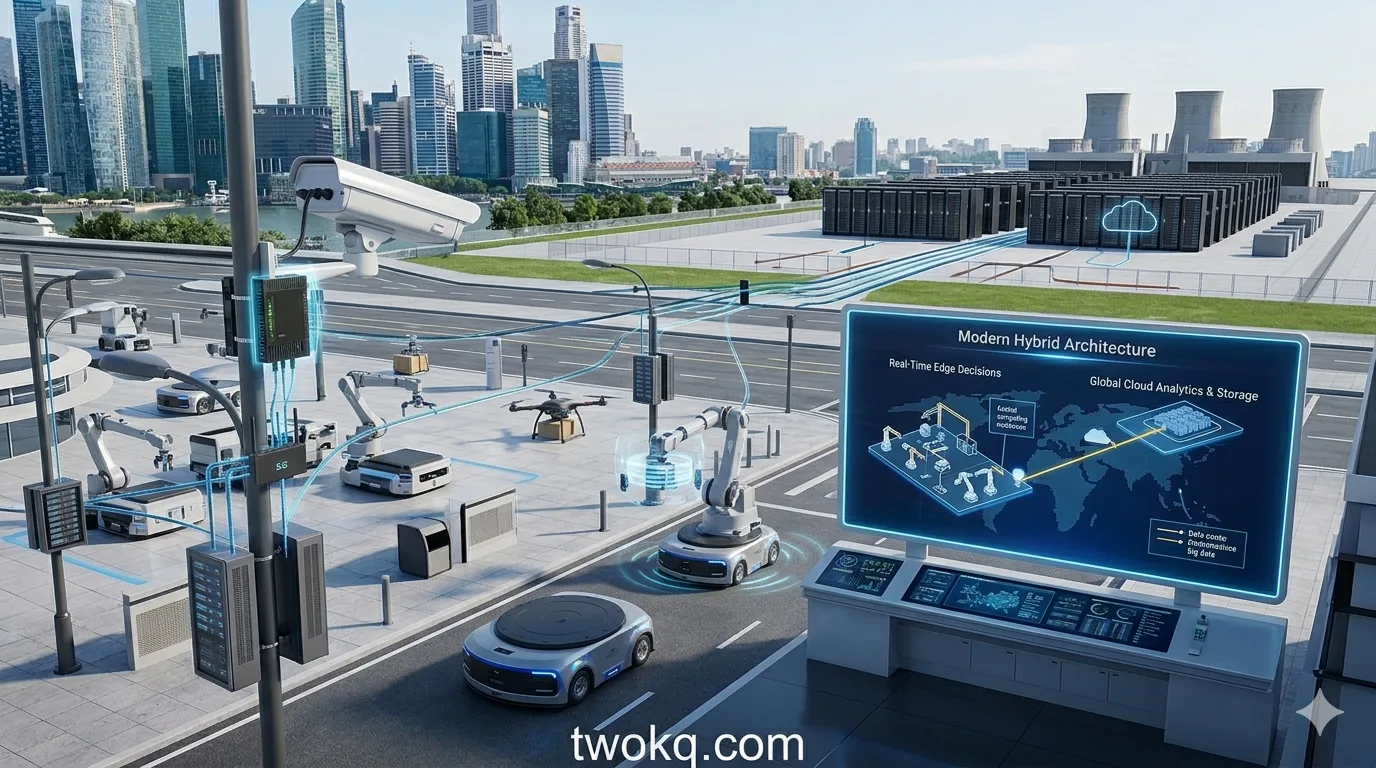
For more than a decade, cloud computing has been the backbone of modern digital infrastructure. From streaming services to enterprise applications, centralized data centers have powered the global shift toward scalable, on-demand computing.
But a new architectural shift is beginning to reshape how data is processed and delivered.
Edge computing is emerging as a powerful alternative to cloud-only systems by moving computation closer to where data is generated.
Instead of sending all information to distant servers for processing, edge systems handle tasks locally—at the “edge” of the network.
This shift is not replacing the cloud entirely, but it is fundamentally changing its role.
The Problem With Centralized Cloud Systems
Cloud computing solved major challenges in scalability and storage, but it introduced a new limitation: latency.
When data must travel to centralized servers and back, even small delays can affect performance. This becomes especially critical in applications that require real-time responses.
Industries such as autonomous vehicles, smart manufacturing, financial trading, and healthcare monitoring cannot afford delays measured in milliseconds.
As digital systems become more connected, the volume of data being generated has also exploded, putting additional strain on traditional cloud infrastructure.
What Edge Computing Changes
Edge computing addresses these challenges by shifting processing power closer to the source of data.
Instead of sending everything to a central cloud server, devices can process information locally or through nearby edge nodes. This reduces the distance data must travel, significantly improving response times.
In practical terms, this means:
- Faster decision-making in real time systems
- Reduced network congestion
- Lower bandwidth usage
- Improved system reliability during connectivity issues
For example, a smart security camera using edge computing can detect motion and trigger alerts instantly without waiting for cloud analysis.
The Role of IoT in Driving Edge Adoption
The rise of Internet of Things (IoT) devices has accelerated the demand for edge computing.
Billions of connected devices now generate continuous streams of data—from industrial sensors to wearable health monitors. Sending all of this data to the cloud is inefficient and, in many cases, unnecessary.
Edge computing allows these devices to filter, analyze, and respond to data locally before deciding what needs to be transmitted to centralized systems.
This not only improves efficiency but also reduces operational costs for businesses managing large-scale IoT networks.
Security and Data Privacy Advantages
Another major driver of edge computing adoption is security.
By processing sensitive data locally, organizations can reduce exposure to cyber threats during transmission. This is particularly important in industries dealing with personal information, financial records, or critical infrastructure systems.
Local processing also supports compliance with data sovereignty regulations, which require certain types of data to remain within specific geographic boundaries.
Edge vs Cloud: A Hybrid Future
Despite its advantages, edge computing is not replacing the cloud entirely.
Instead, the future of digital infrastructure is increasingly hybrid.
In this model:
- Edge systems handle real-time processing and immediate decisions
- Cloud systems handle long-term storage, analytics, and large-scale computation
This combination provides the best of both worlds—speed at the edge and power in the cloud.
Major technology companies are already investing heavily in this hybrid architecture, integrating edge services into their cloud platforms to support next-generation applications.
Challenges in Edge Computing Adoption
While promising, edge computing introduces new challenges.
Managing distributed infrastructure is more complex than maintaining centralized systems.
Organizations must coordinate updates, security patches, and system monitoring across multiple edge locations.
Hardware limitations can also restrict performance, especially in smaller edge devices with limited computing power.
Additionally, ensuring consistency between edge and cloud data remains a technical challenge for developers.
The Road Ahead
As digital systems continue to expand, the demand for faster, more efficient computing will only increase.
Edge computing is positioned to become a foundational layer of modern technology infrastructure, particularly in industries where real-time processing is critical.
Rather than replacing cloud computing, it is redefining its role in a more distributed, intelligent ecosystem.
The next generation of applications will likely be built on systems that seamlessly combine edge and cloud capabilities—delivering speed, scalability, and intelligence at every level of the network.
For businesses and developers, understanding this shift is becoming increasingly important as the boundaries between local and centralized computing continue to blur.