
Apple Launches iPhone Duo Foldable at $1,999
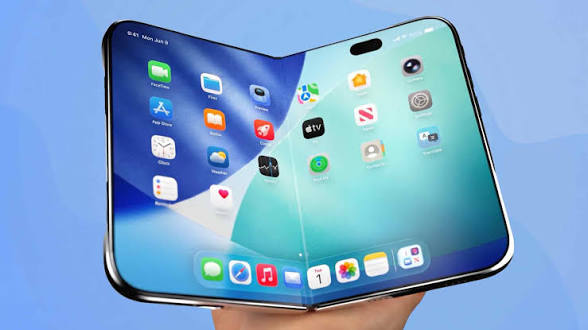
Apple launched the iPhone Duo foldable at $1,999 during its September product event, opening a new hardware category for the iPhone. The passport-shaped device pairs a conventional outer screen with a larger folding display and will reach stores more than a month after Apple’s other announcements.
The first iPhone Duo release centers on four confirmed details:
- A $1,999 starting price with 256GB of storage
- A 5.4-inch cover screen and 7.6-inch inner display
- Preorders on October 16 and availability on October 23
- An A20 Pro chip designed for on-device AI workloads
iPhone Duo Foldable Opens to a 7.6-Inch Screen
The Duo closes into a short, wide shape that Apple compares with a passport. Opened, its 7.6-inch internal display becomes the largest screen on an iPhone, while a 5.4-inch cover display handles conventional phone tasks without unfolding the device.
Reuters reported from Apple’s Cupertino event that the internal display works horizontally or vertically. Apple also described the unfolded Duo as its thinnest phone, placing portability alongside screen size as a defining part of the product.
The device uses a titanium frame reinforced with ceramic fibers, second-generation Ceramic Shield protection and an IP68 rating for resistance to water and dust. Apple is offering two finishes, star white and night sky, with storage configurations extending from 256GB to 2TB.
Apple has replaced Face ID with Touch ID in the side button, a notable departure from the biometric system used across premium iPhones. The outer display has a visible selfie camera, while the inner screen places its front-facing camera beneath the panel.
Those choices show where foldable engineering forces tradeoffs. A hinge, flexible panel and two usable display modes must coexist with cameras, authentication, cooling and battery hardware. The Duo’s eventual durability and repair experience will matter as much as its dimensions after buyers begin using it daily.
A20 Pro Extends Apple’s On-Device AI Strategy
The Duo runs on Apple’s A20 Pro, a 2-nanometer chip with a six-core CPU, seven-core GPU and 32-core neural processing unit, according to The Verge’s launch coverage. Apple is positioning the chip for advanced local models as its redesigned Siri expands across the iPhone lineup.
Apple told Reuters that the updated Siri will work with 300,000 apps at release. The company’s wider event pitch emphasized processing on the device whenever possible and using Private Cloud Compute when a request needs more capability.
The folding screen creates a separate software test. Apple must make multitasking, rotation and transitions between the outer and inner displays feel predictable, while developers need layouts that remain useful across both sizes. Hardware specifications alone do not establish how well existing apps handle that change.
Apple’s October launch gives developers and accessory makers additional time after the event. It also separates the Duo from the iPhone 18 Pro and Pro Max, reducing the chance that a completely new form factor is treated as another routine configuration of the same device.
The $1,999 Price Tests a Small Foldable Market
The Duo will be available for preorder on October 16 and go on sale October 23. Variety confirmed the $1,999 starting price, while The Verge reported that higher-capacity versions will reach 2TB.
That pricing places the Duo above mainstream flagship phones and makes Apple’s first foldable a premium experiment. Foldables accounted for only 1.6% of global smartphone sales in 2025, according to Counterpoint data cited by The Verge, despite years of releases from Samsung, Huawei, Google and other manufacturers.
The category is small, but the financial stakes are not. Reuters reported that iPhone generated $209.6 billion in Apple’s latest fiscal year, slightly more than half of company revenue. Even limited Duo sales could lift average selling prices while giving Apple a platform for future folding devices.
The launch also begins under new chief executive John Ternus, who led his first major Apple keynote after succeeding Tim Cook. His opening hardware cycle now includes Apple’s largest iPhone design shift since the company removed the physical home button from the iPhone X in 2017.
Early demand will reveal whether buyers see the larger folding canvas as useful enough to justify the price. Longer-term evidence will come from hinge reliability, display wear, app support and the economics of repair—areas where a polished launch presentation cannot substitute for months of real-world use.