
Apple Finally Rebuilds Siri as AI Becomes the Center of Its Software Strategy
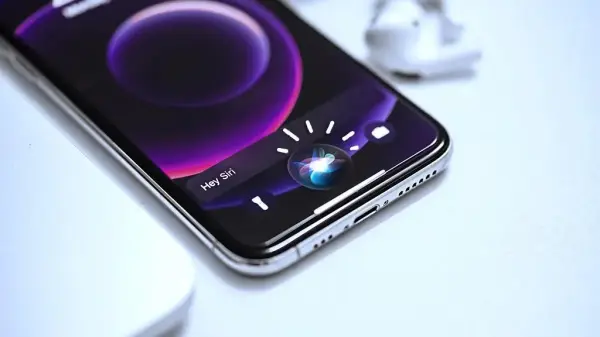
For years, Apple watched the artificial intelligence race unfold from the sidelines while competitors aggressively pushed forward with advanced chatbots, AI assistants and generative AI platforms.
While companies like OpenAI, Google and Anthropic dominated headlines, Apple's voice assistant Siri increasingly became a symbol of missed opportunities.
That narrative may finally be changing.
At WWDC 2026, Apple unveiled one of its most significant software updates in years, centered around a complete reinvention of Siri and a much deeper integration of artificial intelligence across its ecosystem. The announcement represents more than a product upgrade.
It signals Apple's attempt to reposition itself as a serious contender in the next generation of consumer AI.
The company introduced a new AI-powered Siri, expanded Apple Intelligence capabilities, launched advanced child safety protections, enhanced AI-driven photo editing tools and continued refining its Liquid Glass design language.
Together, these updates reveal a broader strategy that places artificial intelligence at the core of Apple's future.
Apple Is No Longer Treating AI as an Optional Feature
One of the biggest takeaways from WWDC 2026 is that Apple is moving away from treating artificial intelligence as a standalone feature.
Instead, AI is becoming deeply embedded throughout the operating system.
Rather than forcing users to open a dedicated chatbot app whenever they need assistance, Apple wants intelligence to exist naturally inside the apps people already use every day.
Whether someone is browsing Safari, managing emails, scheduling meetings, editing photos or controlling smart home devices, AI now plays an active role behind the scenes.
This approach reflects a growing belief across the tech industry that the future of artificial intelligence lies in seamless integration rather than isolated AI products.
Siri Receives Its Biggest Upgrade Since Launch
The centerpiece of Apple's announcement was undoubtedly the new AI-powered Siri.
For more than a decade, Siri has struggled to keep pace with competing assistants.
While other AI systems became capable of carrying natural conversations, reasoning through complex problems and understanding context, Siri remained limited to basic commands and simple queries.
Apple's new version changes that.
The upgraded assistant can now understand personal context, remember previous interactions, analyze content displayed on a user's screen and complete actions across multiple applications.
Conversations are more natural, allowing users to ask follow-up questions without repeatedly providing context.
This creates an experience that feels closer to modern AI assistants such as ChatGPT and Gemini than the traditional Siri users have known for years.
The company is also introducing a dedicated Siri application that allows users to revisit previous conversations across devices, making interactions more persistent and useful over time.
If Apple executes this vision successfully, Siri could evolve from a simple voice assistant into a genuine digital companion.
Apple Intelligence Expands Across the Entire Ecosystem
Beyond Siri, Apple is dramatically expanding the reach of Apple Intelligence.
The technology is now integrated into many of Apple's most important applications, creating a connected AI experience that spans the entire ecosystem.
In Safari, AI can organize tabs, monitor webpages and surface relevant information automatically.
In Mail and Messages, it can help users manage conversations, summarize content and draft responses.
Calendar gains natural-language scheduling features that allow users to create events using simple conversational instructions.
The Phone app receives contextual assistance that can help users during calls and interactions.
This ecosystem-wide integration gives Apple a unique advantage.
Unlike many competitors that rely heavily on standalone AI products, Apple controls both the hardware and software experience, allowing intelligence to flow naturally between devices and applications.
A New Focus on Personal AI
What makes Apple's strategy particularly interesting is its focus on personal context.
Many AI systems excel at understanding general knowledge but struggle to understand individual users.
Apple wants its intelligence systems to understand not only the world but also the specific needs, habits and preferences of each person.
The new Siri can access relevant information from a user's apps, messages, schedules and activities while maintaining Apple's privacy-focused architecture.
This allows the assistant to provide more relevant answers and complete more meaningful tasks without requiring users to constantly explain their situation.
Personal context is increasingly becoming one of the most valuable features in modern AI systems, and Apple is positioning itself to compete aggressively in this area.
AI Is Coming to Smart Homes
Apple also revealed that Apple Intelligence is expanding into the Home ecosystem.
Users can now perform natural-language searches across recorded security footage and receive AI-generated summaries of camera activity.
Instead of manually reviewing hours of video, homeowners can simply ask questions such as whether a package was delivered or whether someone entered a particular area.
The company is also bringing AI-powered automation to the Shortcuts app.
Users can create complex automations using simple text instructions rather than manually configuring every action.
This lowers the barrier to entry for smart home automation and could significantly expand adoption among everyday consumers.
Enhanced Child Safety Becomes a Major Priority
While AI dominated the keynote, Apple also introduced a substantial collection of new child safety features.
The company is automatically enabling age-based protections for child accounts, including stricter content filtering, website restrictions and app approval controls.
One of the most notable additions is Ask to Browse, a feature requiring children to obtain parental permission before visiting unfamiliar websites.
Apple is also expanding its Communication Safety system to detect and blur violent or graphic content, extending protections beyond the nudity safeguards already available.
As concerns grow about children's exposure to harmful online content, these features position Apple as one of the most proactive technology companies in digital safety.
AI-Powered Creativity Gets a Major Upgrade
Photography and content creation are also receiving significant AI enhancements.
Apple's revamped Image Playground introduces more advanced image generation capabilities, allowing users to create photorealistic images from text prompts and transform existing photos into different artistic styles.
The company also unveiled several powerful editing tools.
The upgraded Cleanup feature removes unwanted objects more effectively.
The new Extend tool can intelligently expand image boundaries beyond the original frame.
Spatial Reframing allows users to adjust composition after a photo has been captured, providing greater creative flexibility.
These features reflect a broader industry trend where artificial intelligence increasingly becomes an essential part of the creative workflow.
Privacy Remains Apple's Competitive Advantage
Throughout the event, Apple repeatedly emphasized privacy.
While competitors often rely heavily on cloud processing, Apple continues to promote a hybrid approach that combines on-device intelligence with its Private Cloud Compute infrastructure.
According to the company, user data processed through Apple Intelligence remains inaccessible to Apple itself and is not stored for model training.
This privacy-first approach remains one of Apple's strongest differentiators as consumers become increasingly concerned about how AI companies collect and use personal information.
The Stakes Could Not Be Higher
The significance of WWDC 2026 extends far beyond new features.
For Apple, this represents a critical moment in the artificial intelligence race.
The company built its dominance during the smartphone era by creating products that felt simpler, more intuitive and more polished than competing alternatives.
Apple now faces the challenge of applying the same philosophy to artificial intelligence.
Success would allow Apple to leverage its ecosystem of billions of devices to become one of the most influential AI companies in the world.
Failure would risk leaving the company dependent on competitors that are moving faster in one of the most transformative technology shifts in decades.
The redesigned Siri is therefore more than a software update. It is Apple's attempt to prove that it still has the ability to define the future of consumer technology rather than simply respond to it.